


When considering how amenities affect everyday access in Dubai villa communities, we look beyond a facilities list to assess the routes, entry arrangements and opening conditions that shape everyday routines. A useful amenity is one residents can reach and use when they need it, not simply one that appears on a community map.
- Group amenities by purpose: daily services, family needs and recreation. Then decide which ones support your household’s regular routines.
- Separate facilities within the community from services nearby. Check who can use each facility and whether reaching it involves leaving the community or driving.
- Trace the door-to-door route, including pavements, crossings, shade, gates and entrances. Map distance alone does not show how practical a trip feels.
- Consider traffic, internal junctions and busy-period queues when assessing school runs, commuting and regular errands.
- Check operating hours, maintenance, capacity and access arrangements. A facility is useful only when residents can use it in practice.
- Compare communities against the same household routine, giving reliable access to daily essentials priority over a long list of optional facilities.
Everyday access is one part of a wider property decision. For context on places and projects, explore our guide to comparing Dubai areas, Dubai location overview, developer profiles, off-plan buying guide and off-plan property options.
Our wider reading also covers property investment considerations, rental yield considerations, property tax, the Golden Visa through property and our property resources.
What everyday access means beyond an amenity list
Everyday amenities fall into three groups. Daily services include shops and healthcare; family needs include schools and places to play; and lifestyle facilities include parks, fitness spaces and recreation.
For each facility, establish whether it sits within the community or nearby, whether residents can use it, and how they reach it. A nearby clinic or shop may still require a drive, while a community facility may have entry arrangements that affect who can use it.
We consider an amenity practically accessible when the route, entry arrangements, opening hours, capacity and maintenance allow residents to include it in an ordinary routine. A feature on a brochure has little everyday value if it is difficult to reach, unavailable when needed or poorly maintained.
Joy in Arabian Ranches III is a family-oriented townhouse community with fitness facilities, clubhouse amenities and parks. Its page also highlights access to Sheikh Zayed bin Hamdan Al Nahyan Street and Emirates Road, which makes it a useful example of assessing facilities alongside the connections that help residents reach services beyond the neighbourhood.
Match the amenity mix to your household’s routine
Start with the trips your household repeats: school drop-offs, food shopping, healthcare visits, exercise and commuting. Prioritise the facilities and services that make those trips simpler, rather than giving equal weight to every feature listed.
Families should assess the route between home, school and play areas as well as the facilities themselves. A school or park can be close on a map yet awkward to fit into the day if the route requires a detour or disrupts pick-up and drop-off routines.
For households that value green space or exercise, compare the practical routes to parks, walking paths and sports facilities. Consider whether the routes suit the people using them and whether the facilities are available at the times they prefer to exercise or spend time outdoors.
Retail and dining access also depends on what residents need most often. A convenient shop for regular essentials may serve a household better than a wider choice of restaurants and retailers that requires a separate drive.
The right mix depends on the rhythm of the household, not on a standard checklist. A family with school-age children may prioritise school and play-area access, while someone who exercises daily may care more about a direct route to walking paths or sports facilities.
Test the route from your door, not just the map distance
Trace the full walking route from the front door to the amenity entrance. Look for continuous pavements, safe crossings, shade, gates and clear entrances; a short distance on a map can still involve an awkward or unsafe walk.
Check whether the route works for the people who will use it. Children, older residents and anyone with mobility needs may find a route harder to manage if it includes uneven surfaces, difficult crossings or inaccessible entrances.
Decide whether the trip is realistically walkable or whether the household will drive. That choice affects how easily residents can fit the amenity into a normal day, particularly when they have several errands or activities to combine.
For services outside the community, assess the complete trip rather than proximity alone. Include the route out through gates, the connection to the destination and the practical return trip.
Dubai’s plan envisions integrated service centres with the required services so citizens and residents can reach destinations on foot or by bicycle within a 20-minute timeframe, according to Frontiers in Built Environment.
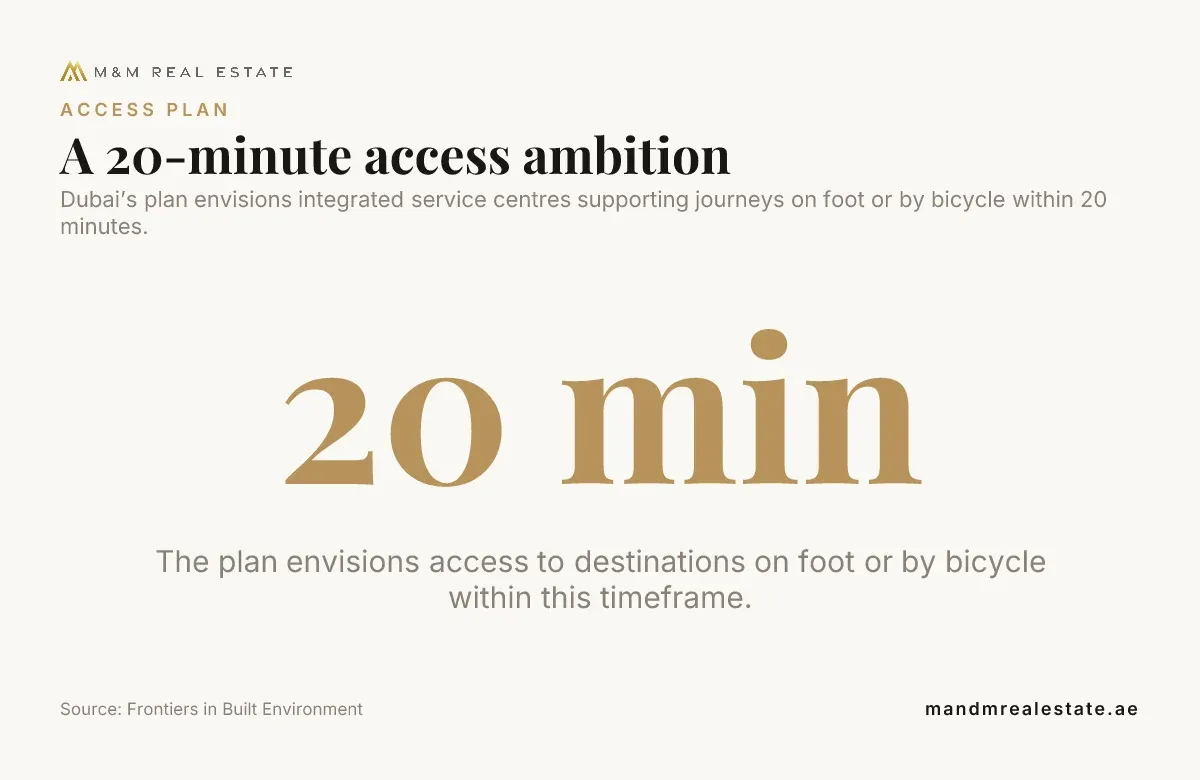
Dubai’s plan envisions integrated service centres supporting journeys on foot or by bicycle within 20 minutes.
Source: Frontiers in Built Environment
Twelve chapters on what the regional war tested, the balance sheet and dollar peg behind the market, and how to pick the right side of this cycle.
Download free→Factor in road connections and busy-period bottlenecks
Assess road connections to the places residents regularly travel, and consider public transport access alongside driving. A community’s location may suit one household’s routine and make another household’s regular trips less practical.
Test likely school-run and commuting trips at the times your household would make them. Queues at exits, internal junctions and busy roads can slow a trip that looks straightforward when viewed outside peak periods.
Look for internal roads, gates or shared access points that concentrate traffic. These can affect both trips to community facilities and trips out of the neighbourhood, particularly when many residents travel at similar times.
Compare the reliability of routine trips, not just distance to central Dubai or the roads shown nearby. A useful assessment considers where residents are going, how they will travel and what conditions they are likely to meet on the way.
Check whether facilities are available when you need them
Compare operating hours with your household’s schedule. A fitness space that closes before residents finish work, or a recreation area unavailable during preferred family time, offers limited practical value to those residents.
Ask how maintenance affects access and whether the facility has suitable capacity at the times residents are likely to use it. A space can be part of community life yet prove difficult to use if it is frequently closed for upkeep or crowded when demand is highest.
Check accessibility and entry arrangements for residents and their guests. Access conditions can differ by facility.
Consider a realistic alternative for essential activities if a facility is busy, unavailable or temporarily closed. This helps households keep regular routines going without relying on a single space or service.
Compare communities using a routine-based checklist
List the household’s regular trips, then assess the route, travel mode, likely busy-period conditions and usable hours for each relevant amenity. This makes the comparison specific to daily life rather than to a facilities list.
Separate essential daily services from desirable recreation. Reliable access to shops, healthcare and other routine needs should come before optional lifestyle features when those essentials shape the household’s day.
Use the same questions for every villa community you consider. Prestige, property type or an impressive list of community facilities should not outweigh a poor fit with the regular trips residents actually make.
| What to compare | Questions to ask |
|---|---|
| Daily services | Can residents reach shops and healthcare conveniently, and do they need to leave the community? |
| Family needs | Do the routes between home, school and play areas work with the household’s schedule? |
| Walking and recreation | Are parks, walking paths and sports facilities reachable by the travel mode residents prefer? |
| Road connectivity | Do regular journeys remain practical during school runs and commuting periods? |
| Facility access | Do opening hours, maintenance, capacity and entry arrangements suit the household? |
For a focused assessment, our guide to judging everyday access in a Dubai villa community brings these checks together.
Everyday access depends on more than the number of amenities a villa community lists. Routes, opening conditions, entry arrangements, maintenance and traffic determine whether residents can use those facilities as part of ordinary life.
Compare communities against the journeys your household repeats, from school and shopping to exercise and commuting. In Dubai villa communities, the strongest amenity mix is the one residents can reach and use in ways that fit their real routines.
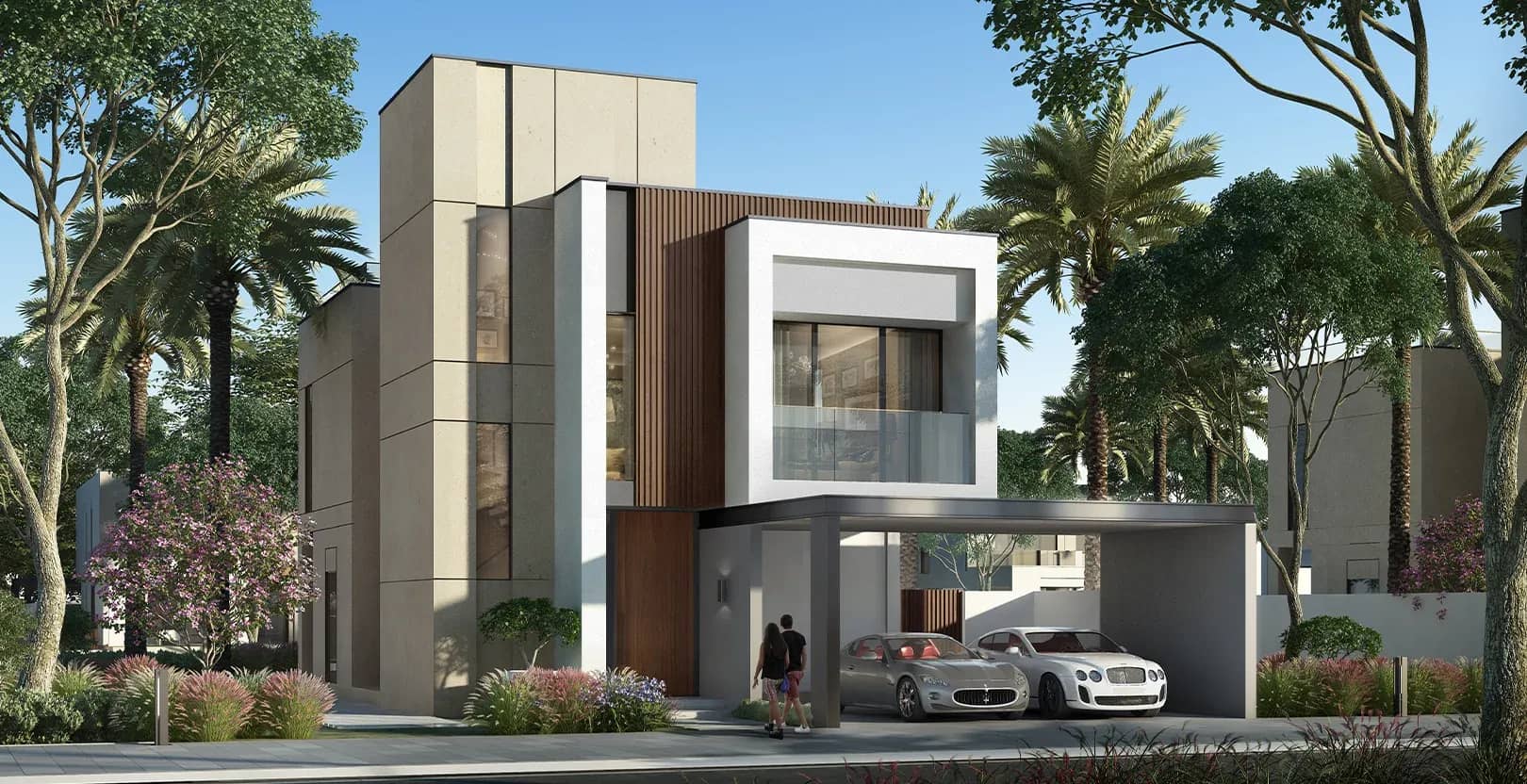
Which Dubai villa community is considered the best?
There is no single community that suits every household, because daily priorities differ. A useful choice is the one that fits residents’ regular trips, preferred travel modes and need for accessible facilities.
Is a villa or an apartment better for everyday access in Dubai?
Apartments may place shared facilities or shops within the same building or development, while villa living often gives households private outdoor space. The better fit depends on how residents balance that space with their access to services and transport.
How can summer heat affect walking access to community amenities?
High temperatures can make an exposed walk less comfortable and change when residents prefer to exercise or run errands. A route with shade and practical indoor alternatives can support more flexible routines during hot weather.
What can residents do when a community facility is temporarily closed?
Residents can ask management how closure notices are shared and whether access is expected to resume on a set schedule. They can also plan an alternative activity nearby while the facility is unavailable.
Does gated access affect how guests and delivery drivers reach a villa community?
Gated access can require visitors and drivers to follow entry procedures or wait for resident authorisation. Clear directions and timely communication help guests and deliveries reach the right entrance with fewer delays.


