

Investing in Dubai
from Australia.
Everything an Australian investor needs to know before committing capital to Dubai real estate. ATO implications, capital transfer, structures, Golden Visa, and the honest risks.
Why are Australians buying in Dubai, and how do they do it with no tax treaty in place?Free PDF, 29 pages
Why are Australians buying in Dubai, and how do they do it with no tax treaty in place?Free PDF, 29 pages
Why Australian investors are looking at Dubai.
Australia’s property market has become one of the most expensive in the world relative to incomes. CGT rates of up to 47% (including Medicare levy), negative gearing complexity, and land tax create structural headwinds for investment returns.
Dubai offers a compelling alternative. No UAE capital gains tax and no UAE income tax on rental income, although Australian residents still declare both to the ATO. Full freehold ownership. An average gross apartment yield of 5.53% (Global Property Guide, Q2 2026). An AED pegged to USD since 1997.
The Australian investor profile at M&M is typically someone who already owns Australian property, understands the diminishing returns of the local market, and is looking for genuine portfolio diversification into a high-yield, tax-efficient jurisdiction.
Read the full case before you decide.
The guide for Australian investors sets out what is moving their capital to Dubai and what it buys there.
Australia vs UAE:
the tax reality.
A direct comparison of the key tax implications for an Australian investor holding real estate in each jurisdiction. Always consult a qualified Australian tax advisor before making any decisions.
| Tax / Obligation | 🇦🇺 Australia | 🇦🇪 UAE / Dubai |
|---|---|---|
| Capital gains tax on property sale | Up to 47% (marginal + Medicare) Significant | 0% Zero |
| Rental income tax | 0% to 45% plus 2% Medicare Progressive | 0% Zero |
| Land tax | Varies by state Annual cost | No land tax Zero |
| Stamp duty / transfer | Varies by state, up to A$7 per A$100 in NSW Significant | 4% DLD fee (one-time) One-time |
| Negative gearing | Limited to new builds from 1 July 2027 Complex | Not applicable (no UAE income tax) N/A |
| Foreign investment rules (FIRB) | FIRB approval required for foreigners Regulatory | Full freehold, no approval needed Open market |
This table is for informational purposes only and does not constitute tax advice. Tax treatment depends on individual circumstances, residency status, and changes in law. Always consult a qualified Australian tax advisor (CPA or chartered accountant) before making any investment or residency decision.
The guide sets out the tax for Australian buyers, step by step.
How the rent and the gain are taxed, and what you report at home.
How Australian investors buy in Dubai.
Five steps from first conversation to ownership. No residency requirement and no local partner.
objective
correctly
to UAE
Oqood registration
ATO
Free investor guide
Why Australia is choosing Dubai.
Property is harder to hold in Australia, easier to own in Dubai, and the CEPA scaffolding between the two opened on 1 October 2025. 29 pages, free.
Inside the guide
- What changed at home for property, super and capital gains
- What Dubai's prime market did from 2020 to 2026, and the yield and tax on the rent
- What CEPA, the UAE-Australia trade agreement, does, and what becoming non-resident requires
- The 1 July 2027 tax dates, and why planning starts this year
- The four filters Australian buyers use to choose a property
Free PDF, 29 pages
Moving money from Australia to Dubai.
Transferring capital from Australia to UAE is a standard international wire transfer. Australia has no capital controls, you are free to move AUD to any jurisdiction.
All four major banks (CBA, ANZ, NAB, Westpac) process international wires to UAE banks. You will need to declare the purpose and provide supporting documentation. Banks report every international transfer to AUSTRAC, whatever the amount; the A$10,000 threshold applies to physical cash. The reporting is routine and does not limit the transfer.
Many Australian clients use OFX (founded in Sydney) for competitive AUD to AED rates. The AED is pegged to USD at 3.6725, so the real conversion is AUD → USD → AED. Given AUD volatility against USD, timing your transfer can impact your effective purchase price.
Golden Visa and residency options.
A purchase of AED 2M or more in your own name can qualify you for the UAE Golden Visa, a renewable permit DLD issues for 10 years, providing a strategic base between Australia and Europe.
For Australian investors, the Golden Visa provides a second residency and does not affect your Australian citizenship. On its own it does not change your Australian tax residency: the ATO treats a visa as one piece of evidence of where you intend to live (TR 2023/1). It gives you access to UAE banking, the ability to sponsor family members, and a base in a globally connected city that sits perfectly between Australian and European time zones.
Important: Australian tax residency is determined by the ATO based on multiple factors including domicile, 183-day test, and ties to Australia. Simply obtaining UAE residency does not change your Australian tax status. Professional Australian tax advice is essential.
We advise Australian investors with precision.
Our advisory team understands the Australian investor context, from ATO compliance to the FIRB framework. We work with Australian-qualified accountants and advisors to ensure your Dubai investment is correctly structured.
 Robin HolmesAssociate DirectorEnglish
 Craig DunleavyAssociate DirectorEnglish
Buying Property in Dubai From Australia: Tax, Financing, Process
Reviewed by Juan Mejia · 19 October 2026
Dubai property guidance for Australian buyers
A change in tax residency can affect how future income and a sale are treated.

Australian tax residency, Dubai rent and a future sale
Australian tax residency, rather than citizenship alone, is the key starting point.
If you move, identify when your tax residency changes and keep records of rental income, expenses, purchase costs and sale documents.
Can Australians buy property in Dubai?
Yes. Foreign buyers can purchase freehold property in designated areas of Dubai. Leasehold is a different ownership arrangement, so establish whether the unit offers freehold or leasehold rights before assessing its long-term fit.
Choose the property type and location around your intended use, budget and holding period. A home for personal use, a completed rental unit and an off-plan investment involve different decisions about occupation, rental timing and payment schedules. M&M Real Estate provides Dubai property listings, off-plan project information, investment guides and market reports to support that comparison.
For an Australian buyer, the practical starting point is a shortlist of Dubai properties with ownership type, purchase terms and ongoing costs identified for each option.
Financing, purchase costs and currency planning
Non-resident mortgage availability and terms depend on the lender and the buyer’s financial profile. A mortgage application commonly calls for identity documents, evidence of income, bank statements, details of existing liabilities and evidence of the deposit. Ask a UAE bank to assess borrowing capacity before committing to a purchase schedule.
Build a full ownership budget in AED, not just a purchase-price estimate. Allow for transfer and registration charges, brokerage where applicable, developer or seller charges, mortgage costs, service charges, property management, maintenance, insurance and periods without a tenant. Request an itemized cost outline for each shortlisted property.
The AED is pegged to the US dollar, so an Australian-dollar budget is affected by AUD/USD movements as well as the exchange spread and transfer fees. For staged payments on an off-plan property, plan each transfer against its due date and keep a record of the AED amount received.
Estimate net rental income, not just gross yield
Gross rental yield compares annual rent with the purchase price. To estimate net income, subtract service charges, vacancy, management, maintenance, insurance and financing costs from expected rent. Compare those costs property by property rather than treating a headline gross yield as take-home income.
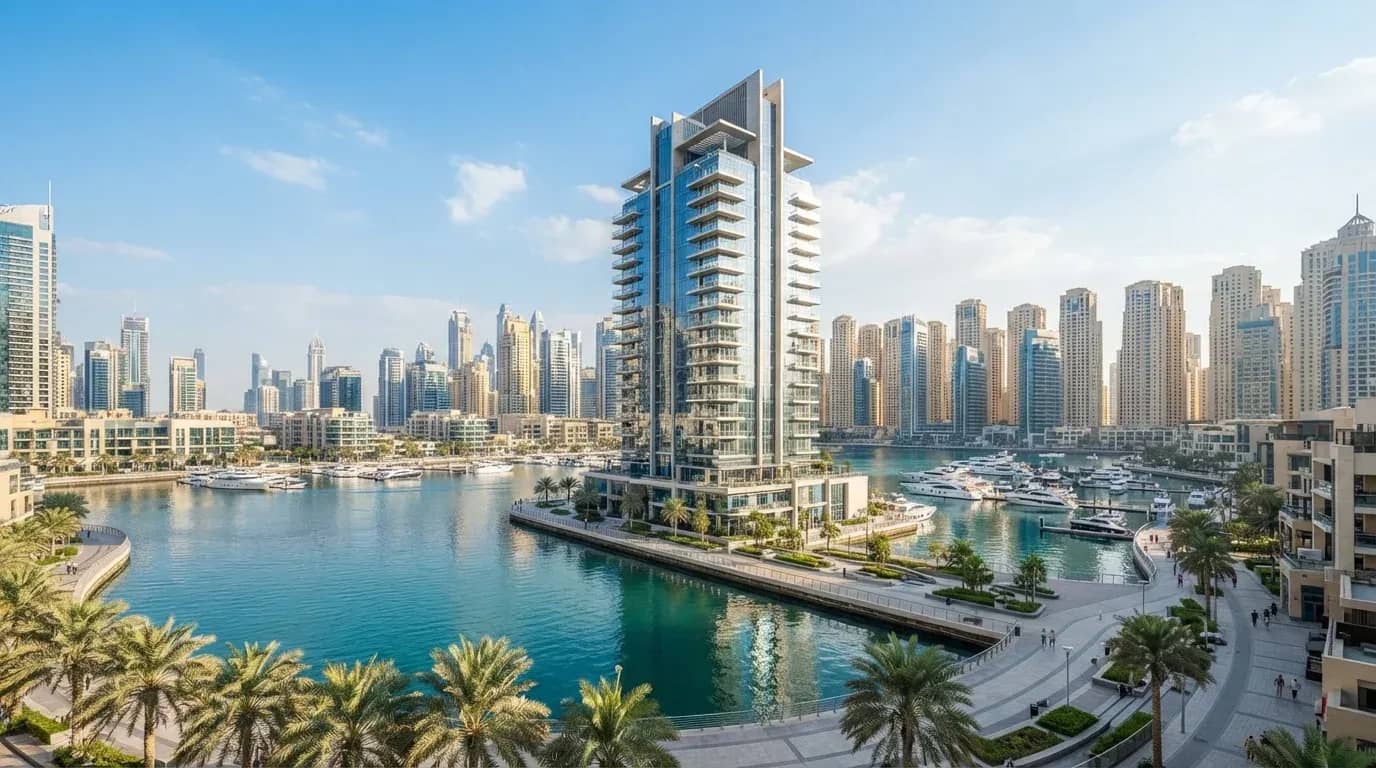
Remote purchase process and buyer checks
An Australian buyer can arrange much of the purchase remotely, with a representative authorized through a power of attorney where required. Confirm the signing and transfer arrangements with the Dubai Land Department and an independent lawyer before relying on a remote process.
- Shortlist the property. Compare the ownership type, intended use, payment schedule, expected rental costs and holding period.
- Arrange finance and funds. Get the lender’s requirements and set a currency-transfer plan before a payment deadline.
- Check the property and seller. Verify title information through the Dubai Land Department, identify who is authorized to sell, and use a RERA-registered agent.
- Review the agreement. Have an independent lawyer review the contract, payment instructions and any No Objection Certificate requirement. For a resale, understand the role of Form F in documenting the transaction.
- Check off-plan protections. Review the developer, project registration, escrow account, construction obligations, payment milestones and the contract’s remedies for delay before sending funds.
Sending money to the wrong account or relying on incomplete title or contract checks creates avoidable exposure, so independently match the seller, title, escrow arrangements and payment instructions before paying a deposit.
Property is harder to hold in Australia and easier to own in Dubai, and the CEPA scaffolding between the two opened on 1 October 2025. The math, the move, and the migration already underway.
Download free→Ready property or off-plan development?
Ready property
A completed home can be inspected before purchase, and its current condition, service charges and rental arrangements can be reviewed as part of due diligence. The buyer’s checks focus on the title, seller authority, contract and transfer requirements.
Off-plan property
An off-plan purchase follows a construction and payment schedule, so assess the developer, escrow arrangements, contract terms and handover obligations before committing. The agreement should set out payment milestones and the remedies available if delivery is delayed.
M&M lists 330 Riverside Crescent by Sobha Realty, with one- and two-bedroom apartments from 496 sq. ft. and listed prices from AED 1.14 million.
Property ownership and residency are separate decisions.
Discuss Dubai property options with M&M
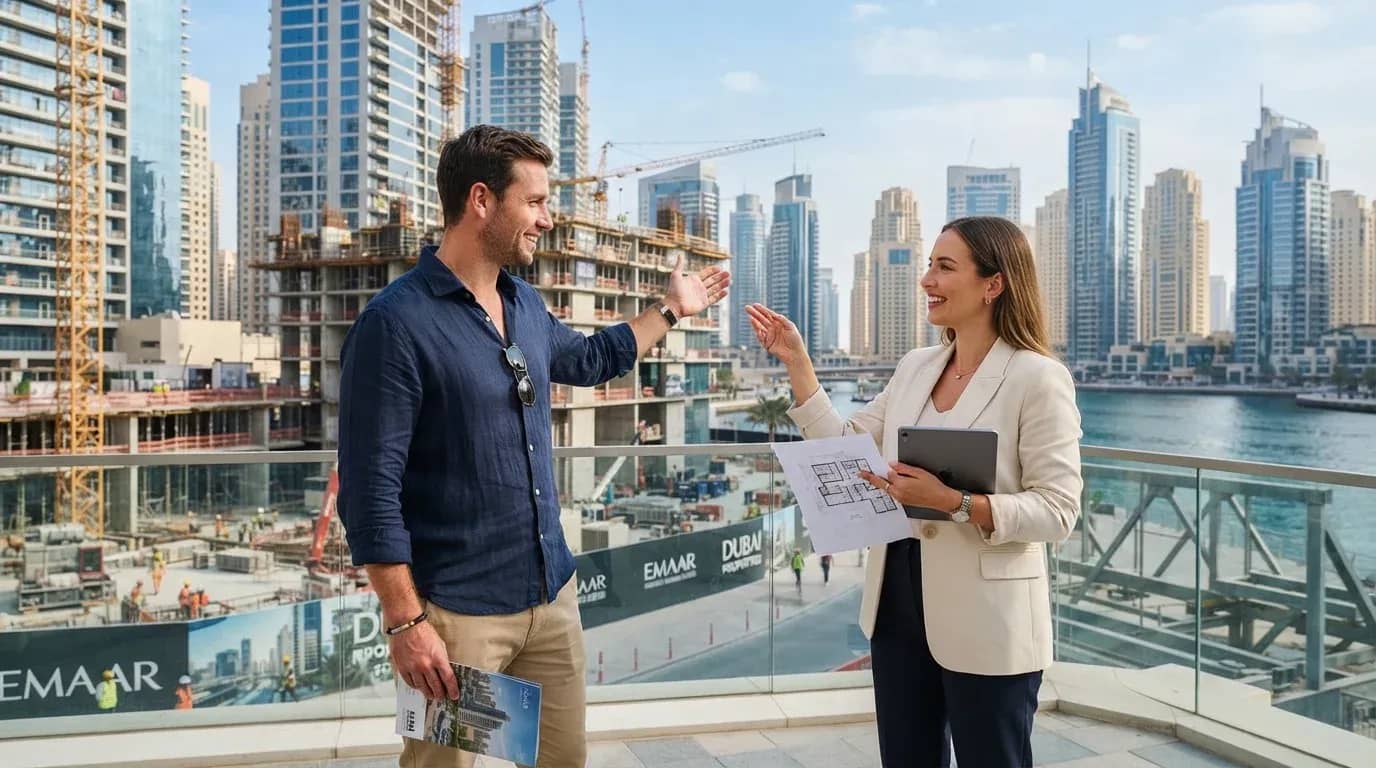
Why Australian buyers use M&M Real Estate
M&M’s international-investor FAQ covers investing in Dubai, tax and legal structure, working with the team and the purchase process.
For broader developer context, M&M also presents Aldar Properties and its Dubai projects. Buyers can use the project listings and investment resources to shape a shortlist, then discuss their situation and options with an M&M advisor.
Dubai service area and map planning
M&M’s property offer focuses on Dubai, while this guide is for buyers researching from Australia. Use a Dubai map to pin each shortlisted building and compare its location against your intended use, rental plan and preferred property type. Then connect the map shortlist to each unit’s ownership status, payment terms and ongoing charges.
For a remote purchase, keep one property file for each pin on the map, including the listing, title or project details, contract, cost outline and payment instructions. This makes it easier to compare Dubai options from Australia without relying on an area name alone.
Investor experience and advisory support
That is a practical starting point for an Australian buyer who needs to discuss a shortlist, remote purchase arrangements or the distinction between completed and off-plan property.
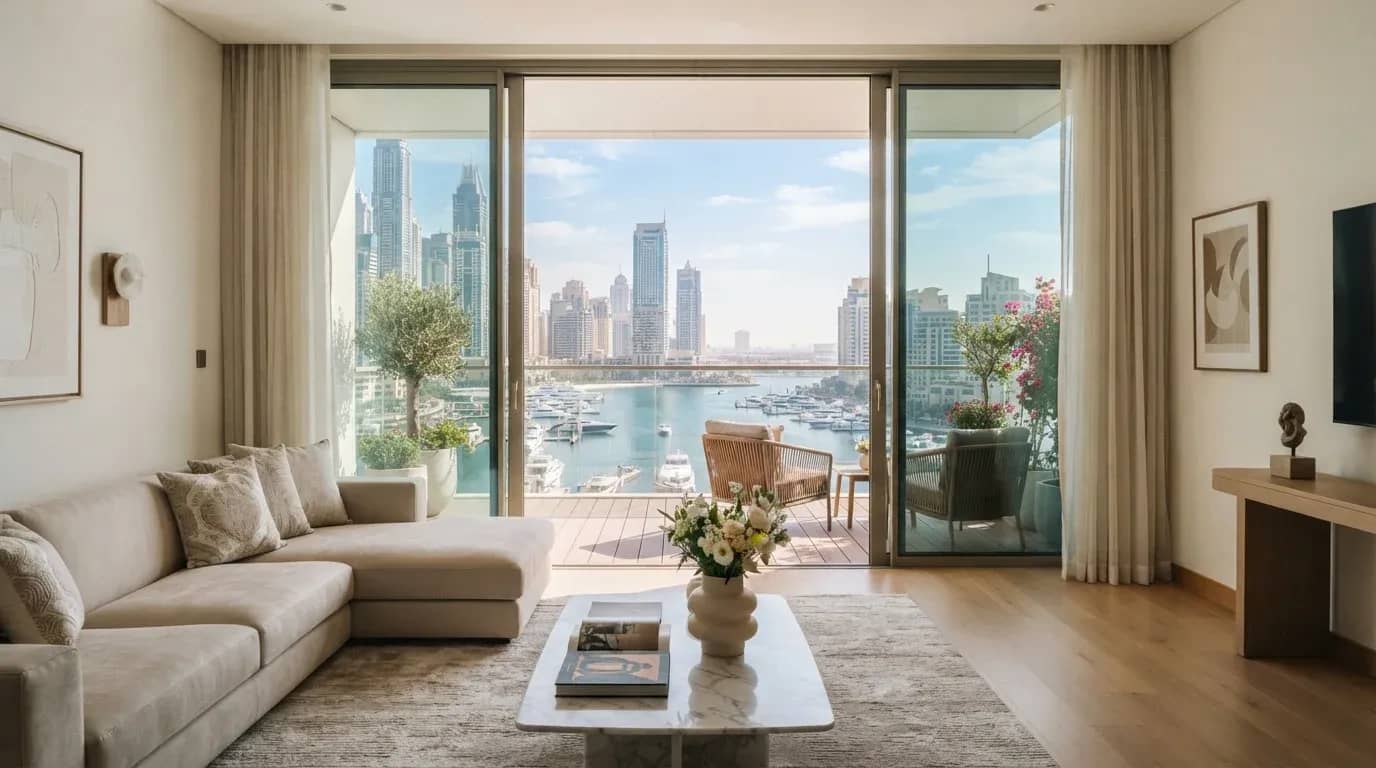
Frequently asked questions about buying in Dubai
Can a foreigner buy a house in Dubai?
Yes, non-UAE buyers can own freehold property in designated parts of Dubai. Check whether a specific unit is freehold or leasehold before assessing its ownership terms.
How should I assess whether a Dubai property fits my budget?
Compare the full purchase and ownership costs with your available funds before choosing a unit.
Can purchase and title transfer be completed without travelling to Dubai?
A power of attorney can let an authorized representative handle the transaction where required.
What documents should an Australian buyer prepare for a Dubai mortgage?
Prepare identity documents, proof of income, bank statements, information about existing liabilities and evidence of the deposit. The lender sets the application requirements and assesses the buyer’s circumstances.
Which costs continue after buying?
Ongoing costs can include service charges, property management, maintenance, insurance, financing and vacancy between tenancies. Include these when estimating net rental income rather than relying on gross rental yield alone.
How should I compare a ready property with an off-plan purchase?
A ready property can be inspected and assessed against its current condition and rental arrangements. An off-plan purchase needs close review of the developer, escrow account, payment milestones, contract terms and handover obligations.
What due diligence should I complete before paying a deposit?
Check title and seller authority, review the contract with an independent lawyer, and match payment instructions to verified records. For off-plan property, review project registration, escrow arrangements and the agreement’s protections before transferring funds.
How can exchange-rate movements affect the total cost?
Your Australian-dollar cost changes with the exchange rate, transfer spread and fees when converting funds to AED. Compare the Australian-dollar amount paid with the AED received after conversion fees.
Talk through your Dubai property shortlist
Share your priorities with an M&M advisor and discuss Dubai listings, off-plan projects and the questions to resolve before a purchase.
Figures are past data, this article is general information and not tax, legal or financial advice, and returns are not guaranteed.


Bring your questions to an advisor.
We work with Australian investors from the first call to the keys. Book a call with an advisor, or start with the guide.
