


Our high-floor versus low-floor comparison in Dubai starts with the building, not the floor number. Views, access, privacy, comfort and the price of a particular apartment all depend on its exact position and surroundings.
- Compare floors within the same building. A podium home, a mid-floor apartment and an upper-level unit can feel very different from tower to tower.
- Judge the actual outlook. A lower home facing an open area may offer more light and privacy than a higher unit facing another tower.
- Balance views with daily access. Lift capacity, service arrangements and outage procedures matter more as you rely on lifts for everyday trips.
- Test the unit, not just its floor. Visit at relevant times, check the balcony and listen for noise with the windows open and closed.
- Separate floor from price. Compare similar homes in the same building before deciding whether a higher asking price reflects height or other differences.
- Assess investment appeal as a whole. Floor position can contribute to rental and resale interest, but it does not guarantee either.
For context on the districts and building types available, browse our locations.
What counts as a high, mid or low floor?
There is no single floor number that defines a high-floor apartment across Dubai. We compare a unit with the building’s occupied floors, podium and nearby structures, because the same floor can sit close to the street in one tower and well above surrounding homes in another.
A low-floor apartment sits closer to street or podium activity. A mid-floor apartment can offer a balance between access and height, while a high-floor apartment occupies an upper residential level. A podium-level home needs a closer look: its outlook depends on what lies directly beyond its windows or balcony.
Position alone does not determine quality. A mid- or high-floor apartment facing a neighbouring tower may have less natural light or privacy than a lower home facing an open space.
We start the comparison with your priorities: views, quiet, quick access, lift reliance and budget. Then we assess how the building and the specific unit affect each one.
For an example of how a tower’s scale shapes the comparison, consider Seapoint Tower 1.
Compare views, privacy, light and balcony comfort
A higher position can open up a broader outlook, reduce direct overlooking and create more separation from street activity. Those benefits depend on orientation and nearby buildings, so a high floor facing another tower may not feel open or private.
A low-floor apartment can feel more connected to outdoor areas. Check the sightlines from paths, roads and podium spaces instead of assuming that every lower home lacks privacy.
Apartment orientation matters as much as height when you assess daylight and heat. Western-facing rooms receive strong afternoon sun, while shading, glazing and neighbouring buildings also shape indoor comfort.
Test the balcony in the conditions that matter to you. Higher elevations can feel windier and more exposed to dust, while the balcony’s direction and shade affect sun and heat.
For a waterfront example, consider Palm Beach Towers when comparing a unit’s floor and outlook.
Weigh lift access against everyday convenience
For an upper-floor home, look beyond the number of lifts. Ask about lift capacity, queues at busy times, service-lift arrangements, maintenance response and how residents receive updates during an outage.
A lower floor can make short trips and stair access more convenient, but it does not automatically make emergency evacuation easier. Ask about the building’s specific procedures, accessible routes and arrangements for anyone who may need assistance.
Think about who will use the apartment and how. Residents with mobility needs, young children or pets may place a different value on dependable lifts and straightforward access than buyers focused on privacy or views.
We treat fire safety and emergency access as building-specific questions. A floor number alone does not tell you how an evacuation works or what assistance residents can expect.
In Downtown Dubai, consider The St. Regis Residences, Downtown Dubai in its building context.
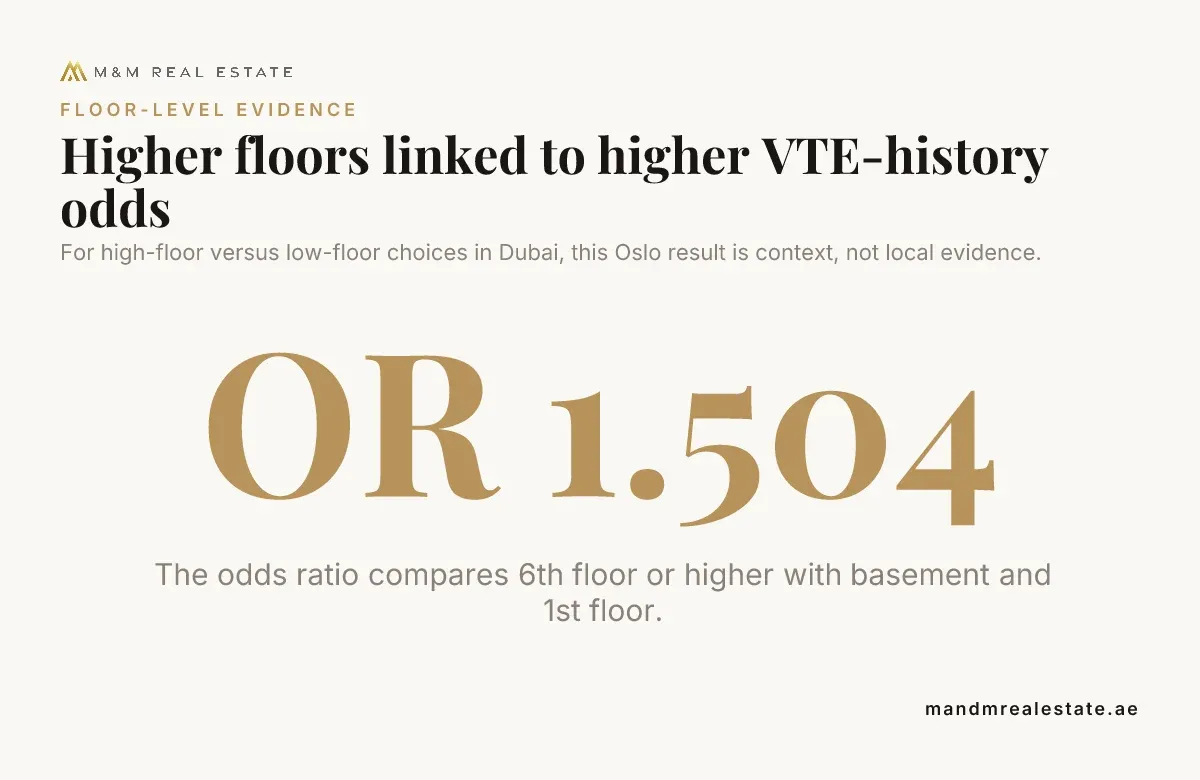
For high-floor versus low-floor choices in Dubai, this Oslo result is context, not local evidence.
We also consider the developer and the building’s management arrangements when assessing how a tower will work for its residents. Our developer directory is one starting point for understanding who is behind a project.
What foreign buyers get wrong in Dubai off-plan, what each mistake costs, and exactly what to do instead.
Download free→Measure a floor premium against comparable homes
To judge a floor premium, compare genuinely similar apartments in the same building. Match layout, area, orientation, view, condition and timing as closely as possible before attributing a price difference to height.
For one worked example, M&M’s Dubai Golden Visa guide gives a purchase threshold of AED 2,000,000, and its Dubai property tax guide says the transfer fee is 4% of the sale value; the fee is divided equally between buyer and seller.
- AED 1,050,000 - AED 1,000,000 = AED 50,000 extra.
- AED 50,000 ÷ AED 1,000,000 × 100 = a 5% premium.
Keep that transfer-fee calculation separate from a floor premium: decide whether a higher asking price buys something you value, such as an open view or less direct overlooking, and whether the benefit is likely to retain appeal. Paying more for height alone is not a strategy.
Keep floor level separate from other value drivers, including condition, orientation, layout and building charges. A price gap does not prove that one apartment will rent or resell more easily.
Off-plan buyers can also consider the design and delivery details that shape a unit’s outlook and access.
Think beyond the floor when assessing rent and resale
Compare rental evidence for similar homes in the same building and area. Tenant demand can reflect layout, condition, access, noise and outlook as well as floor position.
Assess rental yield using annual rent against the total acquisition cost. A higher purchase price for a high-floor unit can absorb any rental advantage, so judge the whole investment rather than the view alone.
A clear outlook may support resale appeal, but a view is not protected simply because it is open today. Investigate nearby plots and planning information before treating the outlook as permanent.
Sea view versus city view investment decisions also depend on what future residents value and whether the outlook is likely to last. We weigh floor position alongside location, building condition, ongoing costs and the needs of likely tenants.
For a broader investment assessment, compare locations with our guide to areas to invest in Dubai. We also consider transaction costs and ownership structure, which our Dubai property tax guide addresses.
Some buyers include residency planning in their wider decision. Our Dubai Golden Visa guide covers that separate consideration; floor level by itself does not determine investment suitability.
Match the floor to the people who will live there
Families with young children can prioritise secure windows and balconies, safe access and dependable lifts. A lower position may simplify some journeys, but it cannot replace checking those features in the apartment and building.
Pet owners can weigh the convenience of frequent trips outside against street noise, privacy and how entrances and lifts fit their routine. A podium home may offer easy access to outdoor areas, but its immediate surroundings still matter.
Buyers who value quiet, privacy or a distant outlook may prefer an upper level if the view and lift service justify the added cost and reliance on lifts. We judge the lived experience, not the floor label.
A mid-floor apartment can provide some separation from street activity while keeping access more straightforward than an upper level. Its actual layout and surroundings matter more than the name given to its position.
Use a viewing to test the specific unit and building
Visit at times that reflect your routine, and listen with windows both open and closed. Note traffic, building services, neighbours and activity directly below the unit.
Check balcony shade, sun, wind and dust in person. From inside each main room, assess daylight, privacy and the quality of the outlook rather than relying on a sales description or floor number.
Investigate nearby plots and relevant planning information before you treat an open outlook as a protected view. A view that feels valuable today may change if nearby land is developed.
Ask about lift servicing, capacity, peak-time waits and resident arrangements during outages. Then understand the building’s emergency procedures before committing to the apartment.
For off-plan options, compare the project and its surroundings with our Dubai off-plan properties page. Our property resources offer further reading as you work through the decision.
Dubai Harbour offers another location to consider when assessing a building’s surroundings.
There is no universal winner between a higher and lower apartment floor in Dubai. The right choice depends on the specific outlook, orientation, privacy, access, lift service and price, weighed against the needs of the people who will live there.
We compare like with like, test the apartment at a viewing and assess the building beyond its floor number. That is how a floor premium becomes a considered choice rather than a payment for height alone.


Are top-floor apartments hotter than units on lower floors?
A top-floor home can receive additional heat through the roof, particularly if the roof and ceiling provide limited thermal protection. Glazing, shading and the apartment’s orientation also affect indoor temperatures, so top-floor position alone does not determine comfort.
Can apartment water pressure vary between floors in a Dubai tower?
Yes, pressure can differ because towers use plumbing layouts and pump arrangements that may divide a building into pressure zones. The relevant question is how the specific building manages supply to its upper and lower homes.
Can residents use lifts during a fire or other emergency?
Residents should not use ordinary passenger lifts during a fire unless the building’s emergency team specifically directs them to do so. Some buildings have designated firefighting lifts for authorised use, which form part of the building’s emergency arrangements.
Does an apartment’s floor level affect its service charges?
Floor level alone does not usually determine service charges. Charges are generally tied to the apartment’s area and the building’s approved costs, so compare the unit’s charge basis and the services covered.
Can a high-floor apartment affect mobile phone reception?
It can, but reception depends on factors such as the building structure, glazing, internal layout and network coverage, not simply height. Test calls and mobile data with your intended provider in the rooms where you expect to use them.


