
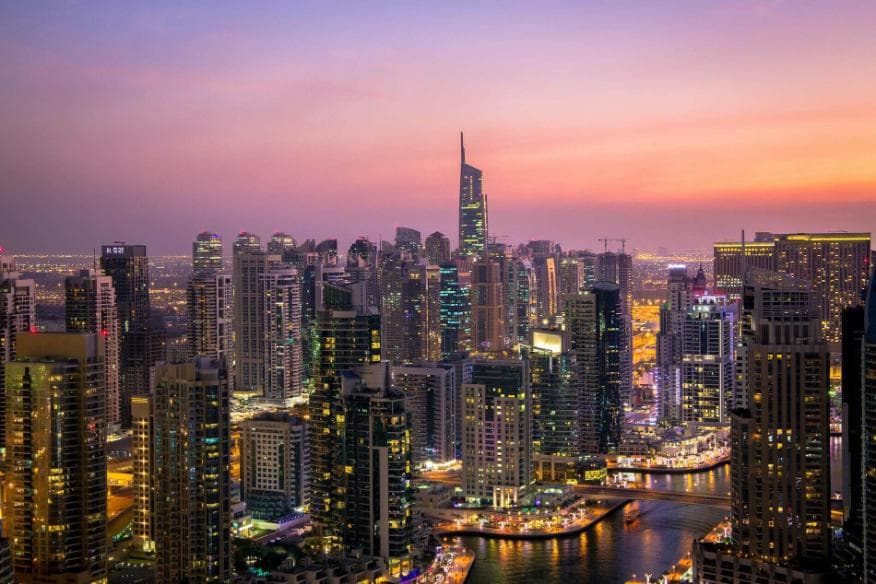
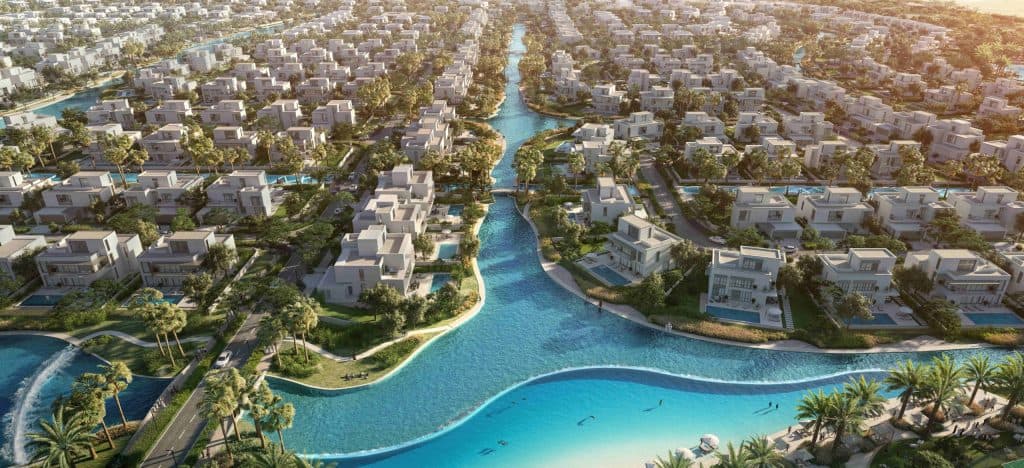
In the last six weeks, I've had the same conversation thirty times. A client in Madrid, or Bogotá, or Miami sees a headline about Iran, the Strait of Hormuz, or regional escalation — and asks some version of the same question: should I be worried about my Dubai investment?
The short answer is: less worried than the headlines suggest. The long answer requires understanding why Dubai is structurally different from the rest of the region — and what the actual risk signals look like when you look at the data rather than the news cycle.
This is that long answer.
First: what actually happened.
In late February 2026, Iran conducted naval exercises near the Strait of Hormuz. Regional media amplified this into a narrative of imminent conflict. Energy markets reacted. Property market forums filled with speculation. My WhatsApp did the same.
What actually happened in Dubai's property market during this period? Transaction volumes held. Off-plan launches continued. The DLD recorded no unusual slowdown in foreign registrations. In fact, the week of highest media coverage coincided with a launch event from Ellington that sold out in 48 hours.
This is not the first time this pattern has played out. It won't be the last.
“Dubai has survived and grown through every regional conflict in its modern history — 1990, 2003, 2006, 2011, 2019, and every escalation since. The mechanism that protects it is structural, not political.
M&M Advisory Team
Why Dubai is structurally insulated.
Dubai's economy is not dependent on the same factors that make other Gulf states vulnerable to regional conflict. Three structural features explain why:
- Non-oil GDP: Dubai generates over 95% of its GDP from non-oil sources — trade, finance, tourism, logistics, real estate. It is not an oil economy. A disruption to oil shipping affects Abu Dhabi significantly more than Dubai.
- Neutral geopolitical positioning: The UAE has maintained diplomatic relationships with all regional powers simultaneously — including Iran, Israel, Saudi Arabia, and Western nations. This deliberate neutrality is an economic strategy, not a coincidence.
- USD-denominated and capital-flight destination: During regional uncertainty, capital historically flows into Dubai from surrounding markets. Lebanese, Iranian, Egyptian, and Saudi private capital has repeatedly sought Dubai as a safe haven during regional instability.
Is Dubai done? Twelve chapters on what the regional war tested, the balance sheet and dollar peg behind the market, and how to pick the right side of this cycle.
Download free→What the data says about past conflicts.
We went back and looked at Dubai property market data during every period of regional escalation in the last 25 years. The pattern is remarkably consistent.
During the 2003 Iraq War, Dubai property prices rose 18% in 12 months. During the 2006 Lebanon War, transaction volumes dropped 4% in the first month — then recovered to above prior levels within 60 days. During the 2019 Saudi Aramco attacks, the most dramatic regional security event of the past decade, Dubai property registered its highest monthly transaction volume in two years in the same month.
The mechanism: regional uncertainty reduces investor confidence in other MENA markets while simultaneously increasing the attractiveness of Dubai as the region's most stable, liquid, internationally connected asset market. Dubai benefits from fear, not from calm.
The Strait of Hormuz: actual risk assessment.
Let's be direct about what a Strait of Hormuz closure would mean in practice.
First, the probability: the Strait has never been fully closed, and the economic incentive for all parties to keep it open — including Iran, which exports significant non-oil trade through it — makes full closure extremely unlikely. Partial disruption is a different calculation.
Second, the impact on Dubai specifically: Dubai imports the majority of its goods through Jebel Ali port, which uses the Strait. A sustained disruption would affect logistics costs and certain supply chains. It would not affect real estate values in any meaningful direct way. Real estate is a local asset. Its value is driven by rental income, local demand, and transaction volume — none of which depend on shipping costs.
Third, the timeline consideration: any investor buying off-plan today is taking a 3–5 year position. The probability that the Strait remains significantly disrupted for that entire duration approaches zero in any rational scenario analysis.
The five scenarios we modeled.
We built a scenario model with five outcomes ranging from de-escalation to severe conflict. Here is our honest assessment of each:
- Scenario 1 — De-escalation (40% probability): Regional tensions resolve diplomatically. Dubai property continues its 2025 trajectory. Off-plan launches proceed at current pace. Investors who waited lose the discount they were hoping for.
- Scenario 2 — Contained tension (35% probability): Current level of tension persists but does not escalate. Some short-term price softening in less liquid zones. Core zones — Marina, Downtown, Business Bay — hold. This is essentially the current environment.
- Scenario 3 — Limited escalation (15% probability): A specific incident causes short-term disruption. Media panic. 3–6 months of reduced transaction volumes. History suggests a 12–18 month recovery to above prior levels.
- Scenario 4 — Major regional conflict (8% probability): A sustained military conflict in the broader region. Dubai's property market contracts significantly in the short term. Recovery timeline: 2–4 years.
- Scenario 5 — Direct attack on UAE (2% probability): Essentially unprecedented in UAE history. Existential risk scenario. Not something current market pricing or rational investment planning can hedge against.
The weighted expected outcome of this model supports continued investment in Dubai — particularly in core zones with high liquidity and a 3–5 year horizon. Scenarios 1 and 2 together represent 75% probability. Scenarios 3 through 5 are exactly why we recommend core zones over emerging zones in the current environment, and why we weight yield-generating assets over pure capital appreciation plays right now.
We publish one analysis per month. No filler, no listings, no sales content — just the market read from our advisors.
Our honest conclusion.
Here is what we actually tell clients who ask us this question right now:
If you are a short-term speculator looking to flip within 12 months, the current environment adds risk you should price in carefully. Liquidity in some zones is thinner than it was 18 months ago, and buyer sentiment has softened at the margin.
If you are a medium-term investor with a 3–5 year horizon buying in a core zone with genuine yield and secondary market depth — Dubai Marina, Business Bay, MBR City — the current environment changes very little about the investment thesis. The fundamentals remain intact. The legal protections remain intact. The escrow system remains intact. The USD peg remains intact.
If you are considering Dubai as part of a fiscal diversification or residency strategy — the geopolitical noise is largely irrelevant to that decision. The structural reasons for UAE fiscal residency are policy-based, not market-based, and those policy structures are not affected by regional tensions.
“We have not changed our core recommendations based on the current environment. We have adjusted our zone weighting, favoring more liquid, yield-generating zones over early-stage capital appreciation plays. That is a calibration, not a reversal.
M&M Advisory Team
The panic was not warranted. The analysis was.
