
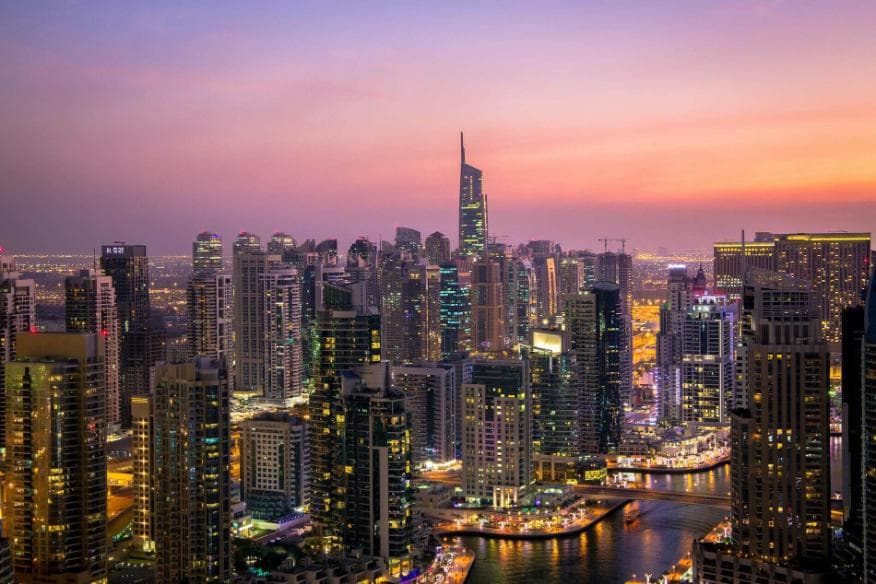
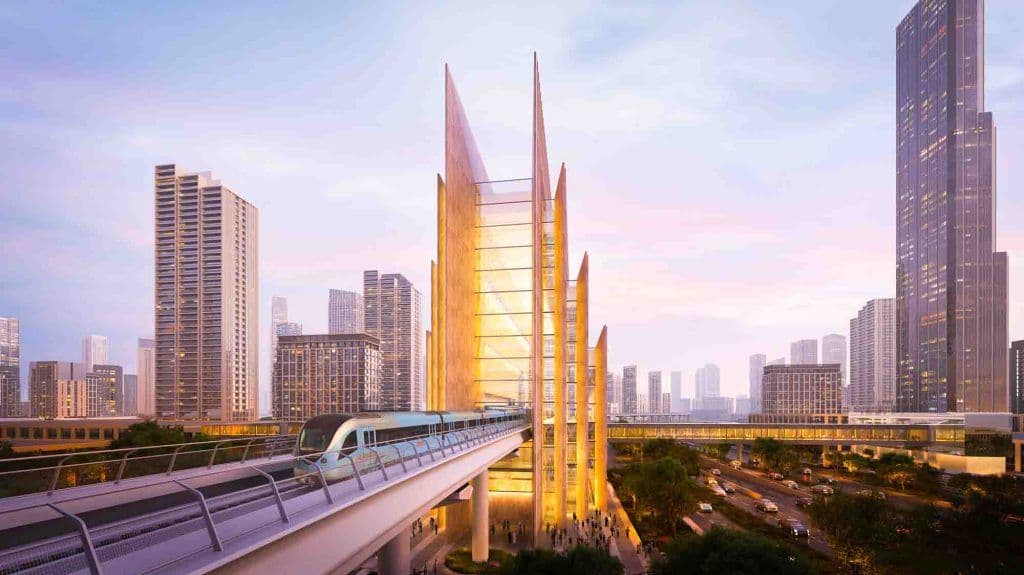
Dubai’s real estate market has never attracted more global attention, or more questions about where it’s heading next. As investors ask questions regarding the future of Dubai’s real estate market, 2025 is shaping into a defining moment: less about volatility, more about structure.
In this article, we unpack what the next phase looks like, from market fundamentals and investor sentiment to the structural forces and development pipelines shaping Dubai’s future. Whether you’re repositioning your portfolio or entering the market for the first time, the signals are clear: the next cycle will reward strategy, not speculation.
Dubai Real Estate in 2025: A Market Built on Strength
Where Things Stand Now
Dubai’s property market remains on firm footing as we move through 2025. In the first quarter alone, real estate transactions reached a total value of AED 114.4 billion, with over 42,000 individual deals recorded – a 23% year-on-year increase that demonstrates sustained investor interest across both off-plan and secondary markets.
Average prices are holding consistently at around AED 1,535 per square foot, reflecting a 2.8% rise quarter-on-quarter and approximately 16% annual growth. This signals a shift from the sharp price acceleration of previous years into a more stable, value-driven phase.
Rental performance remains healthy, supported by consistent tenant demand and long-term population growth. In Q1 2025, apartment yields reached an average of 7.3%, with rental rates across key districts climbing steadily – a key indicator of ongoing strength in the end-user market.
Supply, meanwhile, remains well-managed. Over 73,000 new units are scheduled for delivery in 2025, as part of a carefully phased pipeline of 300,000 homes projected through 2028. Developers are pacing launches intelligently, avoiding oversaturation and supporting asset performance across key price tiers.
From Rapid Growth to Sustained Momentum
Dubai’s property sector has transformed significantly since early 2021, with average capital values surging approximately 75% – a testament to strong fundamentals such as visa reforms, population growth, and economic diversification. Far from being speculative, this growth has been backed by tangible demand and thoughtful policy support.
One of the most significant fundamentals is population growth. Dubai’s population is projected to reach 7.8 million by 2040 – more than double today’s figure. This demographic trajectory is built into every phase of the city’s urban planning, reinforcing long-term capital appreciation and stable rental demand, particularly in villa communities and family-oriented areas where supply remains tight.
Developers are now intentionally phasing their launch and handover schedules to maintain market stability. According to Khaleej Times, only around 62% of the approximately 37,000 projected unit completions for 2025 are likely to reach delivery this year, with a similar approach planned for 2026. This deliberate pacing points toward confidence in investors looking for long-term returns rather than short-term speculation.
Even as the broader market matures, top-tier locations continue to attract end-user and investor demand – supported by limited supply, brand confidence, and lifestyle appeal.
Prime segments, including ultra-central communities and luxury villas, continue to perform exceptionally well. For instance, Palm Jumeirah villas saw a 7.8% quarter-on-quarter price increase in early 2025, while Downtown Dubai maintained over 90% occupancy in its apartment market. These high-demand areas illustrate how Dubai is evolving from rapid expansion to sustainable, quality-focused growth.
Supply vs Population Growth: Are We Heading for Oversupply?
With nearly 73,000 new homes expected in 2025 alone, and a projected 300,000 units scheduled through 2028, it’s fair for investors to question whether Dubai is at risk of oversupply. But the numbers tell a different story – one of measured growth, demand-driven expansion, and long-range planning.
Dubai’s population passed 4 million in early 2025, having more than doubled since 2008. Analysts forecast the city will reach 5 million residents by 2029-2030, with long-term projections of 7.8 million by 2040. That means over 1 million additional residents are expected within the next five years – translating into real, organic demand for housing across every price band.
To meet that demand, Dubai is projected to require approximately 300,000-500,000 additional housing units by 2030, depending on household formation rates and investor appetite. Against this backdrop, the current delivery pipeline looks not excessive – but essential.
Institutional reports acknowledge an uptick in supply over the next two years, with as many as 210,000 units entering the market. However, this expansion is occurring alongside carefully phased handovers, deliberate pacing from developers, and sustained rental growth averaging 8.5% in 2025. Importantly, capital remains disciplined: banks, developers, and regulators are working jointly to avoid speculative risk.
Rather than being driven by speculative oversupply, Dubai’s housing rollout is structurally tied to its population strategy – and to national initiatives like D33 and the 2040 Urban Master Plan, which anchor supply growth to infrastructure, mobility, and liveability outcomes. That coherence between planning and delivery is precisely what underpins Dubai’s continued investability.
Why Confidence Is High, But Questions Still Arise
What’s Fuelling Investor Curiosity
Dubai’s property sector continues to lead globally, but with that success comes scrutiny. As global media outlets circulate narratives of potential “cooling” or “slowdowns” in major real estate markets, investors are understandably asking: what’s next?
To be clear, these conversations aren’t driven by doubt. They’re driven by strategy, and a desire to understand the future of the emirate’s property market. Dubai has recorded some of the world’s strongest real estate returns over the past three years. That momentum has been exceptional, and naturally, investors now want clarity on timing, entry points, and whether further upside remains. It’s less about concern, and more about positioning.
What’s also worth noting is that local realities don’t reflect the global narrative. While headlines speculate about “overheating” in other markets, Dubai is seeing:
- High levels of occupancy in prime areas
- Ongoing rental yield strength
- Strong off-plan absorption, especially in master-planned communities
- Tight delivery control from developers
Put simply: the questions are valid, but the context is different.
We’ve Addressed the Big Questions Already
Earlier this year, we updated a full-length market piece titled Will the Dubai Real Estate Market Crash in 2025?, written to directly address the rising buzz around a potential correction.
The answer, supported by leading market data from Knight Frank, CBRE, Savills and others, delivered a confident and evidence-based answer:
No crash. No crisis. No cause for panic.
It was a retrospective view, looking at Dubai’s growth cycle, market structure, and regulatory backbone to explain why the foundations were stronger than ever.
This article is different – now we’re looking forward.
The fear-based questions have been answered. What investors need today is a clearer view of where the opportunity lies next, and how to capitalise on the future of Dubai’s property market with confidence.
A Calmer Pace, Not a Step Back
Normalising Doesn’t Mean Weakening
After three years of exceptional growth, Dubai’s real estate market is now moving into a more measured, sustainable phase – one that’s essential for long-term strength. Analysts are calling 2025 a “phase of stabilisation”, where investor activity remains high, but speculative heat has cooled.
This isn’t a slowdown, but more a sign of a confident, maturing cycle. Price growth is becoming more balanced, buyer activity is shifting toward quality stock, and developers are releasing projects more deliberately. The result is a more stable foundation for returns, with less volatility and stronger fundamentals.
Resilience Across Segments
Not all parts of the market are behaving the same, and that’s a good thing.
Segment-specific resilience is driving overall market health:
Off-Plan Demand Remains Strong
In April 2025, off‑plan transactions rose 77% year-on-year, totalling AED 46.2 billion – evidence of continued confidence in planned developments, especially within well-planned communities.
Developer Strategy is More Selective
Rather than flooding the pipeline, developers are timing launches around infrastructure delivery, absorption patterns, and segment demand. Projects linked to metro access, branded residences, and waterfront communities are seeing the fastest take-up.
Rental Income Remains Dependable
Despite moderating price growth, rental yields in Dubai continue to offer strong returns. Yields across key residential areas remain in the 5%–11% range, reflecting consistent tenant demand and demographic-driven stability.
Dubai’s market hasn’t stepped back – it’s stepped forward into a new, more sophisticated cycle. For investors, that means less speculation, more structure, and a clearer path to stable returns.
The Structural Advantage Dubai Offers
A Market Built for Long‑Term Confidence
Dubai’s real estate framework provides exceptional assurance for long-term investors:
Robust regulatory environment
Entities like RERA and escrow account systems ensure developers release funds only when construction milestones are met, significantly reducing risk.
Residency-Linked Demand
The Golden Visa and Retirement Visa programmes have attracted high-quality buyers. For example, purchasing property worth AED 2 million now qualifies international investors for a renewable five-year Golden Visa.
Policy and Vision That Supports Investment
Strategic economic and urban planning further solidifies the market’s appeal:
Visionary Frameworks
Initiatives like Dubai’s D33 economic plan and the 2040 Urban Master Plan are shaping a sustainable, investor-focused urban landscape.
Economic Diversification
Non-oil sectors now fuel Dubai’s economy, creating resilience against global volatility and underpinning stable property demand.
World-Class Infrastructure
High-end transport, education, and leisure investments boost investor confidence, drawing long-term capital and buyers.
Leading Globally on Investor Returns
Dubai consistently delivers impressive investor outcomes compared with other global cities:
Top-Tier Rental Yields
Dubai leads in rental performance, offering around a 7% gross yield vs 2-4% in cities such as London and New York.
Low Barriers, Low Taxes
With no income or capital gains tax, minimal land registration fees, and efficient transaction processes, Dubai remains highly accessible and financially attractive to investors.
Market Shifts Are Expected and Accounted For
Anticipating Adjustments, Not Risks
Dubai’s market isn’t sailing into the unknown. It’s responding to shifting tides in a controlled, predictable way. While global conditions like interest rate rises are always on the horizon, Dubai’s low reliance on mortgages and strong regulatory oversight mean these factors are tracked, not feared.
Dubai has benefited from long-term strategic planning since its modern real estate cycle began in the early 2000s. Rather than reacting in real-time, the city phases construction and new launches to match projected demand, ensuring that by 2027, inventory pipelines will align squarely with population growth and lifestyle needs.
Pacing, Not Pressure
Developers and market stakeholders continue to prioritise discipline over expansion. This is reflected in:
- Selective project timing aligned with community infrastructure rollout.
- High market liquidity, underpinned by varied investor types - expats, HNWIs, corporations.
- No signs of speculative froth - independent data confirms the market is built on fundamentals, not hype.
In short: Dubai is not slowing, it’s maturing. Intelligent pacing, not explosive growth, characterises its future.
What the Next 24 Months Could Look Like
Dubai’s market is no longer defined by boom-and-bust cycles. It’s being shaped by vision, structure, and precision. Over the next two years, a set of high-impact developments and institutional shifts will define where and how opportunity unfolds.
Landmark Developments Set to Reshape Dubai
Dubai’s skyline is gearing up for transformative projects that promise to define its future. Here are the key developments investors need to know:
Palm Jebel Ali Relaunch
Recognised as one of the emirate’s largest land releases, Palm Jebel Ali is being revived after its original development paused in 2008. With construction having resumed in 2024, Nakheel is targeting initial handovers by 2028 - a significant catalyst for coastal development and long-term demand.
Expansion of Master-Planned Zones
Areas like Dubai Islands (formerly Palm Deira) and Dubai South continue to benefit from infrastructure-led growth strategies aimed at unlocking entire communities – not just buildings.
Al Maktoum Airport: A Real Game-Changer for Dubai South
The AED 128 billion expansion of Al Maktoum International Airport (DWC) will support up to 260 million passengers annually, reshaping Dubai South into a major global business and residential hub. Sales in the area hit AED 15 billion in the first five months of 2025 alone, while rents jumped ~20%. Experts forecast 15-20% further value growth, driven by housing demand for over 1 million new residents and workers linked to airport-led job creation and infrastructure upgrades.
Expo City Dubai’s Residential Clusters
New neighbourhoods such as Sky Residences and Mangrove are bringing vibrant living spaces to the ‘expo corridor’, establishing a core growth corridor in the city’s southern region.
D33 & Dubai 2040: Planning the Future
Dubai’s next phase of real estate growth is being shaped by two powerful frameworks: the D33 Economic Agenda and the 2040 Urban Master Plan.
The D33 Economic Agenda, launched in 2023, aims to double Dubai’s economy over the next decade. It targets AED 32 trillion in total economic output by 2033, anchored by more than 100 transformative projects across innovation, infrastructure, digital trade, and tourism. This agenda is designed to position Dubai among the top three global cities for living and investment – and it’s already reshaping long-term real estate demand across both residential and commercial segments. Targets include AED 1 trillion in private sector investment, AED 650 billion in FDI inflows, and AED 100 billion annually from digital economy initiatives – all driving sustained end-user and business demand.
The 2040 Urban Master Plan complements this with a bold urban vision. It projects Dubai’s population to reach between 5.8 and 7.8 million by 2040, and outlines the infrastructure needed to support that growth – from housing supply to mobility, green space, and community design. Its headline initiative, the “20-minute city”, aims to make 80% of residents’ daily needs reachable by walk, bike or transit – reinforcing demand for well-planned, integrated communities. Against this backdrop, new housing supply is being phased in deliberately. Despite thousands of units in the pipeline, demand from net population growth – over 3.5 million more residents by 2040 – is expected to comfortably absorb upcoming stock.
Together, these frameworks provide a structured, demand-backed roadmap for growth – not just speculative expansion – and give real estate investors long-term confidence in the city’s direction.
DIFC and Commercial Core Expansions
DIFC 2.0 is adding approximately 13 million sq ft of mixed‑use development, cementing the precinct’s transformation into a global financial hub. This includes offices, retail, residential units, hotels, and leisure spaces – all designed to attract fintech, legal, and corporate services, reinforcing Dubai’s position in the global financial ecosystem.
At the same time, leasing demand in core commercial zones is skyrocketing. Dubai office rents jumped ~45% year-on-year in Q1 2025, with prime districts like DIFC, Business Bay, and Downtown leading the surge due to strong corporate relocations and executive housing needs. This surge reflects a growing influx of multinational businesses, startups, and finance firms.
Branded Residences Gain Institutional Traction
Dubai’s branded residence sector is rapidly maturing, changing from a niche luxury concept into a serious institutional-grade asset class. Global hotel and lifestyle names – including Marriott, Ritz-Carlton, Armani, Bugatti, and Cavalli – are anchoring major new launches, many of which are already under construction or actively selling in 2025.
According to The Wall Street Journal, branded buildings globally can command up to a 33% sales premium over non-branded properties. In Dubai, that premium reflects their prestige, outstanding amenities, and trusted operational standards – qualities that appeal strongly to long-term investors and high-net-worth individuals.
What’s driving this segment forward is its growing appeal to long-term investors. Beyond the brand appeal, offerings typically include five-star management, concierge services, and institutional-grade maintenance – features that enhance leasing yield and retention. For portfolio buyers, family offices, and income-focused investors, this adds a compelling layer of stability to the luxury space.
Dubai currently ranks as one of the top global markets for branded residence launches, with pipeline activity projected to increase through 2026 as international operators double down on demand.
Institutional & Corporate Investment Uptake
Institutional capital is playing a growing role in shaping Dubai’s real estate future. Through sovereign wealth funds, pension schemes and global REITs, large-scale investors are allocating capital to the city’s property sector at increasing scale.
The Investment Corporation of Dubai (ICD), the emirate’s sovereign wealth fund with over US $320 billion in assets, maintains active real estate exposure – signalling long-term confidence from the highest level. Globally, pension funds and corporates are turning to Dubai for its relative yield stability, tax neutrality, and consistent income potential.
What sets this segment apart is the investment horizon. Institutional capital typically operates on 5-7 year hold strategies, reinforcing liquidity, reducing volatility, and contributing to a more disciplined, fundamentals-driven cycle.
This isn’t just capital flow on paper – Dubai is seeing a sharp rise in real-world business activity. DIFC now hosts 85 hedge funds (up from 50 in 2024), and over 440 asset and wealth firms, while Dubai’s wider business ecosystem supports over 200,000 registered companies, including 56% of the Fortune 500. In the last year alone, over 20,000 new businesses were established, with up to 8,000 launching monthly. Commercial property transactions mirror this surge, with a 271% MoM jump in July 2025, reflecting confidence in both Dubai’s infrastructure and long-term economic positioning.
Dubai is no longer just a tactical play. It’s becoming a structured part of long-term global real estate portfolios, and that shift is helping stabilise and future-proof the market.
Regulatory & Financial Market Tailwinds
Dubai’s property market is gaining momentum from a range of structural and regulatory enhancements that promise greater resilience and appeal over the coming 24 months:
Green finance is gaining traction
Banks across the UAE are introducing green mortgage products and ESG-linked financing. These instruments encourage sustainable building practices and align with international investment mandates.
Regulatory oversight is tightening
Dubai authorities are updating governance standards, with new resale monitoring and stricter project viability rules. This strengthens transparency and investor confidence.
Digitalisation is accelerating speed and clarity
The DLD’s ongoing rollout of blockchain-based title and transaction platforms is automating processes around property registration, leases, and utility connections. This significantly enhances transactional speed and reduces friction for both buyers and owners.
Sustainability & PropTech are Thematic Drivers
Environmental and technological themes are no longer peripheral to Dubai’s property market. They’re fast becoming central pillars of future growth and asset performance.
Sustainable design is now baseline, not bonus. Major upcoming launches are integrating LEED-certified infrastructure, energy-efficient architecture, and IoT-powered smart systems as standard features. Projects like The Sustainable City – Yiti in Oman (by Dubai-based Diamond Developers) are exporting this model regionally, reflecting its viability and future relevance.
ESG alignment is influencing investment flows. As institutional capital continues to prioritise environmental and social benchmarks, Dubai-based developers are responding by launching impact-conscious communities that command stronger long-term valuations.
PropTech is reshaping tenant expectations. Smart building features – including automated climate controls, and centralised digital concierge services – are now essential in the luxury segment. Communities lacking these features risk obsolescence, particularly among tech-native buyers and renters.
With regulatory encouragement and rising consumer demand, Dubai’s next generation of real estate is being built with sustainability and technology at its core, reinforcing the emirate’s competitive edge well beyond 2025.
Diversification of the Buyer Base
One of the defining strengths of Dubai’s real estate market heading into 2026 is the breadth of its global buyer mix – a feature that’s increasingly shaping both demand stability and investment momentum.
Emerging markets are on the rise. Investor activity from South Asia, Eastern Europe, and North America has grown markedly in the past 18 months, now contributing a sizable share of transaction volume in both off-plan and resale segments.
Established buyer blocs remain active. Gulf-based investors and Western European buyers continue to provide foundational demand, particularly across villa communities and high-yield apartment zones.
This expanded base is a strategic advantage. A wider geographic spread of capital inflow reduces the market’s exposure to localised economic headwinds or regional policy shifts. It also makes Dubai more responsive to global investment cycles – a key differentiator as the emirate seeks to sustain long-term growth through 2026 and beyond.
What This Means for Future Investors
Dubai’s market is no longer one to chase – it’s one to position into. For investors looking beyond headline growth to long-term value, the opportunity is clear: a maturing, globally integrated real estate landscape built on consistency, structure, and smart capital flow. Here’s how to read the moment, and act.
Dubai Isn’t Slowing - It’s Strengthening
The city’s real estate cycle has entered a new era. Volatility is giving way to predictability. Supply is being phased deliberately. Investor activity is more targeted and returns are anchored in fundamentals, not hype.
Today’s value lies not in chasing price spikes, but in understanding when, where, and how to invest. Market conditions favour those who are selective, not speculative, and who recognise that the emirate’s future is being shaped by planning, policy and deepening global demand.
While many global cities face affordability crunches or cooling markets, Dubai continues to buck the trend. Luxury homes in Dubai cost around $438 per square foot – well below London ($1,480) and New York ($1,700) – yet deliver yields as high as 7%, compared to 2-4% in those cities. Forecasts for 2025 put Dubai’s prime housing growth at 8-9.9%, outpacing the global average of just 1.6%. The city’s rising financial centre status – ranking 12th in the Global Financial Centres Index – underscores its ongoing global pull. For investors, this means Dubai offers both outperforming returns and resilient positioning amid global uncertainty.
How to Stay Ahead
Strategic investors are sharpening their focus. Here’s where attention is shifting:
Track supply at the Community Level
Understand how delivery timelines, infrastructure rollouts, and inventory phases intersect.
Prioritise Yield Over Noise
Especially in prime zones, visa-linked communities, and phased off-plan launches.
Get Aligned With Expert Guidance
Timing, financing, and portfolio mix matter more than ever in a maturing cycle.
Dubai’s next phase is about positioning. Investors who adjust their strategy accordingly are poised to lead the next cycle.
Where to Learn More
For deeper context, revisit our January 2025 market outlook – a data-led analysis that set the tone for this year’s trajectory.
For more information, explore our:
- International investor guides on regulation, residency, and strategies
- Location insights for key communities
- Latest market reports for timing-driven decisions
Talk to our team today – we’ll help you decide where to invest in Dubai’s future real estate market.
