Yes, some waterfront addresses in Dubai carry a price and lifestyle premium, but the available figures do not establish a universal markup over inland homes. At the top end, the premium is capital and lifestyle, not income: buyers pay for the setting, access to the water and personal use, while rental performance depends heavily on property size and location. The honest answer to whether Dubai waterfront property outperforms inland communities is that current figures do not prove consistent outperformance in either prices or rents.
1. Supply: Different waterfronts, different markets
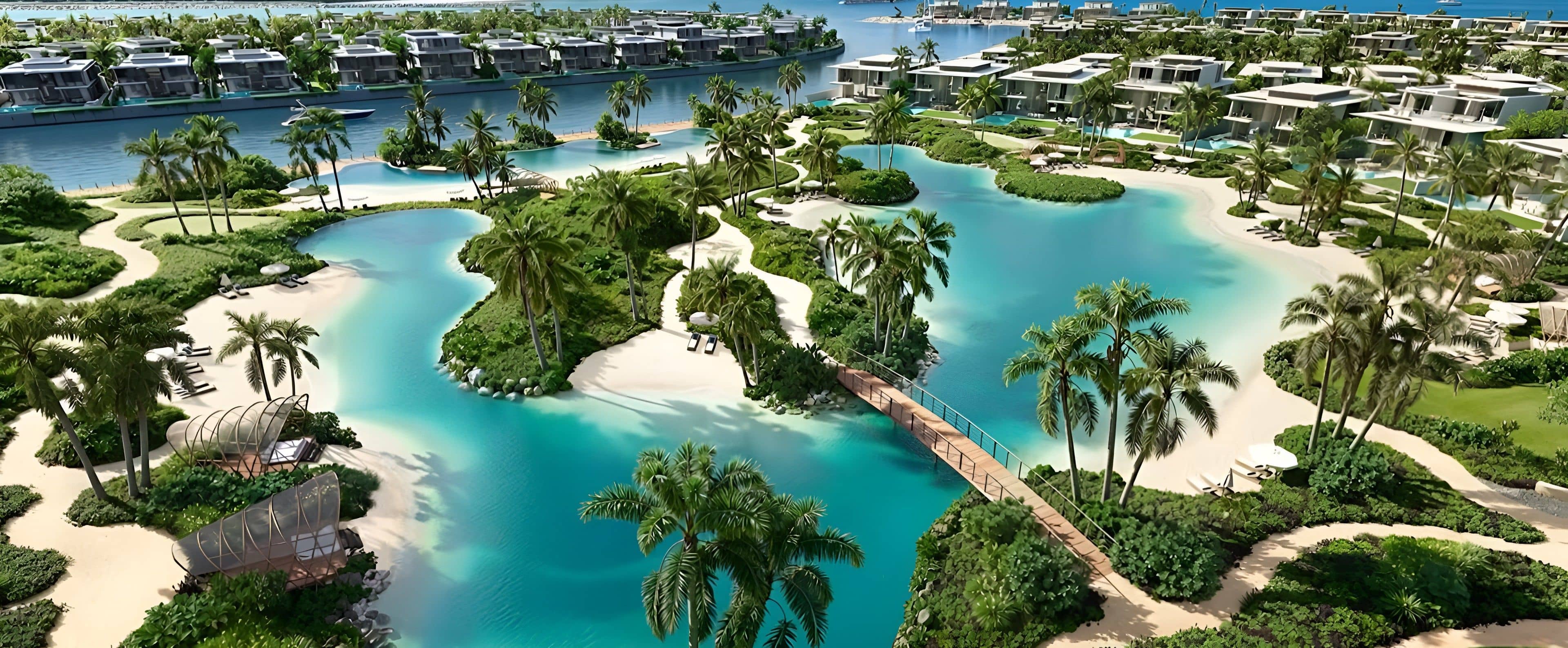
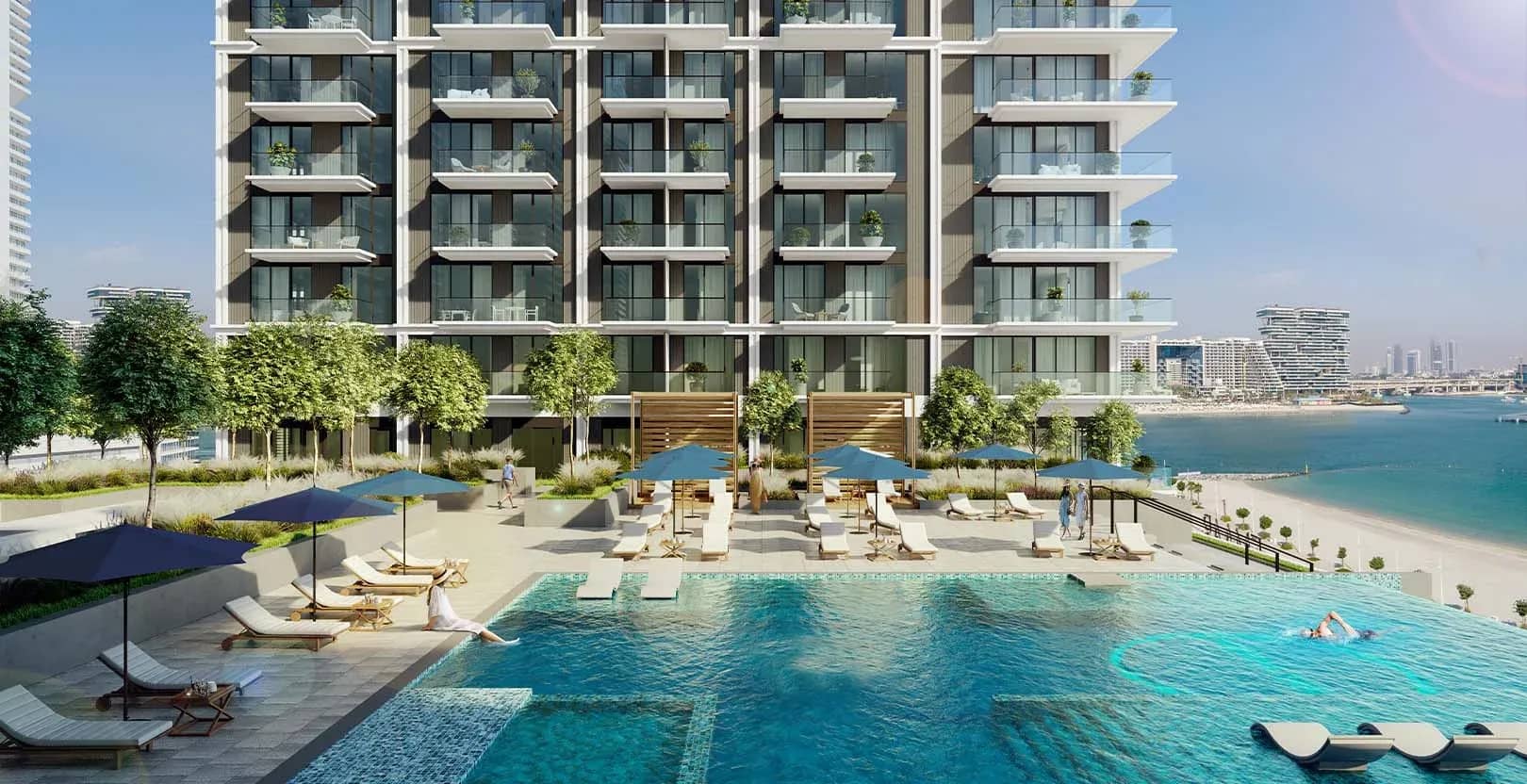
Dubai’s waterfront market is not one uniform category. It includes beachfront residences, marina apartments, villas and canal-side homes, with established addresses and newer developments offering different settings and ownership propositions. A sea view, a beach on the doorstep and a home beside a marina are not interchangeable features, and should not be valued as if they were.
For a starting point, compare the established island setting of Palm Jumeirah with the apartment-led waterfront district of Dubai Marina. Emaar Beachfront offers another beachfront context, while Dubai Islands, Palm Jebel Ali, Dubai Harbour and Rashid Yachts and Marina each represent distinct locations to assess on their own merits.
There is no single price premium to apply across these locations. The value of a specific home depends on its precise position, outlook, building or developer, layout and likely resale audience. Treat “waterfront” as a starting description, not a substitute for comparing similar homes in the same neighbourhood.
2. Price history: strong prime-market figures, but not a waterfront index
Dubai’s prime market recorded significant activity, but broad luxury figures should not be mistaken for waterfront-only results. Knight Frank’s 2026 Wealth Report records 500 Dubai home sales above USD 10 million in 2025. The report also puts Dubai prime residential price growth at 25.1% in 2025. These figures indicate activity and price movement at the prime-market level, not the performance of beachfront or waterfront homes alone.
Dubai Land Department data for Q1 2026 records AED 87.71 billion in luxury real estate, up 26% year on year. This is the DLD’s luxury segment, not a waterfront-specific total, so it cannot show that a waterfront home gained value faster than a comparable inland one.
For buyers asking whether beachfront homes are outperforming inland communities, the evidence supports a measured answer: not conclusively across the board. The cited data does not provide a like-for-like inland comparison or a standalone waterfront price history. A buyer should therefore test a property against comparable homes in its own location, rather than assume the view guarantees stronger capital growth.
3. Resilience: amenities matter, but scarcity is not a price floor
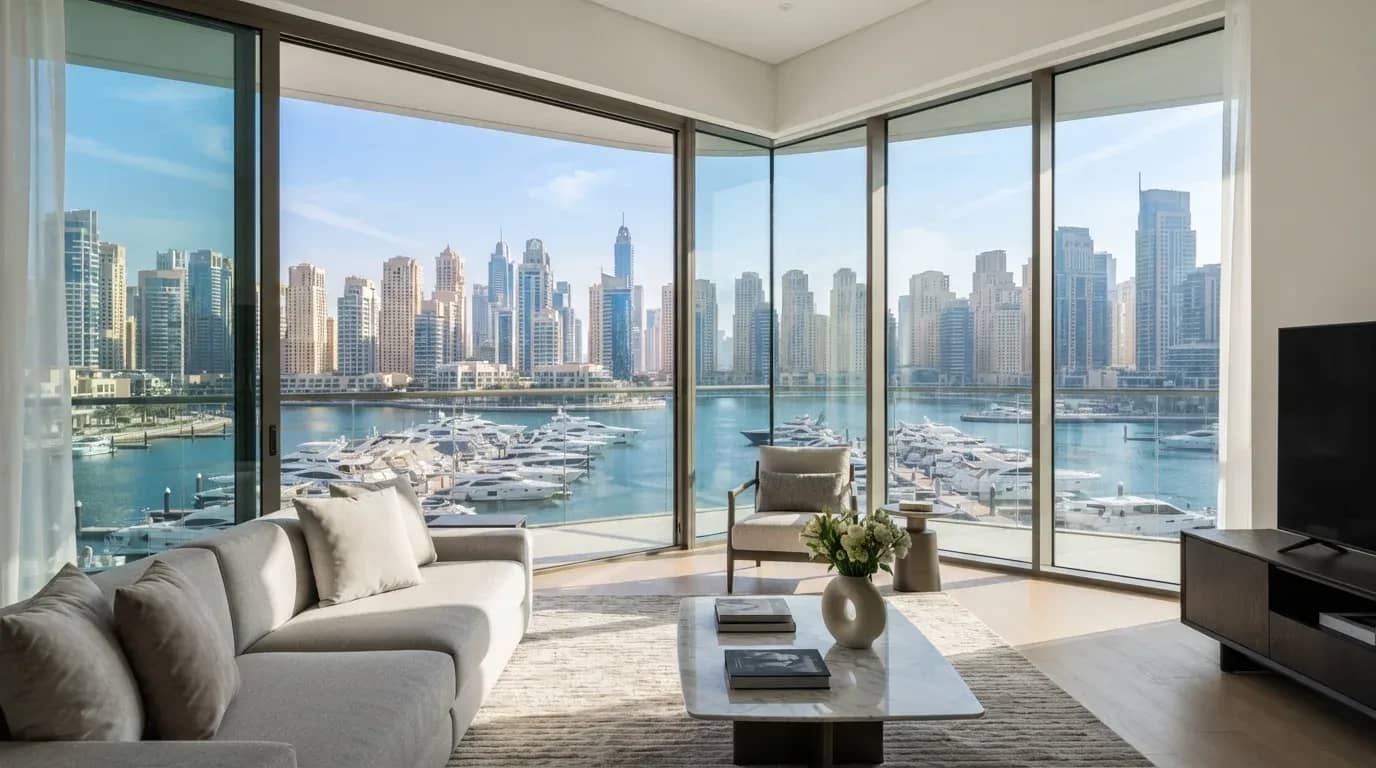
Waterfront appeal can persist because the setting is part of the home itself. Direct water access, open views and the character of a particular address can be difficult to replicate in a different neighbourhood. That can support buyer interest, but it does not remove the need to assess the purchase price, future competition, building quality and resale demand.
Dubai’s 2040 Urban Master Plan aims to increase public beach length by 400%. That is a significant commitment to public access, but it also weakens a simple scarcity argument: more public beach does not automatically make private beachfront property scarcer or protect its price. The plan also identifies Dubai Marina and JBR as one of five urban centres, signalling a role for the area within Dubai’s wider development strategy.
Resilience is best judged at the level of the individual asset. Consider what the home offers beyond the shoreline, how the surrounding area is expected to function, and whether the property remains appealing without relying on a scarcity story. Waterfront can be a meaningful part of a long-term ownership case, but it is not a guarantee against price changes.
Twelve chapters on what the regional war tested, the balance sheet and dollar peg behind the market, and how to pick the right side of this cycle.
Download free→4. Rent: the address alone does not determine the yield
Global Property Guide’s Q2 2026 gross asking-yield figures show a clear difference by property size. On Palm Jumeirah, the reported yields are 8.16% for studios, 7.34% for one-bedroom homes, 3.72% for two-bedroom homes, 2.87% for three-bedroom homes and 1.32% for homes with four or more bedrooms. For Dubai Marina, the figures are 6.12% for one-bedroom, 5.40% for two-bedroom and 5.27% for three-bedroom homes, compared with a Dubai average of 5.53%.
These are gross asking yields, not net returns after costs. The comparison shows why a smaller waterfront apartment may work as an income asset, while a large home can be more difficult to justify on rent alone. At the top end, buyers are more often paying for the property’s setting, space and personal use than for income performance.
One worked comparison: Palm Jumeirah apartments
The following supplied illustration compares a one-bedroom and a three-bedroom home. Global Property Guide’s Q2 2026 gross asking-yield data provides the yield reference for Palm Jumeirah; the purchase and rent figures below are the inputs for this example.
- One-bedroom purchase price: USD 612,700 × 3.6725 AED per USD = AED 2,250,141.
- One-bedroom annual rent: USD 3,750 per month × 12 = USD 45,000; USD 45,000 × 3.6725 = AED 165,263 a year.
- One-bedroom gross yield: AED 165,263 ÷ AED 2,250,141 × 100 = 7.34%.
- Three-bedroom purchase price: USD 3,458,100 × 3.6725 AED per USD = AED 12,699,872.
- Three-bedroom annual rent: USD 8,280 per month × 12 = USD 99,360; USD 99,360 × 3.6725 = AED 364,900 a year.
- Three-bedroom gross yield: AED 364,900 ÷ AED 12,699,872 × 100 = 2.87%.
The comparison makes the trade-off plain: in this illustration, the smaller apartment produces a stronger gross yield, while the larger residence is more reliant on capital value and owner use. Actual results depend on the property and its costs, and gross yield should not be treated as take-home income.
5. Launch dynamics: assess the home, not the launch-day narrative
A launch price is only one part of an investment decision. For an off-plan home, assess the developer’s record, the exact position within the project, the proposed outlook, the payment schedule, delivery risk and the range of competing homes expected to reach the market. For a completed property, examine its condition, service charges, rental history and likely resale audience.
For international luxury buyers considering waterfront villas, the appeal often combines direct water frontage, privacy, views, outdoor space and a recognisable address. A villa may also serve as a personal residence, which can make its value to the owner more important than its rental yield. That is a legitimate reason to buy, but it should be distinguished from an income-led investment case.
M&M Real Estate’s waterfront advisory considers factors such as micro-location, developer track record, product differentiation and liquidity at exit. Its Bay Estate investment case is one example of a project-specific assessment. The same discipline applies to any launch: compare the home with relevant alternatives and decide what would support demand when it is time to sell or rent.
Conclusion: pay for the features you value, not an assumed premium
Dubai waterfront homes can offer a distinctive ownership proposition, but the investment case varies sharply by location, size and intended use. Available figures show that some smaller waterfront apartments can produce competitive gross yields, while larger prime homes often rely more on capital and lifestyle value. They do not establish blanket price outperformance over inland communities.
Compare like with like, separate gross rent from net income, and test any claimed premium against the property’s location and likely exit market. To assess a specific purchase, speak with M&M Real Estate about the property, your objectives and the risks that matter to you.