

A post handover payment plan Dubai buyers consider can spread part of an off-plan property’s price beyond handover, reducing the cash needed on that date. The trade-off is a payment commitment that continues after you receive the property, and it may come with a higher purchase price than paying sooner.
- A post-handover plan leaves part of the purchase price payable after the property is handed over. The Sales and Purchase Agreement (SPA), not the marketing label, sets the real schedule.
- A plan may split the price between payments before and after handover; the contract sets the amounts and dates.
- Compare the full SPA price and every financing charge, not just the amount due on handover day.
- Test each installment against income, current debt, service charges, and a separate reserve for unexpected costs.
- A payment plan can preserve cash at handover, but it does not remove project, market, or personal-income risks.
How a post-handover plan works
A post-handover plan is an off-plan payment schedule that leaves part of the outstanding purchase price to be paid in installments after the property is handed over. A standard schedule may require the full remaining balance at handover, so the critical question is not what the plan is called, but how much remains due afterward.
Most schedules move through the same broad stages: booking or down payment, installments tied to construction, an amount due at handover, then payments over the agreed post-handover period. The exact dates and triggers vary by contract, so map them from the SPA rather than relying on a sales summary.
A split label alone does not show when the later portion is due; check the schedule in the contract.
A plan label does not establish the total price or complete terms; a payment is post-handover only if it falls due after handover.
To verify an offer, identify the amount due on handover and the exact dates, amounts, and conditions for every later installment in the SPA. The off-plan guide to payment mechanics explains that some developers spread a 30% balance over 12 to 36 months after the buyer receives the property; those plans carry a slightly higher price and reduce the amount of capital concentrated at handover.
Compare the payment plan with a mortgage
Compare a developer’s post-handover schedule with a mortgage and with paying the balance at handover. Each route changes who you owe, when cash leaves your account, and what conditions apply.
| Comparison point | Developer post-handover plan | Mortgage | Paying the balance at handover |
|---|---|---|---|
| Who is owed | The developer, under the SPA. | The bank, under the loan agreement. | No lender or developer balance remains if you pay the full amount due. |
| When payments fall due | On the dates or milestones in the SPA, including after handover. | On the bank’s repayment schedule, subject to its loan terms. | A large payment falls due at handover. |
| Potential financing costs | The agreed price may be higher; the contract may also set charges or fees. | Interest or profit charges, fees, and other loan costs may apply. | No borrowing cost on the balance paid with your own funds, but ownership and handover costs remain. |
| Eligibility or conditions | The developer’s offer and SPA terms apply. | Bank approval, eligibility, and loan conditions apply. | You need enough available funds to meet the amount due. |
| Main cash-flow exposure | Installments continue after possession, alongside property costs. | Regular repayments continue to the bank, alongside property costs. | Liquidity drops sharply at handover. |
Spreading developer installments does not automatically make the property cheaper. Compare the full SPA purchase price and all charges over the full term, rather than comparing only the amount payable on handover day.
A mortgage funds some of your payment obligation through bank borrowing, so assess its charges, required repayments, fees, and eligibility separately from the developer schedule. A lower developer installment does not tell you whether a mortgage is affordable or available to you.
Build the complete cash requirement for each route. Include the down payment, construction installments, handover expenses, service charges, any financing costs, and a reserve for unexpected expenses.
For a sense of the off-plan opportunities available to assess, review the Dubai off-plan property selection, then compare each candidate’s written payment terms with its total cash requirement. A listed construction schedule alone does not establish that payments continue after handover.
Work out whether the installments are affordable
Build a month-by-month cash-flow calendar from booking through the final installment. Put the developer’s payment dates beside income, existing debt payments, major commitments, and any expected change in earnings.
Then test the schedule against less favourable conditions: a delayed handover, slower rental start, vacant periods, unexpected property expenses, or a fall in personal income. If the plan works only when everything goes to schedule, it puts too much pressure on your finances.
If you intend to rent the property, use a realistic occupancy date rather than counting on rent from handover day. Allow for vacant periods, operating costs, and service charges before estimating how much rent remains available for installments.
Keep an emergency reserve separate from the money earmarked for the payment schedule. That reserve gives you room to manage an income gap or unexpected bill without missing a developer payment or being forced to sell in a hurry.
What foreign buyers get wrong in Dubai off-plan, what each mistake costs, and exactly what to do instead.
Download free→Weigh the leverage against the premium and risks
The main cash-flow benefit is straightforward: a post-handover schedule can reduce the lump sum needed at handover and may allow you to occupy or rent the property while the balance remains due. Your right to use the property depends on the SPA and applicable requirements.
That timing benefit has a price. Compare the plan’s total payable amount with the property price and financing costs under other routes; a deferred schedule can come with a higher purchase price, so a lower upfront requirement is not proof of a cheaper deal.
Read the SPA for interest or other charges, administrative costs, late-payment penalties, default remedies, early-settlement terms, and the consequences of missing an installment. A plan is not automatically interest-free just because the marketing material does not emphasize a financing charge.
Assess the project and your own exposure as well. Completion timing, handover, market movement, and changes in your personal circumstances can all affect whether you remain comfortable with payments after taking possession.
Our investment cases set out project considerations and payment structures for comparison. Use Market Intelligence to look beyond a headline split: the schedule, total price, handover timing, and your likely holding period all matter.
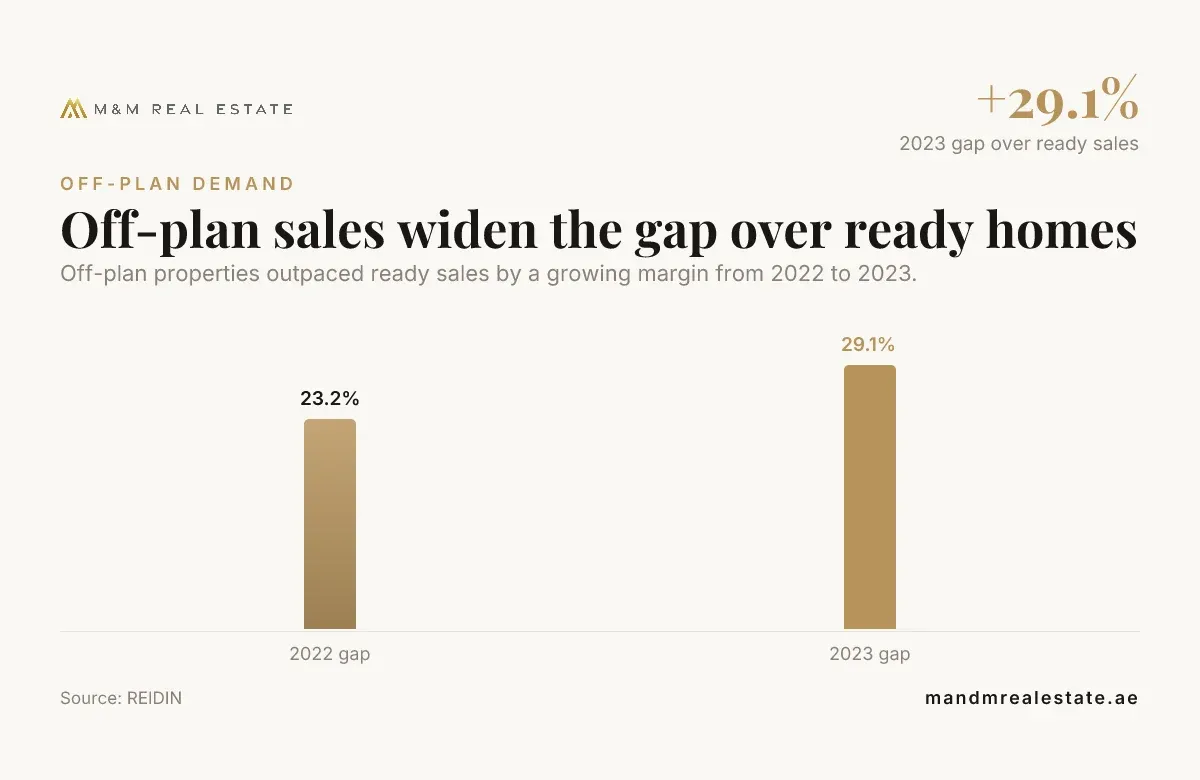
Source: REIDIN
Review the SPA, handover and ownership conditions
Check what triggers each payment, how the SPA defines handover, and when the post-handover period begins. The agreement should let you identify whether installments fall on fixed dates or depend on another event.
Review early-settlement rules, late-payment consequences, default remedies, and any fee or condition attached to changing the arrangement. Also establish whether you may occupy or rent the property while installments remain and which service charges you must pay.
Resale consent and transfer conditions deserve the same attention. Confirm the conditions for transferring or refinancing while a developer plan is active, including any requirements involving title or ownership documents and a mortgage.
For an off-plan purchase, also understand how payments move through the project’s escrow account and what conditions govern withdrawals. Our Dubai property guides and resources offer further context for your contract review.
Who may suit a post-handover plan?
A post-handover payment plan may suit a buyer with reliable future cash flow who can meet installments without depending on immediate rental income or a future resale. It can also help a buyer who wants to avoid a large handover payment and accepts the commitment that continues after taking possession.
That liquidity benefit must justify the price and the duration of the obligation. Buyers with uncertain income, high existing debt, or no reserve for vacancy and unexpected costs should be cautious about carrying a long installment tail.
Choose between a developer plan, a mortgage, and paying in full only after comparing the total cost, cash-flow resilience, contract flexibility, and likely holding period.
A post handover payment plan Dubai buyers consider can be useful leverage when it preserves cash for a clear purpose and the later installments remain affordable under realistic conditions. It becomes a hidden premium when a lower handover payment distracts from a higher total price, restrictive terms, or obligations that outlast your income plan.
Read the SPA, map every payment, and compare the full cost with a mortgage and a handover balance payment. If you want to discuss the numbers with a real person, contact our advisory team.
Can you sell a Dubai property before completing its post-handover payments?
It may be possible, but the SPA and the developer’s transfer conditions control the process. A sale can require developer consent or settlement of specified dues before the buyer can complete the transfer.
What happens if you miss a developer installment after handover?
The response depends on the SPA, which may set notice periods, late-payment charges, and remedies for continuing default. Keep written records of payment communications and follow the contract’s formal process if a payment problem arises.
Can you use a mortgage or refinance while a developer payment plan is active?
That depends on the bank’s lending criteria, the property’s ownership documentation, and the developer’s terms. Ask the bank and developer to explain how any outstanding balance would be treated in the proposed financing.
How long does handover of a new flat in Dubai take?
There is no single handover duration that applies to every project. The developer’s completion process, inspection arrangements, and required paperwork affect when a buyer can take possession, so distinguish the scheduled completion date from the contractual handover trigger.
Can a buyer rent out a property while still paying the developer?
Rental may be allowed, but the SPA and applicable occupancy requirements determine whether and when you can let the property. A landlord also needs to account for tenancy registration and ongoing responsibilities to the tenant.


