


We assess which buyers will pay more for a premium Dubai villa address, and whether that premium earns its place in the decision. The answer starts with real priorities: privacy, access, plot position and the kind of home you want to live in or resell.
- Judge the address and the villa separately. A respected neighbourhood cannot make a poor plot, awkward layout or neglected property a sound purchase.
- Compare completed sales. Asking prices show what sellers hope to achieve, not what buyers have paid for comparable villas.
- Match the community to the buyer. Owner-occupiers, second-home buyers and investors value privacy, amenities and resale liquidity differently.
- Calculate the cost of ownership. Include purchase fees, financing, service charges, maintenance, insurance and cooling, not only the headline price.
- Assess a new development on its terms. Our guide to buying off-plan property explains the points buyers should weigh alongside the payment plan.
- Check location and buyer eligibility. Use our Dubai and Abu Dhabi locations to compare communities, then verify ownership rights for the specific property.
What does an address premium actually buy?
An address premium is the extra amount a buyer accepts for a location’s combination of access, privacy, setting and community character. It only makes sense when those qualities matter to that buyer and the property’s condition, plot and layout support the price.
For an owner-occupier, the premium may mean a shorter daily trip, a quieter street or convenient access to schools and community facilities. A second-home buyer may pay more for a distinctive waterfront setting, while an investor needs evidence that tenants or future buyers will value the same features.
We do not treat a famous neighbourhood name as proof that a villa is fairly priced. Compare homes with similar plot positions, views, build quality and renovation needs, then consider what the address adds on top.
That distinction is especially important in coastal communities. A villa with direct access to the water, a protected view or greater privacy can appeal to a different buyer from one with a similar floor plan on a less exposed plot.
Compare villa locations by access, privacy and setting
Two communities can both offer gated streets and attractive homes, yet serve very different routines. Visit at the times you expect to travel, assess the route to work and schools, and consider how far daily services sit from the villa.
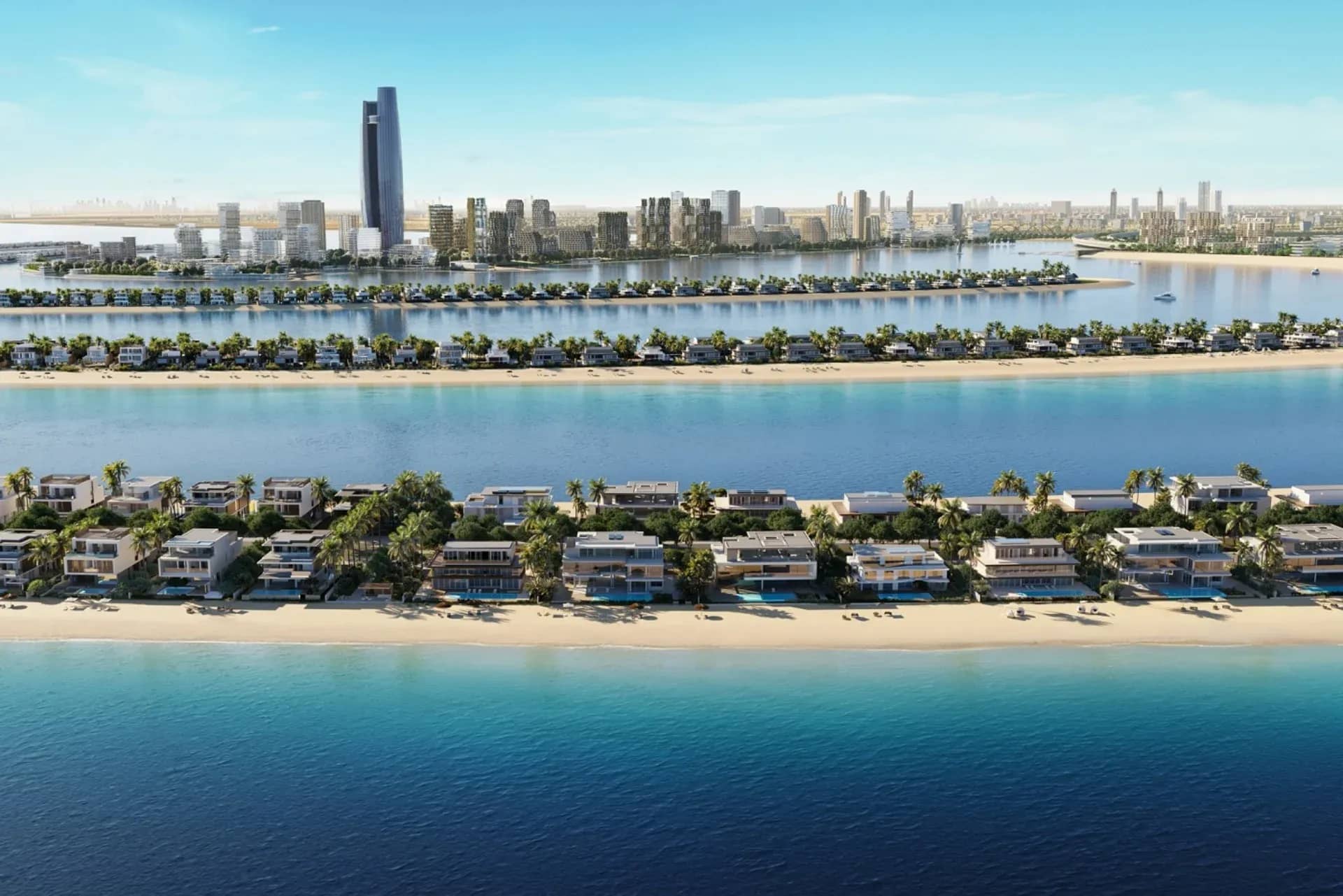
Palm Jumeirah is a globally known address with beachfront villas on its fronds. Palm Jebel Ali presents a different proposition as a developing coastal community, where buyers need to weigh the planned setting against the day-to-day convenience they need now.
Family-oriented communities call for another comparison. Arabian Ranches and Dubai Hills Estate appeal to buyers looking for a neighbourhood environment, but a villa’s exact position, street, access to shared amenities and maintenance condition still shape its individual value.
Our area comparison for Dubai property buyers can help frame the location decision. We also look beyond the community name: traffic routes, school runs, nearby retail and the quality of shared spaces affect whether a home suits its next owner.
Choose a villa layout that works beyond the viewing
Bedrooms alone do not tell you whether a villa fits a household. Think about how people use the shared living areas, whether guests need privacy, where work or study happens, and how the outdoor space connects to the home.
Plot position changes that experience. A corner plot may offer more separation from neighbours, while a waterfront edge or open outlook can shape both privacy and daily use. Examine the villa’s orientation, sightlines, access points and the condition of its structure and finishes.
Large villas can serve extended families or buyers who entertain often, but additional space also brings more upkeep. A compact household may prefer a smaller, well-planned home in a location that makes everyday routines easier.
For a more individual design, La Mer Villas offers an example of a beachfront villa project. Buyers comparing new coastal homes can also review Palm Jebel Ali Villas as a separate community and development proposition.
Test the address premium against completed sales
To test whether an address premium is supported, compare recorded sales of genuinely similar homes in the same community. Match the plot position, view, layout, build quality and condition as closely as possible, and use sales from a relevant period rather than a seller’s asking price.
Separate the value of the wider neighbourhood from the value of the individual villa. A well-known address can support demand, but a compromised view, costly renovation or unusual layout may reduce what buyers will pay for that particular home.
Look for a pattern across comparable transactions rather than relying on one exceptional sale. If the evidence is thin, treat the premium as a decision about personal value and resale risk, not as a proven investment advantage.
That approach also helps identify the likely resale audience. A home with practical access, appealing privacy and a layout that suits several types of household can attract a broader pool of future buyers than a highly specialised property.
Twelve chapters on what the regional war tested, the balance sheet and dollar peg behind the market, and how to pick the right side of this cycle.
Download free→Compare ready villas with off-plan purchases
A ready property lets you inspect the actual home, plot, outlook and surrounding streets before committing. It can suit an owner-occupier who wants to move in soon or an investor who values evidence from existing rental and resale activity.
An off-plan property shifts the decision towards the developer, contract terms, payment schedule, delivery progress and the future character of the community. A payment plan can help structure cash flow, but it does not remove construction, timing or resale risk.
When assessing a new launch, consider the home and the wider development together. Our Dubai developer profiles can support due diligence, while our off-plan buying guide sets out the questions to raise before you reserve.
We also advise buyers to review the contract’s milestones, assignment conditions, completion provisions and remedies. Compare these with your own timeline and financing plan to assess whether the purchase is suitable.
Budget for the full cost of ownership
A villa’s purchase price is only part of the commitment. Build a full budget that includes transfer fees, any No Objection Certificate charge, mortgage registration and lender costs, plus ongoing service charges, maintenance, insurance and cooling.
Costs vary by property and community. Ask for the applicable service-charge basis and expected maintenance needs, then consider whether the home’s size, pool, garden and shared facilities fit your tolerance for upkeep.
Here is one worked example using the AED 2 million property threshold in our Dubai Golden Visa property guide and the 4% transfer fee described in our Dubai property tax guide:
- Start with the AED 2,000,000 threshold in our Dubai Golden Visa property guide.
- The La Mer Villas page lists a starting price of AED 330,000,000.
- Subtract the lower starting price from the higher one: AED 330,000,000 - AED 18,000,000 = AED 312,000,000.
This example illustrates the transfer fee, not the full cost of ownership. For an ownership budget, add the property-specific purchase and running costs to the price, then compare the resulting total with your own financial plan.
For investment decisions, our guides to rental yields and ownership costs and property tax considerations help frame the wider calculation. Also account for vacancy, maintenance between tenants and the likely audience when you eventually sell.
Check ownership rights and the purchase process
Dubai ownership rights vary by location and title. Confirm whether the property is freehold or leasehold, whether your buyer status permits the intended ownership, and what the title and sale documents say about the plot and property.
Local and overseas buyers should review the same fundamentals: title, seller authority, outstanding charges, contract conditions, financing arrangements and transfer steps. Overseas buyers should also plan how they will sign documents, manage payments and handle property oversight from abroad.
Mortgage buyers should agree their financing approach early and factor valuation, lender requirements and mortgage registration into the transaction plan. Cash buyers still need a clear transfer process and a full record of the funds and documents required to complete.
Our Dubai property resources bring practical guidance together, while our Dubai real estate investment guide helps investors connect the purchase with their wider portfolio strategy.
Decide whether the address fits your buyer profile
Owner-occupiers should give daily convenience, schools, privacy and community facilities more weight than a prestige label. The right address is the one that supports the household’s routine without forcing compromises that become tiring after the viewing.
Second-home buyers may accept higher upkeep for a distinctive setting, but should plan for periods when the villa sits empty. Consider who will oversee maintenance and how easily the property can be reached when you are away.
Investors need to test rental demand, likely vacancy, ongoing expenses and resale liquidity. A highly exclusive community may appeal to a smaller buyer pool, and its value can depend more heavily on the quality and management of shared facilities.
That is a more useful starting point than assuming a famous address guarantees demand.
Property ownership may form part of a residency application route when the buyer and property meet the relevant conditions. A purchase alone does not guarantee residency, so read our Dubai Golden Visa property guide before building residency assumptions into your decision.
Does a villa’s plot area tell me how much garden I will have?
Not by itself. Setbacks, built structures, access routes, pools and landscaping all affect usable outdoor space, so compare the site plan with the actual garden and the areas you expect to use.
What should an overseas buyer arrange before travelling to view villas?
Prepare a shortlist of communities, confirm your financing route and organise the documents you will need for identity and funds checks. A focused viewing schedule also makes it easier to compare each home against the same criteria rather than relying on memory after several appointments.
Can an investor rely on a future resale to fund an off-plan purchase?
That approach depends on the contract’s resale or assignment terms, market demand and the buyer’s ability to meet payment obligations if a resale takes longer than planned. Build a plan that remains workable without assuming an early exit.
See also: Off Plan Properties in Dubai.
The buyer who should pay for a premium Dubai villa address is the one who can identify what that location adds, whether for daily life, a second home or an investment plan. We compare the address with the plot, home, completed sales and total ownership costs before deciding whether the premium is justified.
That is the real test behind premium villas in Dubai: not whether the neighbourhood name sounds important, but whether the property and its setting fit the buyer who will own it next.

Who owns the most expensive villa in Dubai?
A price alone cannot establish who owns Dubai’s most expensive villa. First distinguish a seller’s asking price from a completed transaction, then rely on verified ownership information rather than speculation about a private buyer.
Have villa prices dropped in Dubai?
There is no single answer that applies to every Dubai villa: prices can move differently by community, plot and condition. Compare completed sales for similar homes over the period you care about instead of using listing prices as proof of a market-wide fall.


