

Lunaya
Why this project.
Why now.
Lunaya is selling now. The villa and townhouse collection, the first two apartment buildings, the payment plans and the price sheets are all released. It is a gated community of 564 houses and five low-rise apartment buildings on Sheikh Zayed Road in Jebel Ali, directly opposite Palm Jebel Ali, built by Zaya (the developer behind Al Barari) with FIVE, in what the developer describes as a 50/50 venture. The market has noticed: about 405 sales had been registered with the DLD by late September, against 564 houses.
Villas and townhouses are under a fifth of Dubai's homes and fewer than six in every hundred homes handed over this year. A house needs ten to twenty times the land of an apartment for similar revenue, so on serviced land inside the city almost every developer builds upward. In H1 2026 villas were 16% of residential deals and 40% of the money: AED 91.3bn of AED 225.7bn.
Lunaya enters that segment inside its peer group. The four-bedroom homes come in at AED 1,753 per sq ft for The Bloom and 1,810 for The Rise on the developer's price guide, level with Al Barari (1,810) and below Damac Hills (1,850), Tilal Al Ghaf (1,980) and Dubai Hills Estate (2,690) on recent DLD-registered four-bedroom sales. The Valley and Emaar South sit lower, as volume communities without lagoons and without a 65% green masterplan.
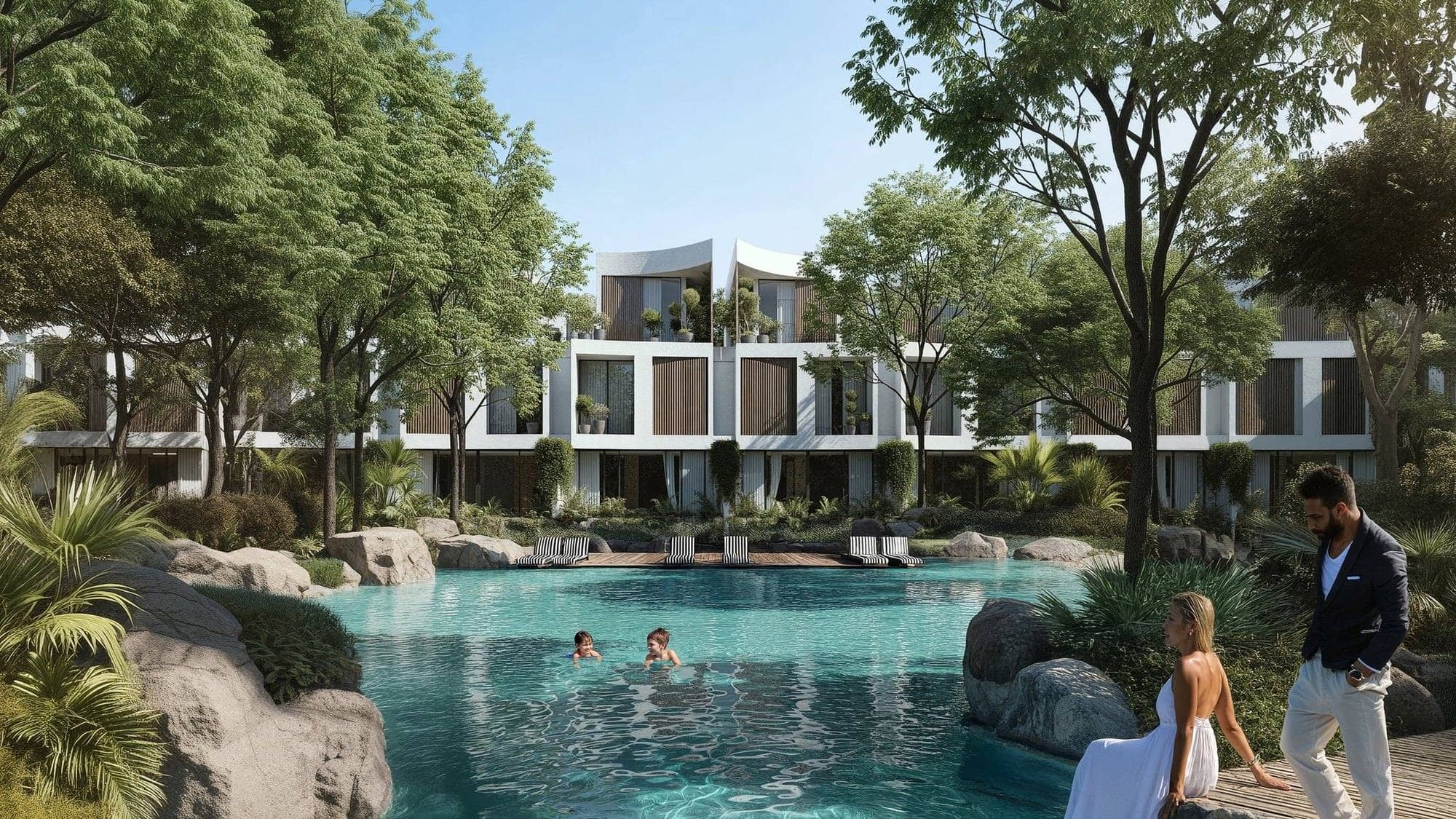
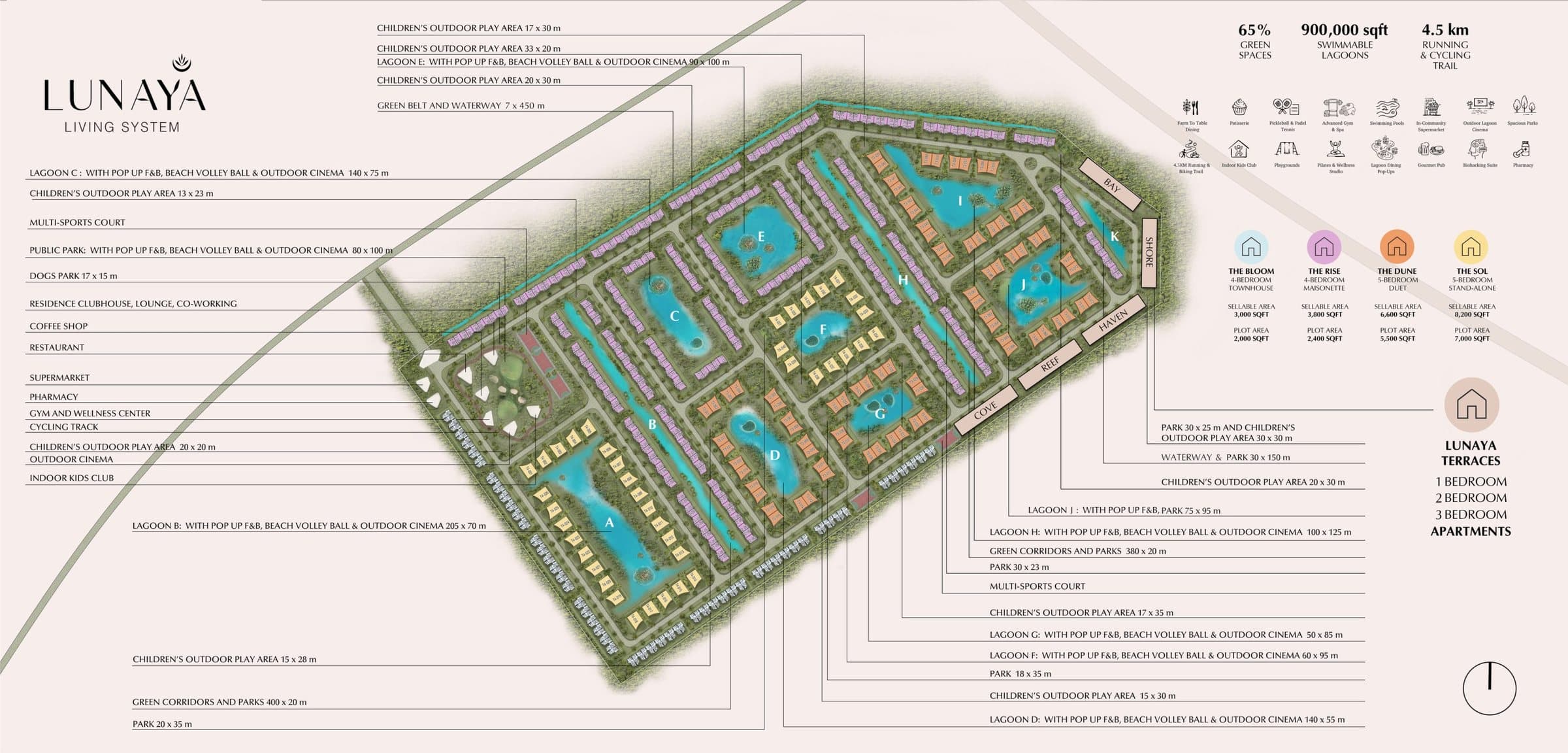
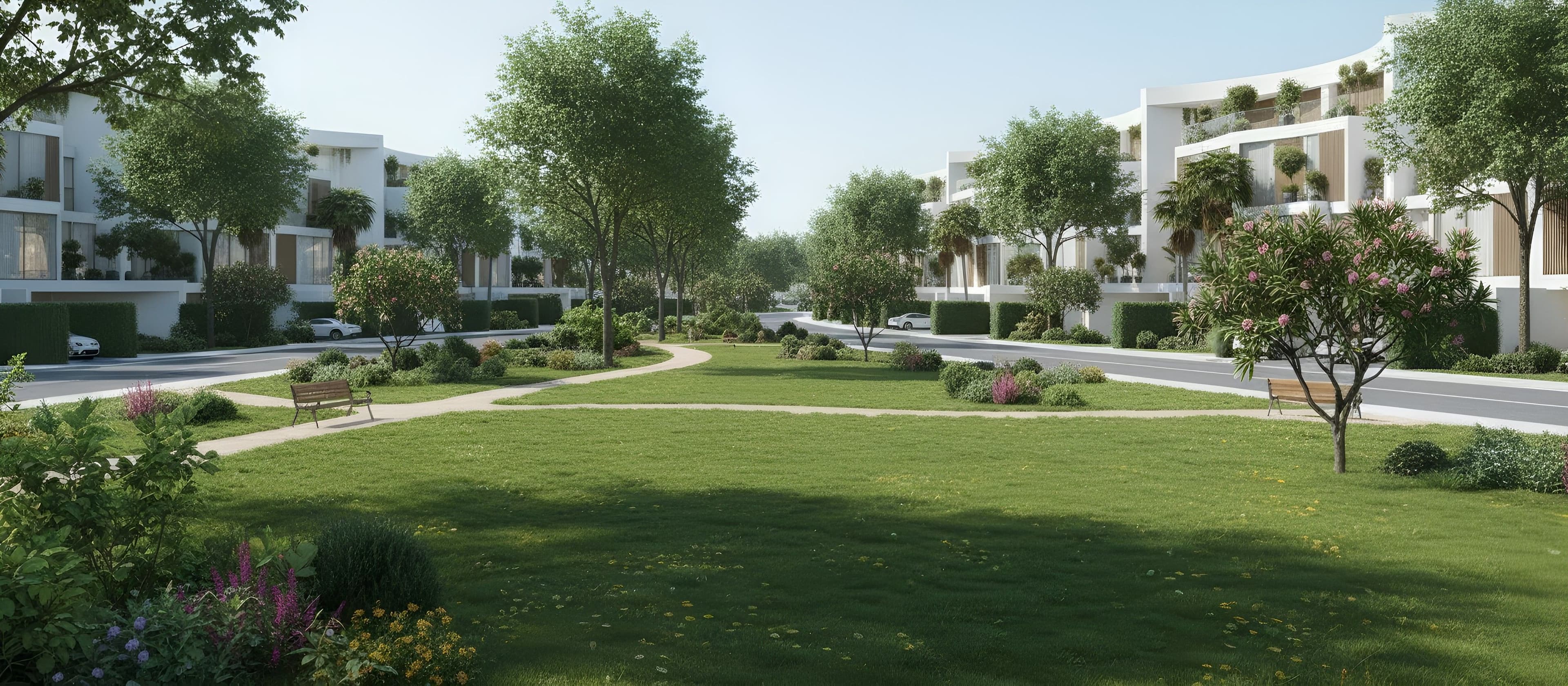
The density is written into the plan. The developer states the 4.2 million sq ft site is permitted for roughly 1,900 units; it is building 564 houses and five G+7 apartment buildings, and says 65% of the land is kept as landscape, eight lakes and about 900,000 sq ft of swimmable lagoons. That is the same decision that made Al Barari what it is.
The trade, stated plainly: you commit 40% of the price, plus the 4% DLD fee, over the build. In return you hold a house in the scarcest segment of Dubai's market, bought at pre-completion pricing from a developer whose earlier communities re-rated as they matured. The risk is time. This is a 2029 house in a corridor that is still being built, and villas are bought for capital growth more than for rent.
Reasons we
recommend this.
Villas and townhouses are under a fifth of Dubai's homes and 5.6% of the homes forecast to be handed over in 2026. The constraint is land, and that does not change quickly.
About AED 1,750 to 1,810 per sq ft on the four-bedroom homes, level with Al Barari and below Damac Hills, Tilal Al Ghaf and Dubai Hills Estate on recent registered sales.
Zaya built Al Barari, Dubai's original low-density garden community. Resales of its recent phases register at 80% to 115% above what buyers paid the developer.
Palm Jebel Ali sits across Sheikh Zayed Road, and Al Maktoum International, planned for 260 million passengers a year, is about 15 minutes away by the developer's estimate.
564 houses and five low-rise apartment buildings where, the developer says, about 1,900 units were permitted, with 65% of the 4.2 million sq ft kept as landscape, lakes and lagoon.
40% is paid over roughly two and a half years; the remaining 60% falls due when there is a finished, inspected house to hand over.
Jebel Ali.
What we actually think.
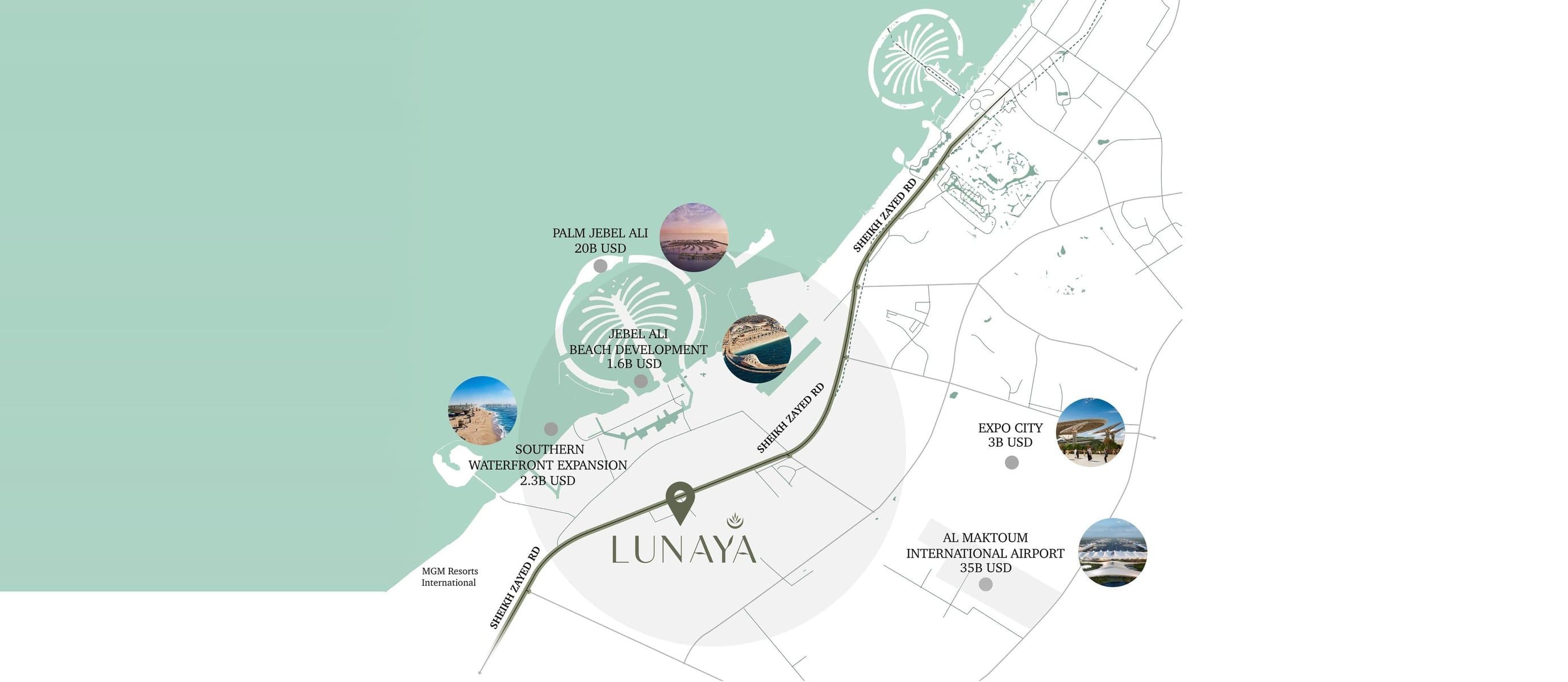
Lunaya sits on Sheikh Zayed Road in Jebel Ali, directly opposite Palm Jebel Ali and between Dubai Marina and Al Maktoum International. The developer quotes three minutes to Sheikh Zayed Road, seven to Palm Jebel Ali and Mohammed Bin Zayed Road, sixteen to Dubai Marina and fourteen to the airport, in free-flowing traffic; its figures vary between documents, so allow more at peak hours.
Dubai's next decade of infrastructure is being poured around the site. Al Maktoum International is an AED 128bn expansion designed for 260 million passengers a year at build-out, with its first phase targeted for 2032. Palm Jebel Ali is twice the size of Palm Jumeirah, and Dubai South is a 145 km² city being built around the airport. Across the road, five-bedroom villas on Palm Jebel Ali registered at AED 19M to 32M, about 2,440 to 3,900 per sq ft, between May and September 2026, before a resident has moved in. Lunaya's largest villa is priced at about 2,065.
Beachfront land on a new island is not inland lagoon land, and Lunaya should not be expected to reach frond pricing. The point is the direction of travel in this corridor and who is committing capital to it. The developer states there is no flight path over the site; the new airport is about 19 km away by its figure, close enough to bring an airport and logistics workforce into the rental market.
Zaya.
The track record matters.
The developer describes Lunaya as a 50/50 venture between Zaya and FIVE, each partner funding half. Zaya has a twenty-year record of building the scarce thing and then running it: Al Barari, Dubai's original low-density garden villa community; Nurai Island in Abu Dhabi, a private island resort it developed and operated, acquired by Aldar in July 2022; Zaya Hameni, a boutique JVC building with oversized layouts, completed in 2017; and Zuhha Island, 30 beachfront villas and resort residences off Jumeirah, where 28 of 30 villas had sold by October 2025 and the resort is scheduled for December 2026.
FIVE runs its own hospitality businesses: Cinque and Ronin, both listed in the Michelin Guide (Ronin was its 2025 Opening of the Year), the REFIVE spa, and the food, wellness and amenity programme that keeps a community's running costs and rents in the right relationship.
In an off-plan house, the developer answers the two biggest questions: will it be built well, and will people want to live there. Zaya's answer to both is a finished community you can drive through today. Al Barari was a low-density, landscape-first community on the edge of the city when it launched. The buyers of its recent phases paid what looked like full prices at the time; their homes now resell on the Dubai Land Department register at 80% to 115% above what they paid.
Honest about
the downsides.
We assess every case against three risk dimensions. These are our views, not the developer's marketing.
What residents
actually get.
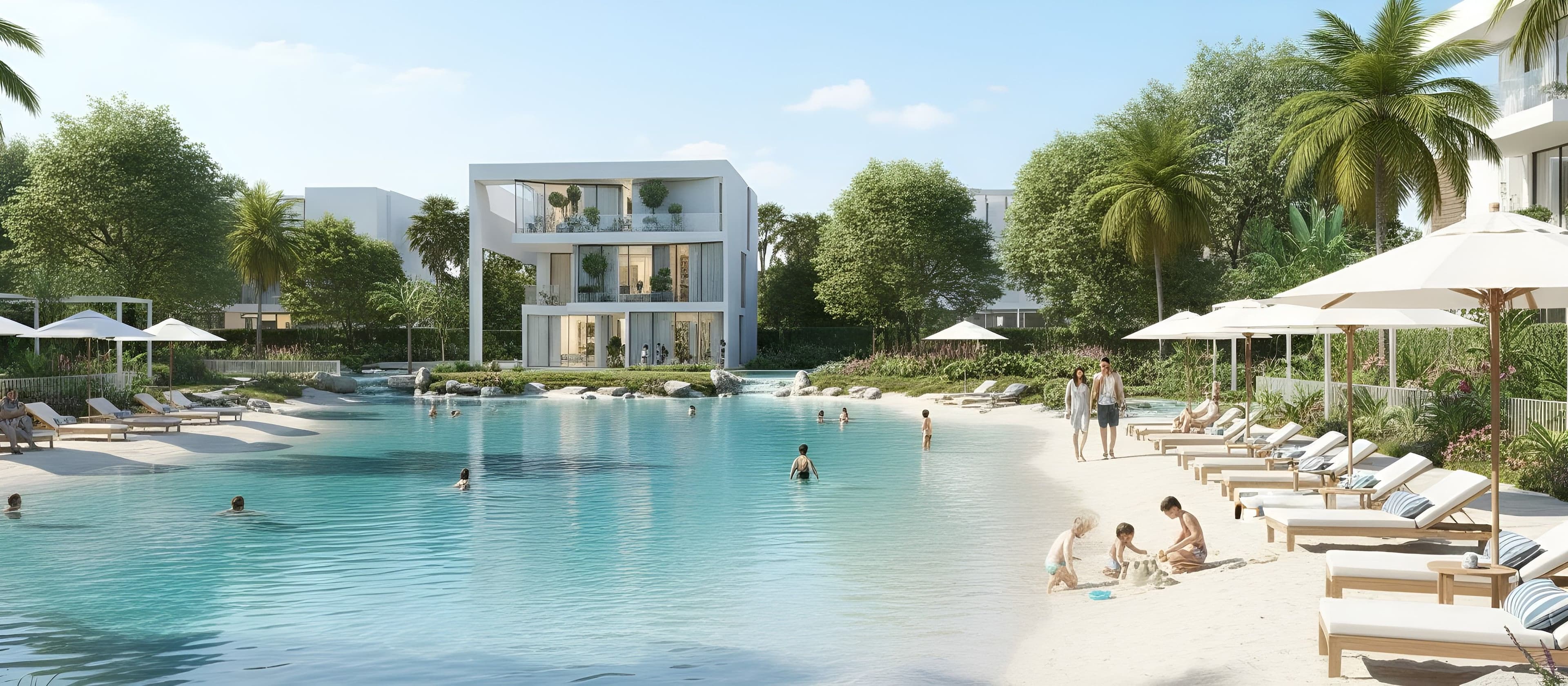
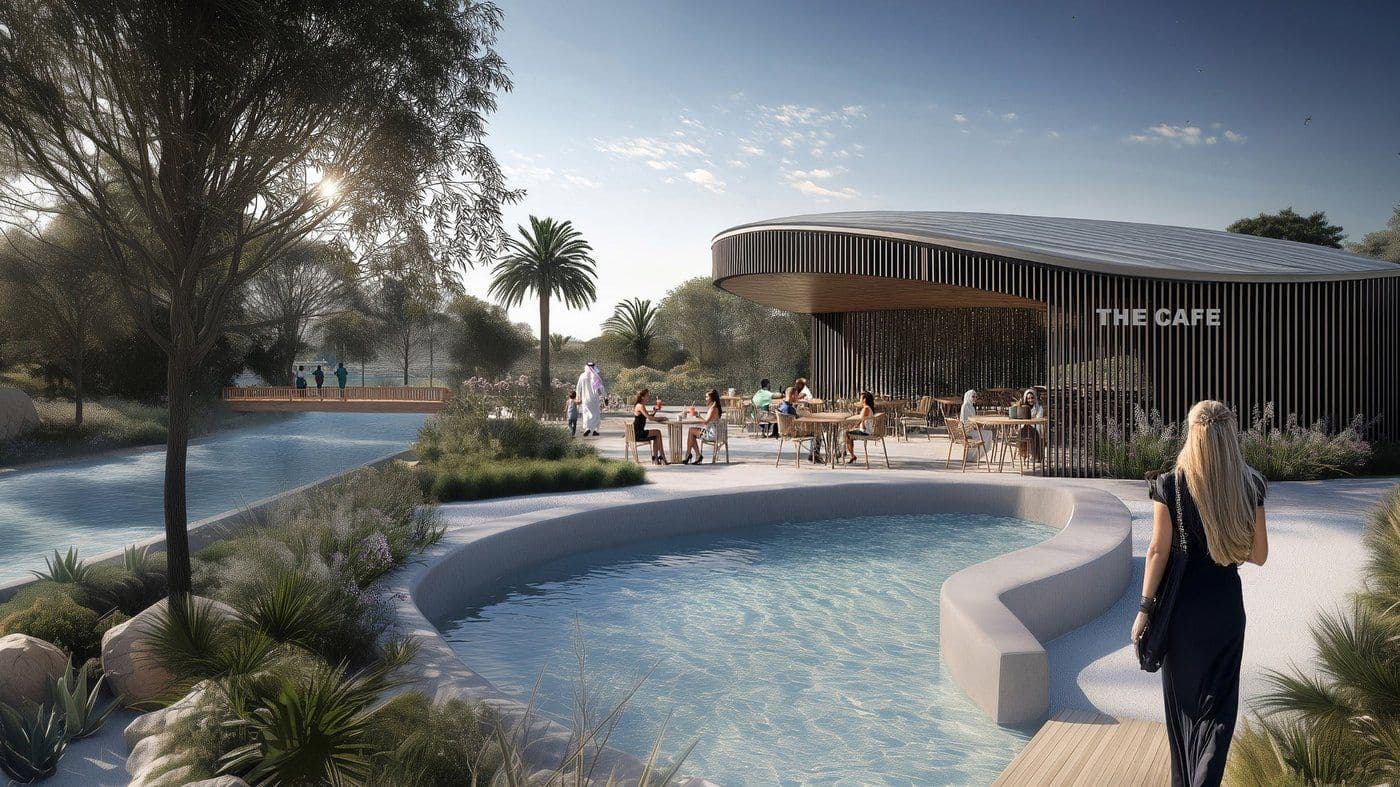
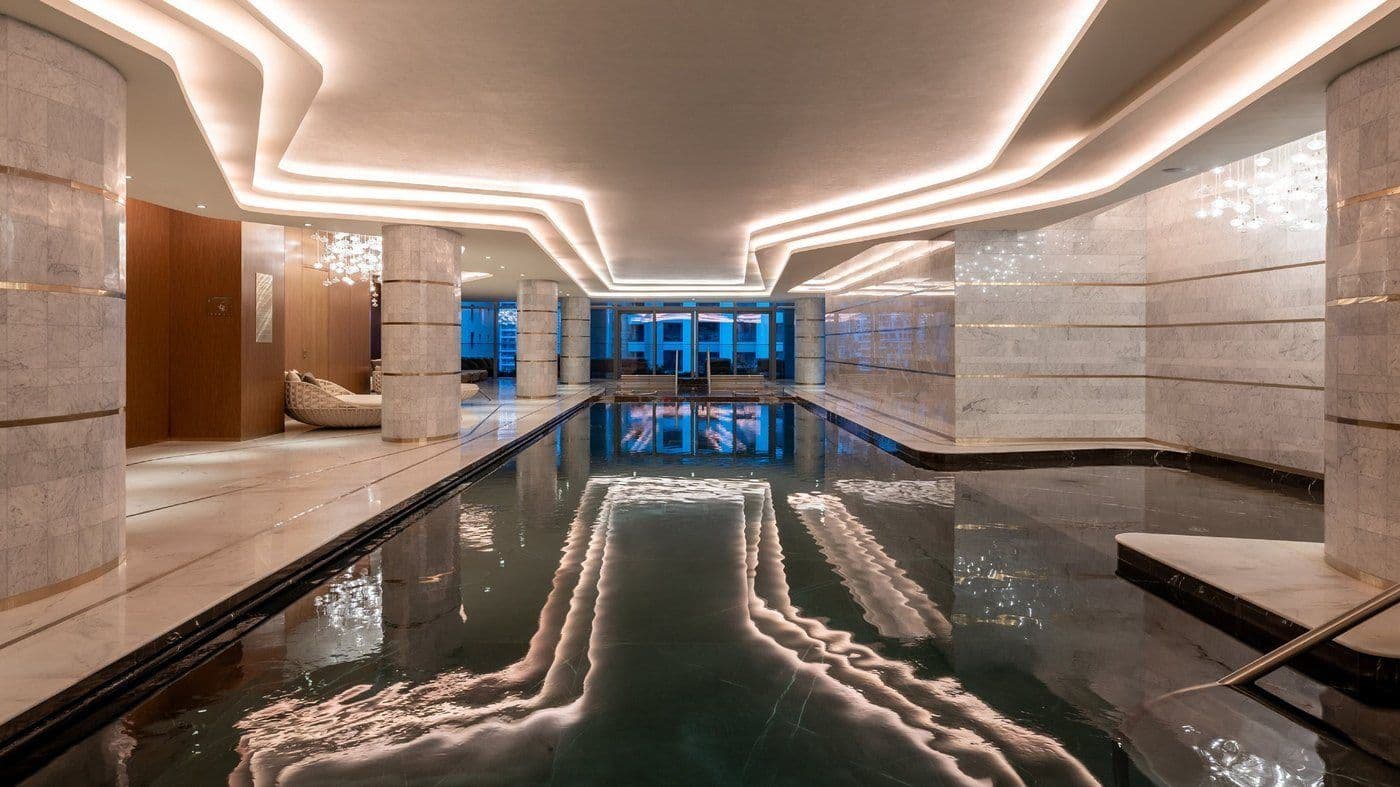
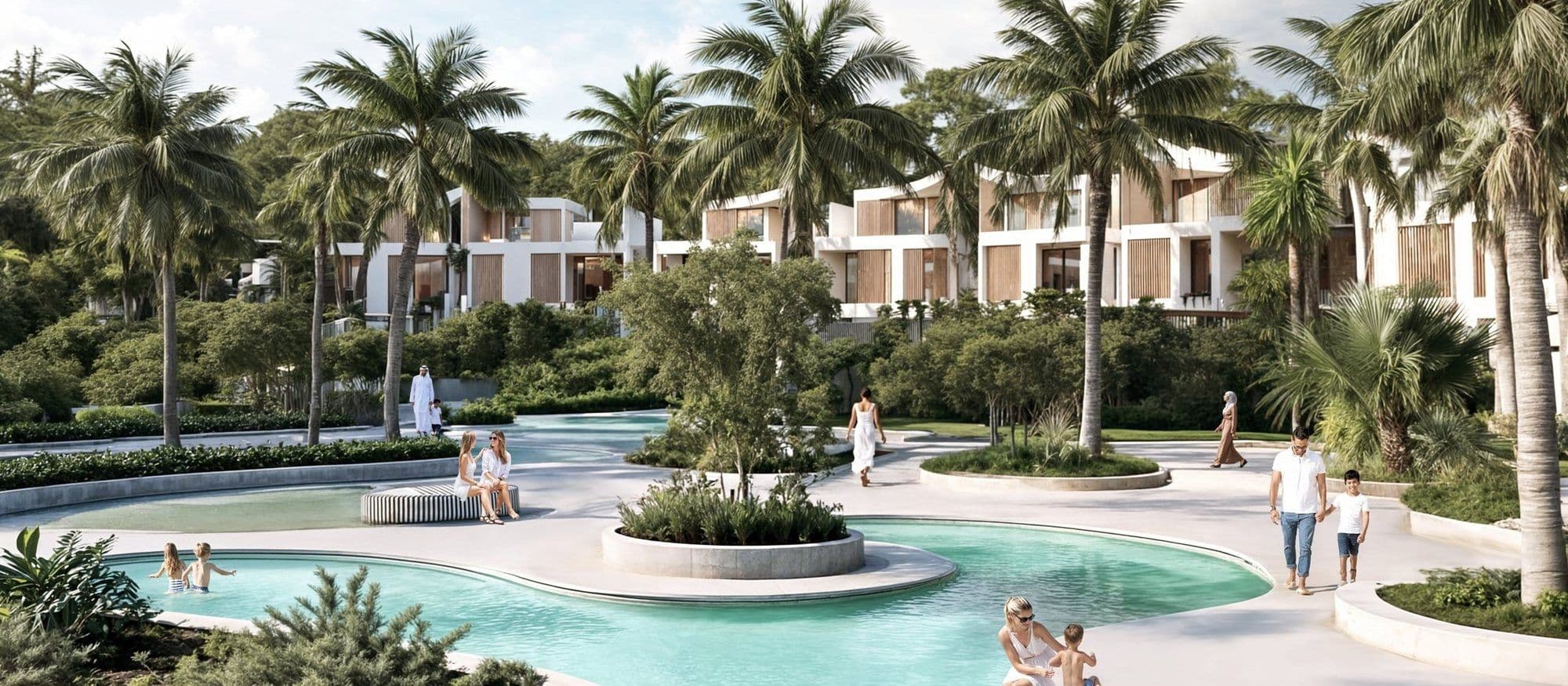
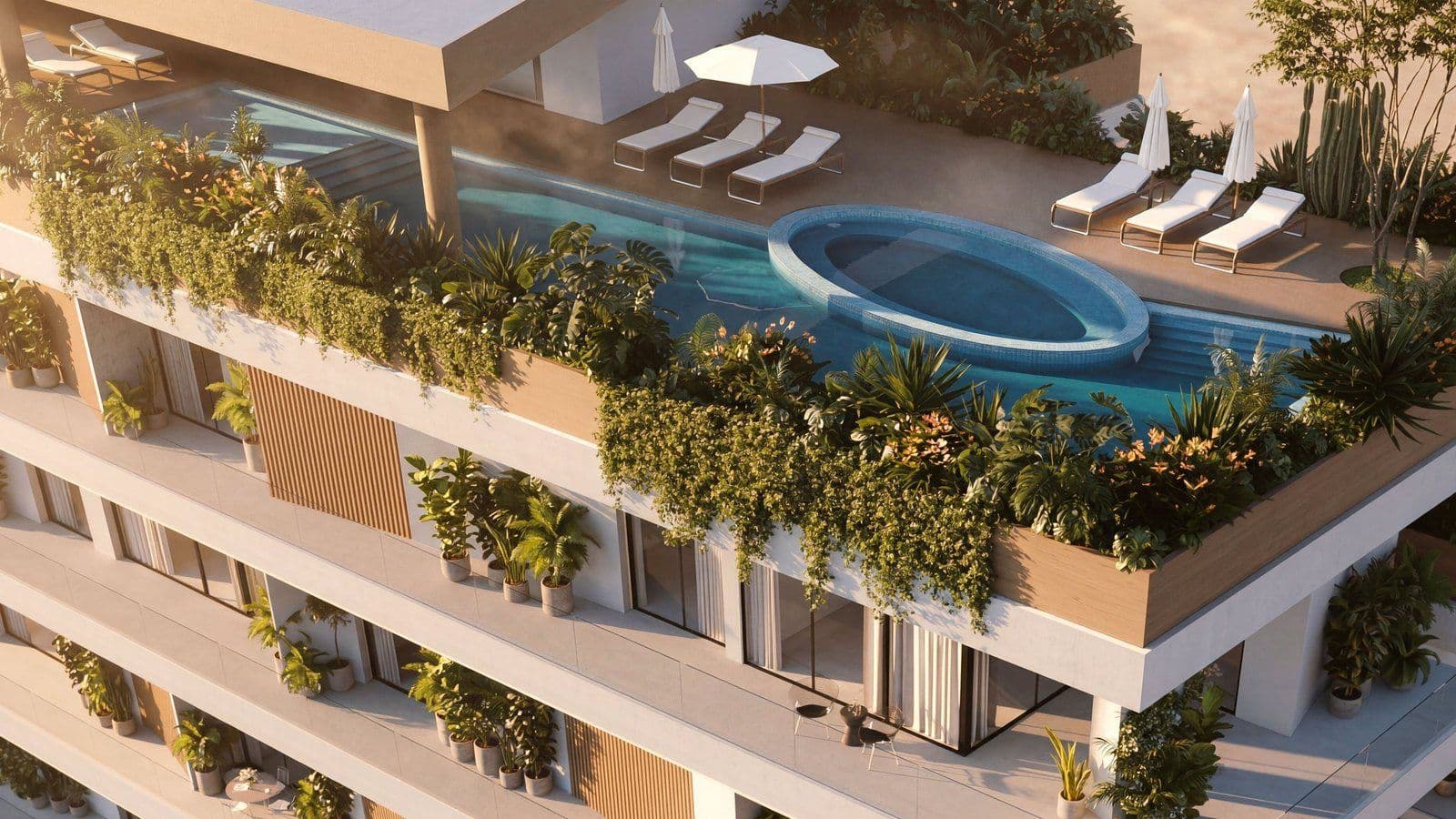
Official renders from Zaya. These are the amenity spaces included in the development.
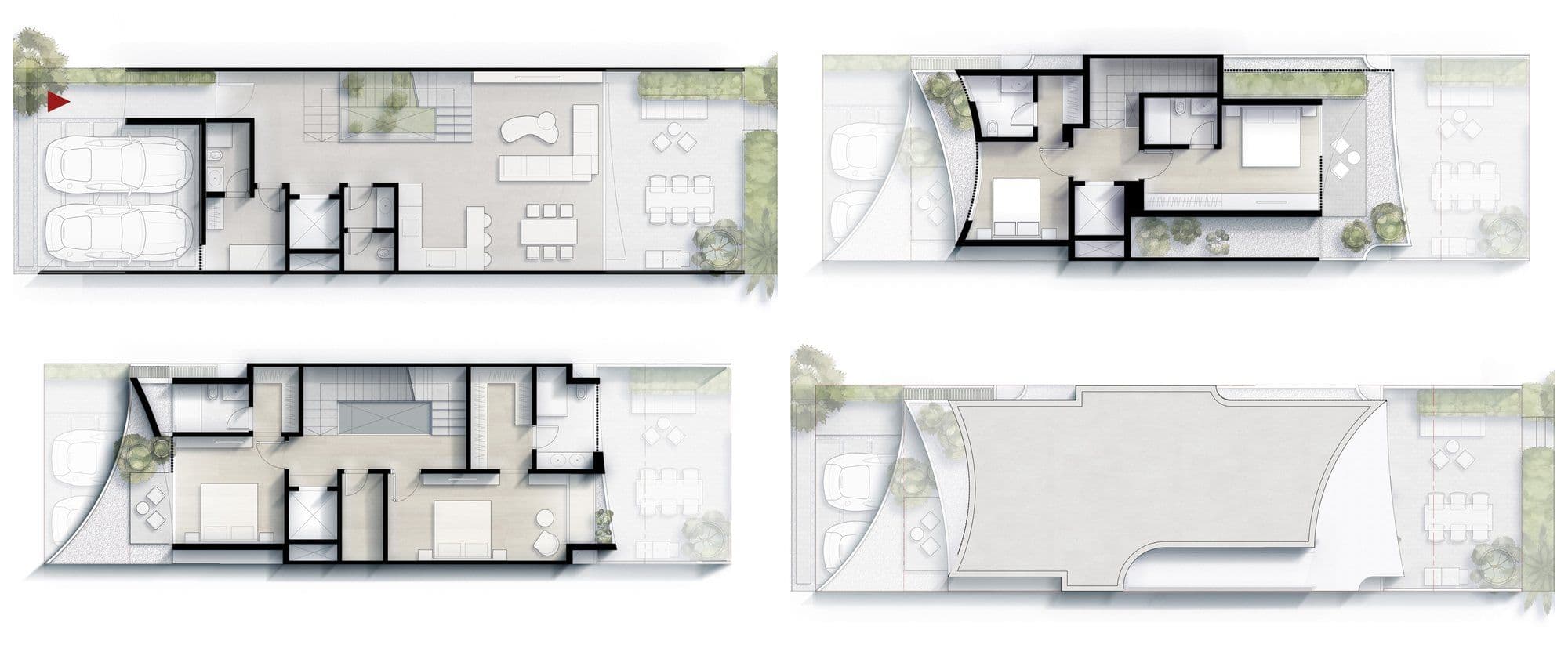
Layouts and
spatial planning.
What's available
and at what entry.
Different strategies.
Same asset.
Illustrative scenarios built on the assumptions shown in each one. They are not a forecast, prices can fall as well as rise, and returns are not guaranteed.
The full case, prepared for you.
Developer analysis, location deep-dive, risk assessment and our complete thesis, sent straight to your inbox.
We recommend
this case. With
caveats you
should read.
Lunaya is a strong fit for some buyers and the wrong one for others. The case is strong: a house in the scarcest segment of Dubai's market, from the team that built Al Barari, on a masterplan that turns most of its permitted density into landscape and lagoons, priced level with Al Barari and below the other established lifestyle communities it will be compared with.
The discipline is time and funding. This is a 2029 house in a corridor that is still being built, 60% of the price falls due at completion, and villas are bought for capital growth more than for rent. Buy for the Flat case and let the others be the reward: a house that works for you with no growth at all is the right house. We underwrite day one at today's corridor rents and treat the developer's claims of above-market rents as upside.
Lunaya releases in phases and the best-positioned units in each release go first, so the right next step is the live shortlist, then a call, then a reservation only if the numbers work.
- The case in one page
- Inside the gates
- The scarcity case
- Saturday, 2029
- Location
- Price positioning
- Scarcity by design and the streets
- The developer and the precedent
- The core argument and the four house types
- Amenities, the growth corridor and Lunaya Terraces
- Payments and scenario arithmetic
- Eight points we raise, and the appendix