


We help buyers compare Dubai townhouses and ask when shared community space beats a larger plot, starting with the routines that shape real daily life. A larger garden gives you control and privacy; a well-run community can bring useful places to play, exercise and meet neighbours close to home.
Key Takeaways
| What to weigh | Practical test |
|---|---|
| Private plot or shared amenities | Choose based on how often your household would use each space, not on the brochure list. |
| Privacy and neighbour contact | Check sightlines, shared walls and outdoor areas at different times of day. |
| Everyday convenience | Walk from the home to parks, pools and other facilities, then check access rules and upkeep. |
| Ownership costs | Compare service charges, owner responsibilities and likely maintenance alongside the purchase price. |
| Investment fit | Assess rental demand, location and the full cost of ownership against your investment goal. |
| Local context | Use our Dubai area guides and property resources to structure your comparison. |
How townhouse layouts differ from villas
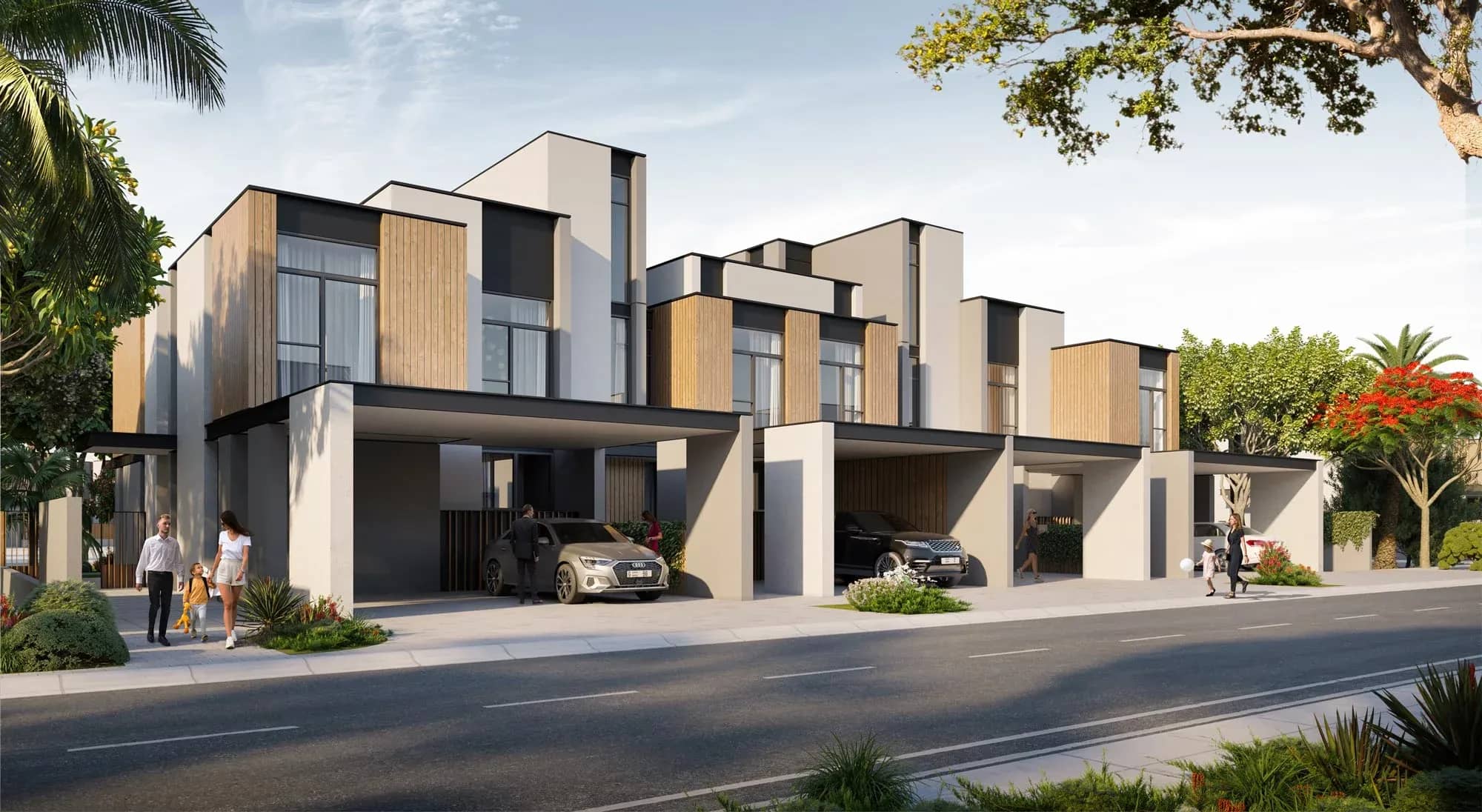
A townhouse usually shares one or more walls with neighbouring homes and has a private plot, often with a compact garden or terrace. A villa usually stands separately, with more land around the building, although marketing labels do not always describe the physical layout precisely.
We look beyond the name on the listing. Check whether the home is attached or detached, where the shared walls sit, how the rooms connect, and whether the outdoor area is genuinely usable rather than just present on a plan.
Bedroom count alone does not tell you how a home will work. Compare storage, circulation, room proportions and the connection between the kitchen, living space and garden, then consider whether the layout gives each household member enough privacy.
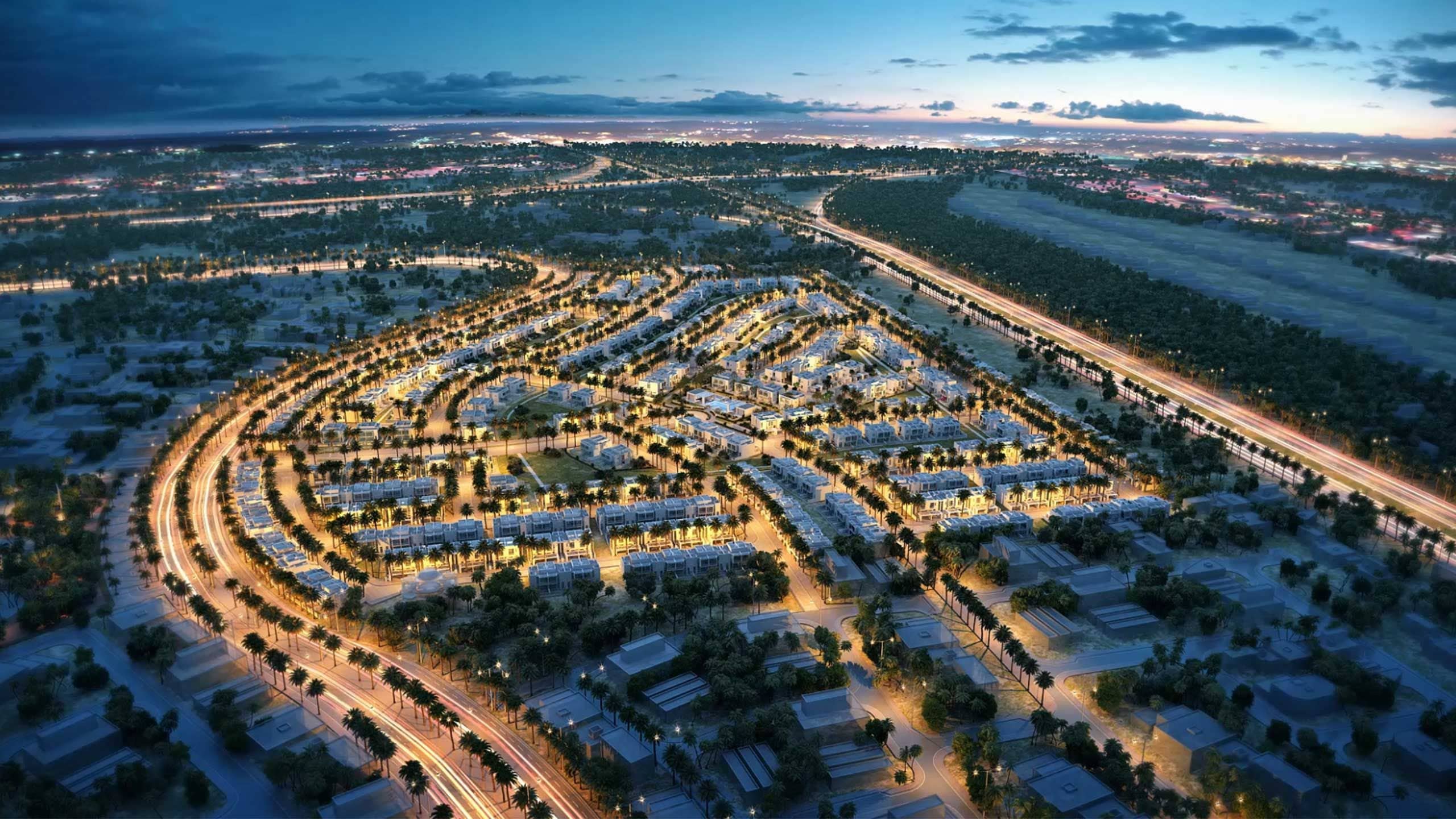
These local images show the relationship between homes, streets and shared green space in established and planned community settings.
When shared parks and pools are more useful than extra garden
Shared community space can make up for a smaller private garden when it supports activities your household would otherwise need to travel for. A nearby play area, pool or walking route can add practical value, but access to a shared facility is not the same as having a private outdoor space you can use whenever you choose.
Match the facilities to your routines. Children who play outside most days may benefit from a nearby park; a household that entertains outdoors may prefer a private garden; someone who enjoys planting may value the control and quiet of their own plot.
Then test whether the shared amenities work in practice. Walk from the home to each facility, check opening times and access rules, look at the condition of the space, and find out how the community handles upkeep and repairs.
Our test: Count an amenity as useful when it is accessible, maintained and close enough to fit naturally into the week.
Community features can shape daily family life, but only when residents can use them comfortably. A park visible from the home may be more convenient than one at the far edge of a development, while a pool beside a busy route may feel less private than a quieter facility.
Privacy, shared walls and outdoor sightlines
Townhouse living can mean more contact with neighbours and more potential for sound to travel through shared walls. A villa usually offers greater separation, but privacy still depends on its plot, windows and relationship to neighbouring homes.
Visit at different times and listen from bedrooms and living areas. Pay attention to doors, stairs and rooms that sit against a neighbouring wall, as well as outdoor areas where voices carry between gardens or terraces.
Unit position changes the balance. An end unit may have fewer shared walls and an additional side outlook, while a home facing a path, play area or neighbouring windows can feel more exposed; inspect the actual sightlines from the rooms and garden.
Also check where sunlight reaches the living areas and outdoor space. Nearby buildings, boundary walls, trees and the home’s orientation can all affect light and outlook, so assess the specific unit rather than relying on a community-wide description.
Twelve chapters on what the regional war tested, the balance sheet and dollar peg behind the market, and how to pick the right side of this cycle.
Download free→Purchase budget, service charges and maintenance
Compare the full ownership picture, not just the asking price. Service charges, repairs, garden care and any private pool upkeep can change the cost and effort of owning a home, while shared facilities may bring community charges that support common areas.
For a worked budget illustration, the Mudon Al Ranim project page, accessed 24 October 2026, lists a starting price of AED 1.9 million: AED 1,900,000 ÷ 2 = AED 950,000 as a hypothetical initial contribution, then AED 1,900,000 - AED 950,000 = AED 950,000 remaining.
That arithmetic illustrates only how a buyer might divide a purchase price. Add applicable transaction costs, financing, service charges and expected repairs when comparing actual budgets.
Ask who handles common-area upkeep and which repairs remain the owner’s responsibility. Community management typically looks after shared facilities and common areas; owners remain responsible for the private home and plot, subject to the property’s documents and community rules.
For an investment view, consider how running costs affect net income rather than focusing only on potential rent. These guides cover and rental returns and property tax.
Choose a community by its daily access
A community’s plan on paper is only part of the decision. Check how easily you can reach the places your household uses, including parks, shops, schools, work routes and public transport, then consider traffic, parking and walking routes at the times you expect to travel.
Shared amenities should sit within a convenient route from home, not just within the development boundary. Look for safe pedestrian access, clear connections between homes and facilities, and practical routes for children, visitors and deliveries.
For off-plan homes, review the promised community design alongside the delivery record and the developer’s approach to shared facilities. Our Dubai property developer profiles and off-plan guide help buyers build that assessment.
These locations and investment guides give context for comparing community access with the needs of a specific household.
When you buy property in Dubai, compare a townhouse and a villa against the same household needs and investment objective. A larger plot may offer more privacy and control; a carefully planned townhouse community may reduce the need for private facilities and put everyday amenities closer.
What townhouse maintenance involves
A townhouse owner usually manages the interior and private outdoor space, including routine cleaning, garden care and repairs within the home. Community management typically looks after shared areas such as parks, pools and common routes, with responsibilities set by the community’s governing documents.
Garden size affects time and effort. A larger plot can bring more planting, irrigation and surface care, while a compact garden can be simpler to manage but may offer less room for play, seating or gardening.
Ask how common areas are maintained, how residents report issues, and which outdoor repairs or services sit within the owner’s remit.
Rental demand and investment goals
A townhouse can suit tenants who want more room and a community setting, while a villa may appeal to households that prioritise separation and a larger private plot. Rental demand depends on the home, its location, condition and costs, so compare each property against the tenants you intend to serve.
For a Dubai property investment, weigh likely rent against service charges, maintenance and periods without a tenant. Our investment guide offers a framework for aligning property choice with the wider strategy.
Buyers considering long-term residency can also read our guide to the Dubai Golden Visa through property. Treat residency planning as a separate part of the decision from the home’s layout, maintenance and community fit.
See also: Which Dubai Property Area Fits Your Investment Goal in 2026?, What Investors Need to Know About Tax on Dubai Property, Off Plan Properties in Dubai.
Dubai townhouses make the strongest case when shared amenities fit the household’s routine, remain easy to reach and receive consistent care. A larger private plot is the better choice when privacy, gardening, outdoor entertaining or personal control matter more than facilities shared with neighbours.
We compare the whole experience: layout, shared walls, outdoor space, service charges, maintenance and location. The real question is not simply which home has more land, but when shared community space beats a larger plot for the people who will live there.
Which townhouse position is usually quieter?
A home farther from a pool, play area or main pedestrian route may experience less activity outside, while an end unit may have fewer shared walls. The quieter choice depends on the immediate surroundings, so listen inside the home and outside it during typical busy periods.
Can I make a townhouse garden more private?
Planting, screens and carefully positioned seating can improve privacy, subject to community rules and boundary restrictions. Plan the garden around the views from neighbouring windows as well as the view from inside your own home.
What should I ask about shared pool access?
Ask who may use the pool, whether guests need permission, how opening times are set and how maintenance interruptions are communicated. For a Dubai townhouse, those rules determine whether a shared pool fits your routine as well as its location does.
How can I compare two homes with the same bedroom count?
Compare usable floor area, storage, room shape, natural light and the connection to outdoor space. A townhouse with a practical layout and convenient shared facilities may work better than a larger home with awkward circulation or a garden your household rarely uses.
Does an end unit always offer more privacy?
No. An end unit can reduce the number of shared walls, but its side boundary may face a walkway, road or neighbouring windows. Check the position of the home and its sightlines rather than relying on the label alone.


