


The Wilds, Athlon, Ghaf Woods and Tilal Al Ghaf build green space into their villa-community offering. For buyers searching for villa communities with green space Dubai, the useful distinction is how much of that greenery residents can use today, rather than what a masterplan promises for later.
Knight Frank’s Destination Dubai 2024 survey of 317 high-net-worth individuals, published on 22 May 2024, ranked access to green space or parks first when choosing a property, and 88% said its absence could be a potential deal breaker; proximity to a clinic or hospital ranked second, and beach access third. Savills reported that apartments made up 97% of Dubai launches in Q3 2025, leaving low-density villa stock scarcer among new launches.
- Compare accessible parks and walking routes with planted views and other greenery residents may not be able to enter.
- Separate existing shade and mature planting from trees, parks and facilities planned for future phases.
- Trace a walkable route from the home to parks, paths and everyday destinations, including the crossings and entrances along the way.
- Assess private gardens separately from shared green space because they offer different levels of privacy, recreation and upkeep.
- We bring together buyer guidance in our wellness real estate hub.
- Consider schools, clinics, shops and transport alongside outdoor amenities, so the location works for daily routines as well as recreation.
Why green space matters when choosing a Dubai villa community
Green space is part of a home’s daily setting. A nearby, accessible park can support a walk or outdoor break, while trees along regular routes can provide shade on the way to community facilities.
These benefits depend on what residents can reach and use. A planted buffer can improve a view, while a connected path or community park offers a place to walk or spend time outdoors.
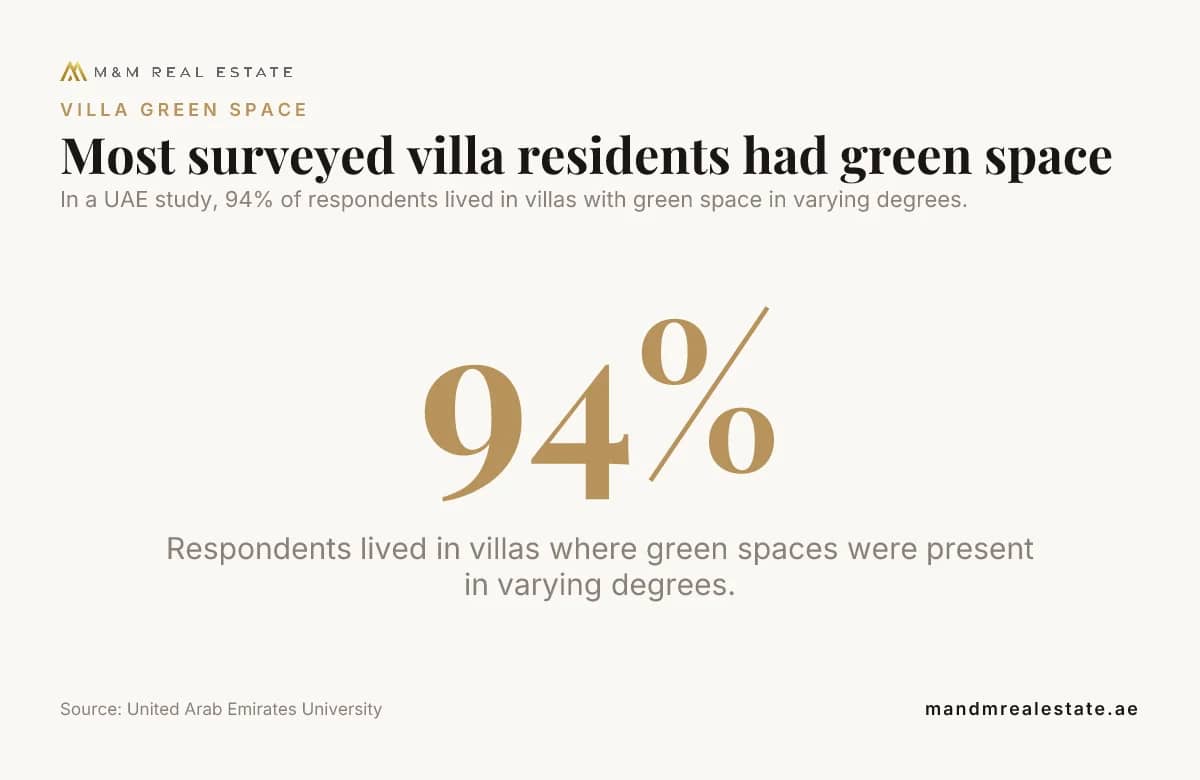
In a UAE study, 94% of respondents lived in villas with green space in varying degrees.
Source: United Arab Emirates University
What the nature-focused communities offer
The four communities below provide useful points of comparison, from native woodland and walking routes to an established green-community setting.
| Community | Features stated by the developer or in reporting | What to compare on site |
|---|---|---|
| The Wilds | Dubai Holding and Aldar launched this roughly 1,700-home community in Wadi Al Safa, Dubailand, on 19 February 2025, with sales opening on 27 February 2025. Dubai Holding describes native woodland and eco corridors, and says the community received LEED Platinum and Fitwel 3-star credentials, making it the first UAE community to hold both. | Trace how the woodland and corridors connect with homes and paths, and distinguish certification from everyday access. |
| Athlon | An active-living community. | Follow the route from likely home locations to parks and tracks, and consider how the connections fit the household’s daily routine. |
| Ghaf Woods | A forest-living community. | Compare the planting and paths available now with those scheduled for later phases. |
| Tilal Al Ghaf | Majid Al Futtaim’s established green community provides a useful reference point for buyers comparing a more established setting with newer projects. | Assess the present-day planting, routes and shared spaces in person. |
Newer projects may offer planned woodland and parks, while an established community may have mature planting already in place. Young trees provide less immediate canopy than mature trees, so compare the current outdoor experience with the long-term plan.
Nature-focused developments may also include different home types. Dubai Holding announced The Wilds Residences, 740 apartments, in February; this gives buyers a further home-type comparison alongside villa communities.
Launch-price example: The Wilds’ 3-bedroom villas launched from AED 5,100,000 in February 2025, according to Gulf News.
Separate usable parks and paths from green views
Prioritise community parks, walking routes and connected green corridors if regular outdoor use is important. Planted buffers and garden views can improve the outlook, while a golf-course view alone does not establish that residents can enter the course or use it as public parkland.
On a masterplan, trace a continuous route from villa clusters to parks, play areas and paths. Roads, plot boundaries and restricted entrances can interrupt a route, so check how people would actually walk between these spaces.
Compare private outdoor space separately from shared greenery. A private garden gives a household more control and privacy, while a community park offers shared recreation without the same garden-care responsibilities.
Palm Jebel Ali Villas offers 5-, 6- and 7-bedroom home types in a new standalone community, with sizes from 7,316 sq.ft and a listed price from AED 18,000,000. Its home sizes and formats help frame a comparison of private living space alongside the separate question of access to shared parks and paths.
For a wider view of how address and setting contribute to a villa decision, read our guide to premium Dubai villa addresses.
Twelve chapters on what the regional war tested, the balance sheet and dollar peg behind the market, and how to pick the right side of this cycle.
Download free→Use distance, shade and connectivity to judge the masterplan
The World Health Organization recommends a minimum of nine square metres of green space within 800 metres per individual, with an ideal amount of 50 square metres per hundred individuals, as reported by ArcGIS StoryMaps. Use this as a planning reference, then assess the quality of the space and whether residents can reach it.
Measure the walking route from likely homes instead of relying only on a straight-line radius. Entrances, road crossings and barriers all affect the time and effort involved in getting to a park.
Look for shaded paths, tree-canopied seating and connections between homes, parks and everyday destinations. Shade can make a route more comfortable in hot weather, so inspect where it falls along the walk rather than judging a park from its plan view alone.
Dubai’s city plans provide wider context, while each community’s accessible green space remains a separate consideration:
- The Dubai 2040 Urban Master Plan sets a citywide direction for green and recreational space.
- Dubai’s park network is set to expand.
- Dubai’s Quality of Life Strategy includes plans for public park space.
According to Frontiers in Built Environment, the plan aims to reach 80% of people’s daily requirements and destinations by situating 55% of residents within 800 metres of mass transportation stations. For a household, these citywide aims provide context for checking the actual route from a particular home to local services and green space.
Compare planting maturity and sustainable design honestly
In an established neighbourhood, look for continuous shade along paths, maintained planting and usable green areas distributed across the community. Mature trees can improve immediate comfort, so note how much of the everyday walking route sits beneath their canopy.
For a developing project, separate planting already in place from future trees, parks and phased amenities. New planting gives less immediate shade, so compare the present-day experience with the long-term plan and the timing of planned facilities.
LEED and Fitwel credentials describe defined assessments or ratings. They do not by themselves show whether every green area is accessible to residents, so consider certification alongside the location of paths, park entrances and shared spaces.
Assess sustainable design through specific features, such as native planting, connected ecological corridors, water reuse and energy-efficient homes. If urban farming is part of the household’s priorities, look for clear information about opportunities to grow food.
Balance greenery with family needs, services and upkeep
For family use, compare walking and cycling routes, play areas, shaded places to sit and the distance from homes to parks. These details give a more practical picture of outdoor amenities than a general family-friendly label.
Map schools, clinics, shops and transport as well as green space. A park-focused setting can still involve longer daily journeys, so compare the routes your household will use through the week.
Ask how shared planting is maintained and how private gardens are irrigated and cared for. Shared facilities and personal gardens create different responsibilities, while a private garden’s privacy and control come with ongoing upkeep.
For a structured comparison of home types and neighbourhood considerations, Villas and townhouses in Dubai is an investor report comparing villas, townhouses and apartments since 2021 across twelve communities, including prices, rents, schools and drawbacks to consider before buying.
For questions about purchase stage and developer background, see our off-plan buying guide, Dubai off-plan property overview and developer profiles.
To compare locations and investment context, explore our Dubai location guides, Dubai area comparison and Dubai property investment guide. Our rental and yield guide, property tax explainer and buyer resources cover related ownership questions.
See also: Dubai Golden Visa through Property: 2026 Guide.
Dubai’s green villa communities offer different combinations of woodland, parks, paths and established planting. Compare what residents can use now with what the masterplan schedules for later, then test the route to green space alongside access to services and the upkeep of private gardens.
Start with our free wellness real estate guide to organise your comparison, then contact an M&M advisor for a conversation about your priorities.
Do green corridors in a villa community support wildlife as well as walking?
They can support movement between planted areas when vegetation forms connected habitat, as well as offering a route for people. The Wilds identifies native woodland and eco corridors among its features, giving buyers a specific example to ask about when comparing community plans.
How can a household reduce water use in a private garden in Dubai?
Choose planting suited to local conditions, group plants with similar watering needs and use targeted irrigation such as drip lines. Check the irrigation system for leaks and set it to avoid watering during the hottest part of the day.
Can a community park still feel useful if it is small but close to home?
Yes. A nearby park can support short visits and everyday outdoor breaks when it has a comfortable place to sit and suits the household’s routine. Consider the activities it can accommodate as well as its size.
What should residents look for in shaded outdoor spaces during Dubai’s hottest months?
Check whether shade covers seating and the paths people use, including around the times the household is most likely to go outside. A shaded destination and a comfortable route to reach it make a more useful combination than shade in one isolated spot.


