


Premium villa finishes shape comfort through authentic materials, careful workmanship and systems that work well in daily use. In Dubai, the right choice also depends on each room’s sun exposure, moisture, cleaning routine and connection to the outdoors.
- What makes a villa feel premium? Materials, detailing and practical systems should work together. A polished surface alone cannot make up for poorly aligned joinery or uncomfortable lighting.
- How should you compare off-plan homes? Review the finish schedule alongside the payment and purchase terms in our guide to buying off-plan property.
- Why look at a developer’s track record? The developer appoints the teams responsible for the design and delivery. Our developer profiles provide background for that wider review.
- Which materials suit each room? Match the surface to its exposure, use, maintenance needs and the way people move through the space.
- How do you judge installation quality? Inspect joints, edges, doors and seals across whole surfaces, not just in close-up samples.
- How should finishes respond to Dubai’s climate? Account for sun, heat and humidity from the start, and coordinate materials with ventilation, lighting and plumbing.
What makes villa finishes feel premium?
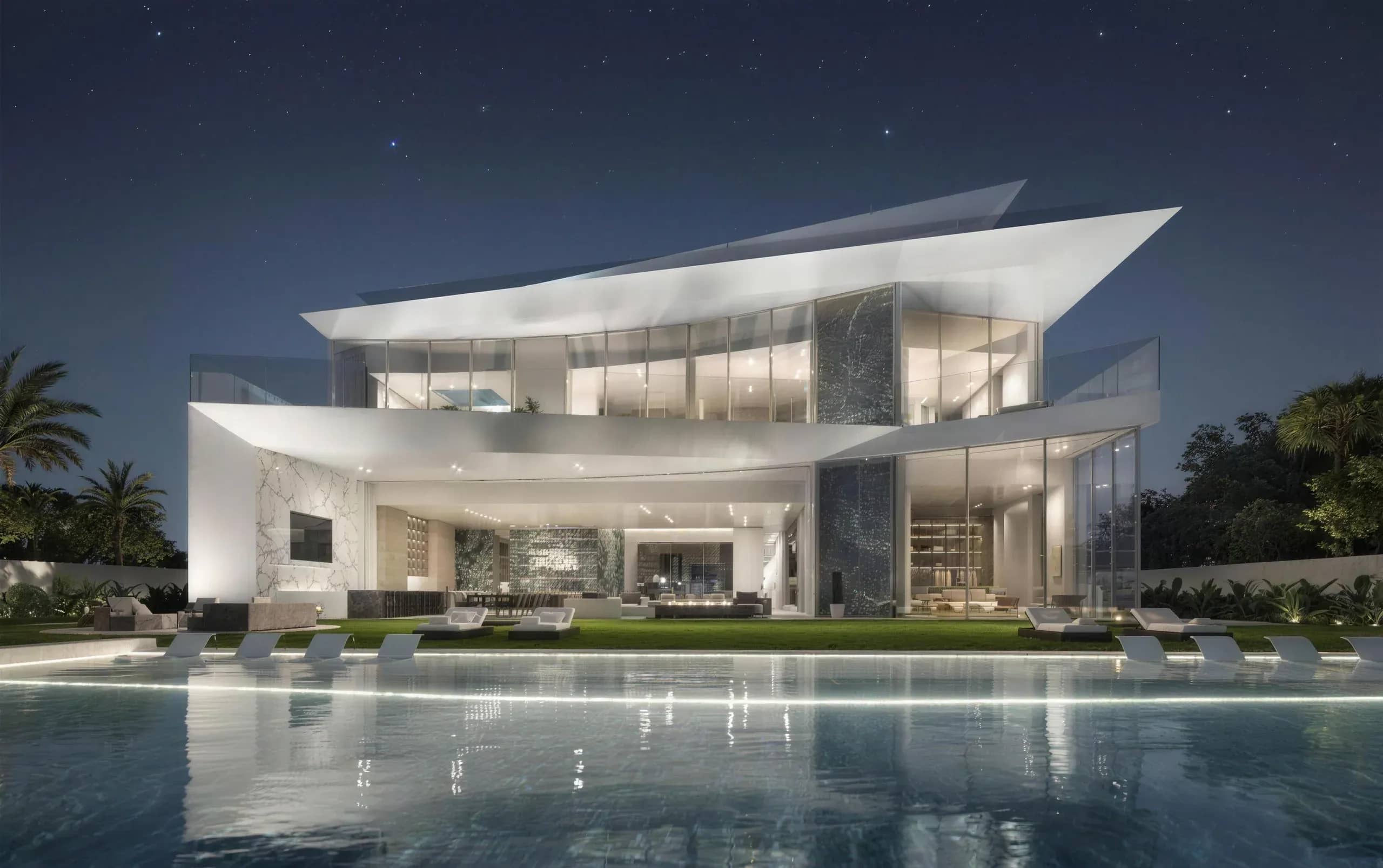
A premium villa brings materials, workmanship and building systems into a coherent whole. Private outdoor space, well-planned room zones and integrated storage are common features, though each villa’s layout differs.
Natural stone has individual veins and colour changes. Printed patterns often repeat, so look at a large sample and follow the pattern across its surface. Solid timber has grain through its thickness; timber veneer uses a real-wood surface over a stable core.
Workmanship shows in even joints, clean edges, aligned doors and consistent gaps. A surface can look refined while poor setting-out or fitting makes the finished room feel careless.
Comfort belongs in the specification too. Useful storage, well-placed lighting and reliable climate control affect daily use as much as a stone floor or timber wall. M&M Real Estate’s off-plan villas in Dubai provide a starting point for considering villa layouts alongside finish choices.
Choose materials according to each room’s demands
Start with what each surface needs to withstand. Kitchen worktops face heat, food acids and regular cleaning. Bathroom floors face water and bare feet. Outdoor paving must cope with direct sun, rainwater and safe movement.
| Room or surface | Material choice | Care and performance point |
|---|---|---|
| Kitchen worktop | Natural marble or engineered quartz | Marble has distinctive veining and can etch when acids touch it. Resin-based engineered quartz has a more consistent appearance and needs protection from high heat and prolonged direct sun. |
| Bathroom floor | Moisture-suitable tile or stone with a textured surface | Texture helps with footing on a wet floor. Waterproofing, sound grout lines and sealed junctions protect the construction behind the visible finish. |
| Living area | Solid timber or timber veneer | Solid timber has depth and can be refinished, while humidity changes can make it move. Veneer gives a real-wood surface with greater dimensional stability, though it allows less deep sanding. |
| Outdoor paving | Surface suited to exposure and drainage | Polished paving can become slippery when wet. Dark paving absorbs more sun and can feel uncomfortably hot underfoot. |
Compare appearance and upkeep together. A marble worktop may suit a buyer who values natural variation and accepts regular care. An engineered surface may suit someone who prefers a more uniform pattern, with heat and sun protection included in the care plan.
Compare stone, timber and tile samples across the rooms before settling the full specification.
Compare surface finishes and care trade-offs
Polished stone reflects light and gives a formal appearance. It can also create glare and make scratches or etching easier to see. Honed stone has a softer, less reflective look, while some stones show marks or absorb spills more readily with that finish.
Sealing slows staining in porous stone. It does not stop every spill or protect marble from acids, so use a care routine suited to the specific stone and avoid acidic cleaners on marble.
Grout colour and joint width shape the overall pattern. A grout colour close to the tile creates a quieter surface; a contrasting colour draws attention to the tile layout and makes irregular spacing more visible.
Ease of cleaning depends on the details around the surface too. Limit narrow ledges and deep recesses where dust collects, especially in areas that need frequent cleaning.
Compare materials, lighting, and fixtures to see how premium villa finishes can shape the feel of a space.
Read workmanship in joints, edges and installation
Inspect tile joints across a full wall or floor. Look for consistent widths and straight lines; lippage, wandering joints or sudden changes in grout width can point to weak setting-out.
Check corners, worktop edges and mitres closely. Open and close joinery doors, then look for consistent gaps between each door and the panels around it.
Caulking around baths, sinks, windows and material changes should form a continuous, neat seal. Gaps, smears or peeling edges can allow water through and make the junction harder to maintain.
Review full-size samples and mock-ups together. Then inspect how flooring meets thresholds, joinery meets walls and lights meet ceiling details; settling those junctions with the design and installation teams reduces last-minute changes.
- Check tile alignment and grout width across the whole surface.
- Inspect mitres, corners, door alignment and movement.
- Look for continuous caulking at wet areas and changes of material.
- Compare approved mock-ups with finished junctions around the villa.
Account for Dubai’s sun, heat and humidity
Strong sun can fade timber, fabrics and coatings over time. Use finishes suited to ultraviolet exposure, and consider lighter colours in exposed areas because dark surfaces absorb more heat.
Heat and humidity can cause materials to move. Timber, large-format surfaces and exterior junctions need suitable detailing so expansion does not force edges apart or crack rigid finishes.
Coastal or exposed sites call for exterior hardware suited to corrosion risk. Plan shade and drainage alongside paving, so a consistent colour palette does not take priority over safe footing and water management.
Coordinate finishes with HVAC, plumbing and lighting controls while the design is still being developed. Access panels, vents, drains and switches need to remain usable and sit cleanly within the material layout.
Premium off-plan villas in Dubai are water-body-facing homes. That makes exposure, exterior material choices and the detailing of indoor and outdoor junctions useful points to include when assessing a villa’s finish specification.
Coordinate lighting, joinery and indoor and outdoor transitions
View stone, timber and paint samples in daylight and under the lighting planned for the installed rooms. Warm and cool light can change how a colour reads and how strongly a surface texture shows.
Layer ambient, task and accent lighting. This gives rooms more than one useful light level, limits glare from reflective stone and keeps work surfaces practical for daily use.
Bespoke joinery, handles, hinges and other hardware work best when specified as part of one scheme. Consistent alignment and a comfortable grip make cupboards and doors easier to use, while good planning keeps storage useful without crowding the room.
Keep the palette connected between indoor and outdoor areas, then let each space meet its own needs. A clear threshold can mark the change in use, while outdoor materials still need to suit privacy, shade, drainage and safe footing.
La Mer Villas is a beachfront villa development with a minimalist, light-coloured textured base palette and high-quality fittings.
The project’s textured base palette offers a clear example of using surface and material character to shape a room without relying on a busy pattern.
Related investment checks
Finish quality is one part of a villa purchase. These M&M guides cover the wider decisions around buying, location, ownership and investment:
- For purchase terms, compare off-plan properties in Dubai and how a 30/70 payment plan works.
- For area context, read which Dubai property area fits an investment goal and browse the wider Dubai and Abu Dhabi location guides, including the pages for JVC, Dubai Hills Estate and Al Jaddaf Waterfront.
- For ownership and portfolio planning, see the Dubai property investment guide, rental yields and costs, tax considerations for property investors and the Dubai Golden Visa property guide.
See also: Dubai Investment Guides & Resources, Bay Estate by Nakheel, Dubai Islands: Investment Case, The Yards Plaza by BEYOND, City of Arabia Offices, Emaar and DAMAC: How to Compare Two Projects on the Public Record, Dubai population growth is reshaping how the city plans for residents, How Dubai Property Crowdfunding Works: Shares, Returns and Risks, The Yards Plaza by BEYOND, City of Arabia Offices, M&M.
What to do now
Before committing to a finish palette, compare full-size samples in the villa’s daylight and planned lighting. Ask the developer for the material schedule, care requirements and details for transitions between floors, walls, joinery and wet areas.
For an off-plan villa, review the approved finish specification alongside the inspection plan, then record any changes in writing. An M&M advisor will go through your budget, timeline and shortlist with you. Contact M&M.
Premium villa finishes change the experience when materials, workmanship and building systems suit the way the villa will be used, maintained and exposed to Dubai’s climate.


How can you reduce echo in a villa with large rooms and hard finishes?
Add sound-absorbing materials where they can soften reflected sound, such as curtains, rugs, upholstered furniture and acoustic panels. A ceiling treatment can also help in a tall room where sound carries across the space.
How often does exterior timber usually need maintenance in a sunny climate?
Inspect exposed timber regularly for fading, dry patches, peeling coating and small surface checks. Recoat it when the finish shows those signs, following the care instructions for the coating used.
What should you do if grout starts to crack or separate?
Find out whether the crack follows a change of material or runs through a tiled area, since those patterns can point to different causes. Remove loose grout and repair the joint with a suitable grout or flexible sealant after addressing any movement or water entry.
Can a finish schedule help keep materials and installation details consistent across a villa?
Yes. A finish schedule records each material, colour, surface treatment, location and junction detail so the design and installation teams can work from the same specification.
What makes a villa luxury?
Luxury is the overall sense of comfort and care created by a villa’s design and finish.
What is a premium villa?
A premium villa is one whose finishes feel considered and whose rooms work well for everyday living.
What are the typical features of a villa?
Typical features include distinct living zones and private outdoor space; when comparing layouts, check whether the main living areas connect naturally to the outdoors.


