


Access to green space, nearby health services and beach access can all shape property choices. The features that support a healthier home are rooted in its design: air, water, light, materials and movement, with relevant certificates helping buyers check what a development can verify.
- Consider nearby green space, health services and beach access when setting priorities.
- Give everyday access to parks, shaded walking routes and trails close attention, especially in Dubai’s climate.
- Assess air filtration, water purification, daylight, circadian lighting, acoustics and materials alongside shared facilities.
- Ask what a wellness certificate covers and which features it verifies.
- Match fitness, recovery and water facilities to residents’ routines, accessibility needs and the development’s operating capacity.
- Global price findings offer market context, while a specific Dubai home’s value depends on its own location, design and buyer demand.
Which wellness amenities buyers value most
When comparing property amenities, consider how access to green space, health services and beaches fits residents’ needs.
A usable park or trail can be a more practical priority than a spa when buyers compare amenities.
Developers should explain what their facilities do and how the design supports daily life.
Global price findings provide context, not a forecast for a particular home in Dubai. GWI’s 17 June 2025 synthesis of more than 300 studies reports a 10-25% price premium for wellness homes in the mid and upper market; GWI’s 2018 report also found a 10-25% premium for homes in wellness communities, with a 5-55% range and 740 projects in the pipeline at that time (GWI, 2018).
At M&M, we look at resident experience alongside evidence of design and buyer demand. Our wellness real estate hub explores how these elements fit into a property decision.
Put green space and active routes near the top
A useful green space makes routine movement easier. Prioritise parks residents can reach on foot, shaded walking routes, places to sit and trails that connect homes with shared facilities; these support everyday use more directly than ornamental planting alone. For a Dubai example, Vida Residences is listed at 1,400,000.
In Dubai, assess shade, heat exposure and humidity when considering outdoor fitness areas and gathering spaces. Water use and energy needs also belong in the design discussion, so the routes and places residents are invited to use remain practical in local conditions.
Accessibility shapes whether these spaces work for a whole community. Consider whether residents of different ages and mobility levels can reach paths, seating and shared outdoor areas comfortably, and whether routes connect clearly with building entrances and daily destinations.
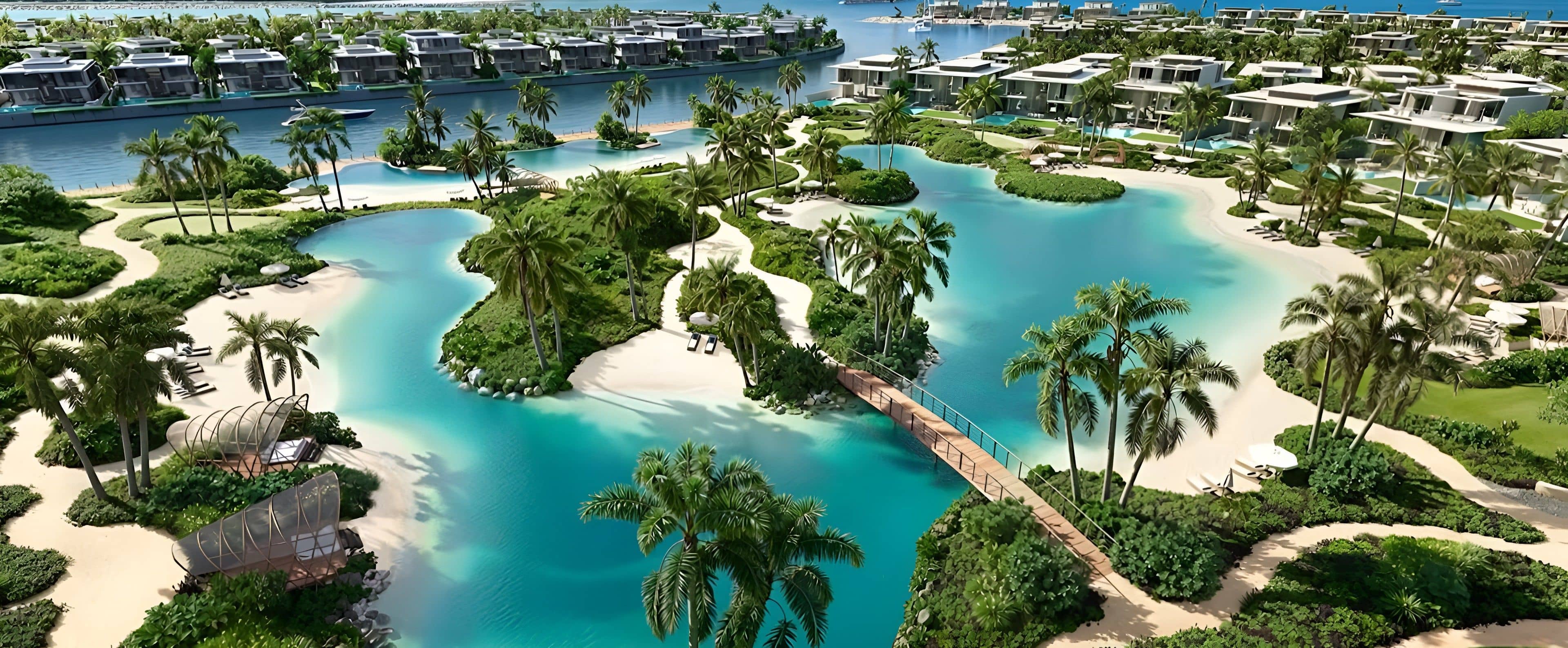
These examples show two useful ways to think about green space: a connected network of walking routes, or a larger community setting with woodland and eco corridors. For either, ask how residents reach the space, where shade and seating sit, and whether daily routes connect to useful destinations.
Separate healthy-home design from decoration
Healthy-home design concerns the conditions residents experience indoors and how the wider development supports movement and access to services. Air filtration and indoor air quality, water purification, daylight and circadian lighting, acoustics and non-toxic materials are practical features to ask about.
A spa, gym or yoga deck can add leisure value, while the home’s air, water, light and materials require evidence of their own. Ask the developer: Which systems support indoor air quality? How is drinking water treated? How does the design bring in daylight and manage evening light? What measures address sound and material emissions?
Then ask which certificate or standard verifies the stated features, which parts of the project it covers, and which criteria it assesses. A certificate can apply to a building, shared spaces or a wider community, so the scope and feature list are essential to understanding what the certification demonstrates.
Include the neighbourhood in the assessment. Active design, a substantial share of green space and access to health services are part of a wellness-focused residential offer, alongside the systems inside the home.
Wellness-washing can make a facility list sound more substantial than the design evidence behind it; a buyer who asks for certificates and feature documentation gets a clearer basis for comparison.
Twelve chapters on what the regional war tested, the balance sheet and dollar peg behind the market, and how to pick the right side of this cycle.
Download free→Choose fitness and recovery facilities residents can use
Flexible movement space can serve more routines than a room organised around fixed equipment alone. Look for room to stretch, move, practise varied forms of training and adapt activities for different abilities; outdoor exercise areas and accessible studios can support residents who do not want a conventional gym session. Golf Residence by Fortimo is listed at 1,390,000.
Recovery facilities such as saunas, cold plunges and specialist therapies can complement fitness when they fit residents’ needs. Assess likely use alongside space, maintenance, staffing and utility requirements, so the amenity mix remains practical to operate.
Match facilities to the intended residents and development. A modest, accessible studio or a shaded outdoor exercise area may suit more daily routines than a specialised facility with greater operational demands, while a well-planned mix can serve varied interests across a community.
Evaluate pools and water-based amenities in context
A standard pool, hydrotherapy facility and cold plunge each serve different purposes. Consider who is likely to use each option, how it connects with the wider fitness offer and whether residents can reach it comfortably from homes and shared routes. 399 Hills Park is listed at 1,500,000.
Dubai’s heat and humidity make the setting and operating plan important parts of the decision. Assess shade around outdoor pools, water consumption, energy needs, cleaning and maintenance, then consider how the pool connects with shaded seating, walking routes and other shared facilities.
Water alone does not demonstrate a complete wellness offer. A pool may support recreation and movement, while air quality, lighting, acoustics, access to green space and health services shape other parts of residents’ experience.
For developers, the useful question is how each water facility serves the whole community: which residents use it, when it is comfortable to use, and how it fits the operating budget. For buyers, those answers make it easier to compare a list of facilities with the way the development is designed to work.
Test the amenity mix against use, cost and long-term appeal
Before committing space and budget, identify who each amenity is for, how often residents may use it, and whether people of different ages and abilities can access it. This helps keep the programme connected to residents’ routines instead of relying on facilities that require specialist knowledge or a narrow pattern of use.
Compare construction needs with ongoing maintenance, staffing, space and utility demands. Indoor fitness areas, pools and specialist recovery spaces each bring operating considerations, so a clear plan for their day-to-day use can help protect the quality of the overall resident experience.
Assess appeal beyond resale. A coherent offer can support everyday satisfaction, a sense of community and residents’ willingness to stay, while a long list of costly facilities may add little if residents rarely use them.
When assessing a development, ask:
- Which features support health inside the home, and which are shared leisure facilities?
- What certificate verifies the design claims, and what exactly does it cover?
- How do parks, trails and shared spaces work in Dubai’s climate?
- Who can use each facility comfortably, including older residents and people with different mobility needs?
- How will the development operate and maintain each amenity over time?
For a fuller framework, read our free wellness real estate guide. It helps buyers organise questions about design, certification and the practical value of a development.
See also: Buy Off-Plan Property in Dubai: 2026 Guide, Dubai Golden Visa through Property: 2026 Guide, Which Dubai Property Area Fits Your Investment Goal in 2026?, Property Developers in Dubai: Profiles and Track Records, Dubai Rental Yields in 2026: Gross Returns, Costs and Tax, What Investors Need to Know About Tax on Dubai Property, Dubai Property Investment in 2026, Off Plan Properties in Dubai, Best Areas to Invest in Dubai and Abu Dhabi, Dubai Investment Guides & Resources, Bay Estate by Nakheel, Dubai Islands: Investment Case, The Yards Plaza by BEYOND, City of Arabia Offices, Emaar Vs Damac Developer Comparison, Al Jaddaf Waterfront Guide 2026: Prices and Metro, Beyond’s 30/70 Payment Plan: What It Actually Changes, JVC (Jumeirah Village Circle) Investment Guide 2026, Dubai Hills Estate Guide 2026: Prices and Yields, Dubai Population Growth, How Dubai Property Crowdfunding Works: Shares, Returns and Risks, The Yards Plaza by BEYOND, City of Arabia Offices, M&M.
Start by considering green space, nearby health services and beach access. Then examine the design details, certificate scope, accessibility and operating plan that help a wellness offer work in everyday life.
For practical questions to take into a property search, start with the free wellness real estate guide, then speak with an M&M advisor.
Does a wellness certificate apply to an entire development or to individual homes?
Check the certificate for the named building or spaces, then ask whether it covers individual homes.
Do wellness amenities affect residents’ service charges?
They can contribute to operating costs through staffing, cleaning, repairs, water and energy use. Ask for the service-charge budget and how shared facilities are included in its calculation.
Does proximity to a clinic count as a health amenity, or does the service need to be onsite?
Nearby care can be part of a health-supporting location. Compare travel time and whether the services suit your household’s needs.
Can a development’s wellness features benefit residents who do not use gyms or pools?
Yes. Indoor conditions and accessible routes can support daily life even for residents who do not use shared exercise facilities.
What are examples of wellness benefits?
Examples include healthier indoor conditions, convenient outdoor access and shared spaces for movement or relaxation.


