


Do I pay UK capital gains tax when I sell a Dubai property as a UK resident? In most cases, yes: UK tax residents can owe Capital Gains Tax on gains from overseas property, including a property in Dubai. Your UK tax residence for the tax year of the sale, the sterling gain and any reliefs all affect the result.
The short answer: UK tax residence usually brings overseas gains into scope
The UK can tax a UK resident’s gain on a Dubai property sale. The property’s location does not, by itself, remove the UK charge. The starting point is your residence status for the tax year in which the disposal takes place.
Use the Statutory Residence Test to assess your UK tax residence for that year. Moving to Dubai does not, on its own, make you non-UK resident. If you move into or out of the UK during the tax year, split-year treatment may apply only when the statutory conditions are met.
Keep this question separate from the rules for a non-UK resident selling UK property. Those rules concern UK land and have a different scope. Our guide to tax on Dubai property gives wider context on the Dubai side of ownership.
Before estimating tax, establish your residence position for the disposal year and record the dates you entered or left the UK.
Work out the gain in sterling, not just in dirhams
For UK tax, calculate the gain in sterling. Convert the acquisition costs and sale proceeds separately using an appropriate exchange rate for each transaction date. If the AED price changes little, exchange-rate movements can still leave a sterling gain or loss.
Start with the sale proceeds, then deduct the purchase cost and eligible costs connected with buying, selling or improving the property. Keep ordinary repairs and routine maintenance separate from capital improvements, because routine upkeep is generally not a capital improvement for this calculation.
Build a file that shows how you reached each figure. It should contain:
- The purchase and sale contracts, including the conditions attached to the sale.
- Completion statements, payment records and invoices for costs claimed.
- A dated record of the exchange rate used for each conversion and the resulting sterling amount.
Use the sale contract and its conditions to identify the disposal date. The date the proceeds reach your bank account does not, by itself, set the tax year. A buyer’s payment schedule may affect cash flow, while the contract determines when the disposal is treated as taking place.
Keep the sterling calculation alongside the original AED figures, so an accountant can follow the conversion from each transaction date.
Check the reliefs, allowance and rate for your circumstances
The chargeable gain is the result before applying eligible capital losses and the annual exempt amount available for the relevant tax year. These may reduce the amount subject to tax, but they do not change the underlying calculation of the property gain.
The Capital Gains Tax rate depends on the tax year and your circumstances, including your taxable income. Do not use one rate as a default for every seller. Work out the gain and identify your income position for the year before estimating the tax due.
Private Residence Relief may apply if the Dubai property genuinely qualified as your only or main residence for the relevant periods. Living in the property alone does not automatically exempt the whole gain. Review the ownership and occupation periods, including absences, and keep evidence that supports the periods claimed.
Put the residence evidence beside the purchase and sale records, so the relief calculation follows the same timeline as the disposal.
What thousands of high-net-worth British residents are doing right now, the forces pushing them, and what Dubai offers in 2026.
Download free→Report a foreign-property disposal through the right UK route
A UK-resident individual will generally report a taxable disposal of overseas property through Self Assessment, using the Capital Gains section and relevant supplementary pages. The reporting route for a Dubai property sale is separate from the 60-day reporting and payment rules that generally apply to UK residential property disposals.
Each owner should calculate their share from the legal and beneficial ownership position. Co-owners generally report their respective shares, rather than one owner reporting the full gain. Keep the ownership documents with the sale records, especially where the legal title and the beneficial interests differ.
M&M Real Estate’s Compliance service provides documentation for an accountant preparing a UK tax resident’s worldwide income declaration and Self Assessment filing. It suits a seller who needs the Dubai property records organised alongside their wider tax documents.
For the return, give the accountant the ownership split, disposal date, sterling calculation, eligible costs, losses and any relief claimed.
Selling while abroad may not settle the UK tax question
A person who is non-UK resident when selling should check the temporary non-residence rules before treating the gain as outside UK tax. A later return to UK residence can affect the treatment of a gain made while abroad, so consider the departure date, residence history, sale date and return date together.
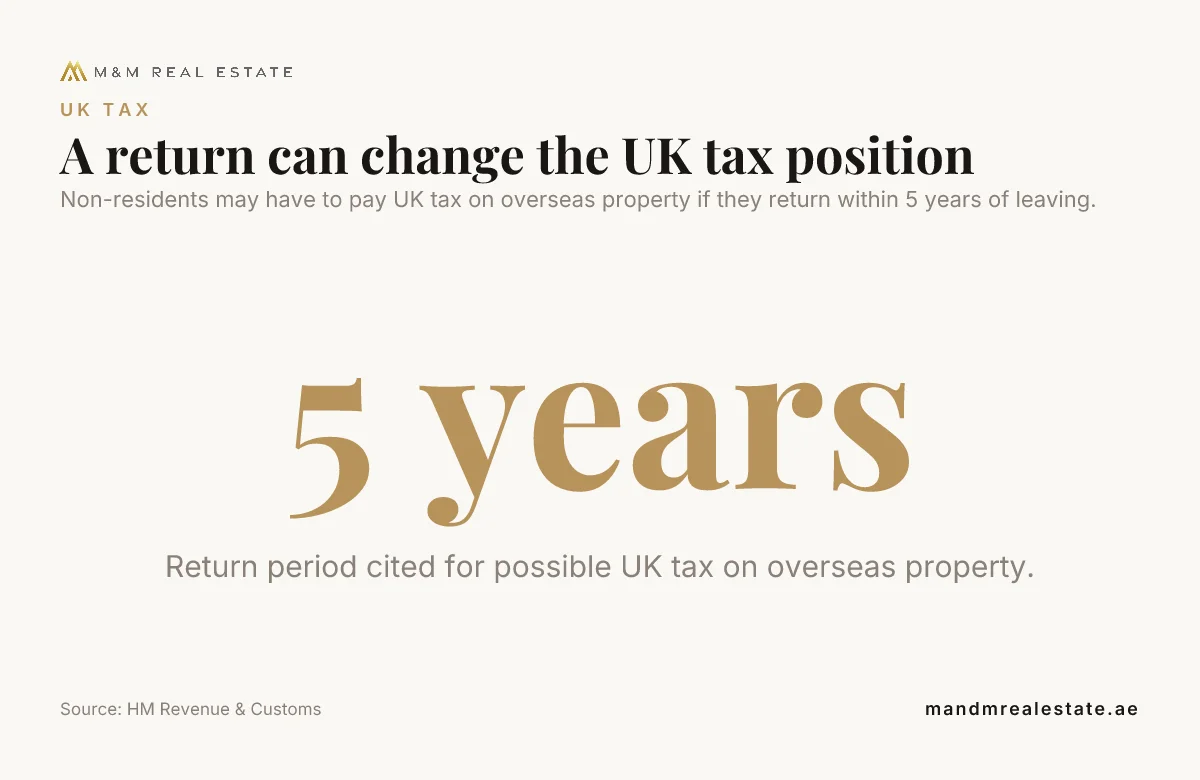
Non-residents may have to pay UK tax on overseas property if they return within 5 years of leaving.
Source: HM Revenue & Customs
This is a separate issue from a non-resident selling UK property. The fact that the Dubai property is overseas does not make those two situations interchangeable.
Write down the dates of departure, sale and any return to the UK before deciding how the disposal should be reported.
Consider UAE tax and ownership structure separately
For an individual, the UAE generally does not impose personal income tax on a property capital gain. A company or a property held as part of a business can lead to a different UAE tax analysis. The UK position remains a separate question.
UAE tax paid does not, by itself, remove UK Capital Gains Tax. Any foreign tax credit relief depends on tax actually paid and the relevant treaty and domestic rules. A company is also a separate taxpayer from its shareholders, so company ownership can change who is taxed and which rules apply to a disposal.
M&M Real Estate’s Legal setup service coordinates with UK-qualified solicitors and UAE legal partners on personal ownership and a UAE company structure. This can help a buyer or owner frame the ownership question with the right professionals before a sale or restructuring.
This is general information, not tax or legal advice.
If you are considering what to do with the sale proceeds after dealing with the tax position, these M&M pages cover other parts of Dubai property investment:
- Buying and ownership: the off-plan buying guide, off-plan properties in Dubai, a guide to a 30/70 payment plan, and the Dubai Golden Visa property guide.
- Areas and developers: Dubai area guides, area comparisons for investors, Al Jaddaf Waterfront, JVC, Dubai Hills and Dubai developer profiles.
- Market and investment context: the Dubai property investment guide, Dubai rental yields and costs, Dubai population growth, property crowdfunding in Dubai and Dubai investment resources.
- Investment Cases: Bay Estate by Nakheel, The Yards Plaza by BEYOND, The Yards Plaza Investment Case and an Emaar and DAMAC comparison.
What to do before you sell
Before agreeing a sale, establish your UK residence position for the tax year, identify the disposal date under the contract and assemble the purchase, sale, cost and ownership records. Ask your accountant to review the sterling gain, available losses, annual exempt amount and any residence relief before filing.
An M&M advisor can discuss the Dubai ownership records and the documentation available for your accountant. Speak with an M&M advisor about your property and sale timeline.
this article is general information and not tax, legal or financial advice, and returns are not guaranteed.


Can I deduct mortgage repayments when calculating the gain on my Dubai property?
Repaying the mortgage principal is a financing payment, not an allowable cost of acquiring or improving the property. Keep loan statements separately from invoices and transaction costs used in the gain calculation.
What happens if I sell my Dubai property at a loss?
A qualifying capital loss may be used against eligible capital gains under the UK rules. Keep the same contract, cost and sterling-conversion evidence you would retain for a gain, because the loss calculation also needs support.
How long should I keep records for a UK tax return covering a Dubai property sale?
Keep the records for as long as HMRC can enquire into the return, and retain them longer if an enquiry or dispute remains open. Preserve documents that establish ownership and acquisition cost even after the sale paperwork is complete.
How is the gain calculated if I inherited the Dubai property?
For UK Capital Gains Tax, the starting acquisition value for inherited property is generally its market value at the date of death. Use the estate valuation and retain evidence of that valuation, along with later improvement and sale costs.
What if the buyer pays the Dubai property sale proceeds in instalments?
Instalments can mean the seller receives cash over time while the disposal is dealt with for the tax year set by the sale contract and its conditions. Keep the payment schedule and receipts, and plan for tax cash flow before all proceeds arrive.


