In a Dubai off-plan Sale and Purchase Agreement (SPA), the clauses that set the buyer’s options cover the unit, payment duties, handover, default and resale. Read the SPA with its schedules and related documents, because the signed contract pack determines what the buyer must pay and what steps are available if the purchase changes course.
Read the SPA as part of the full contract pack
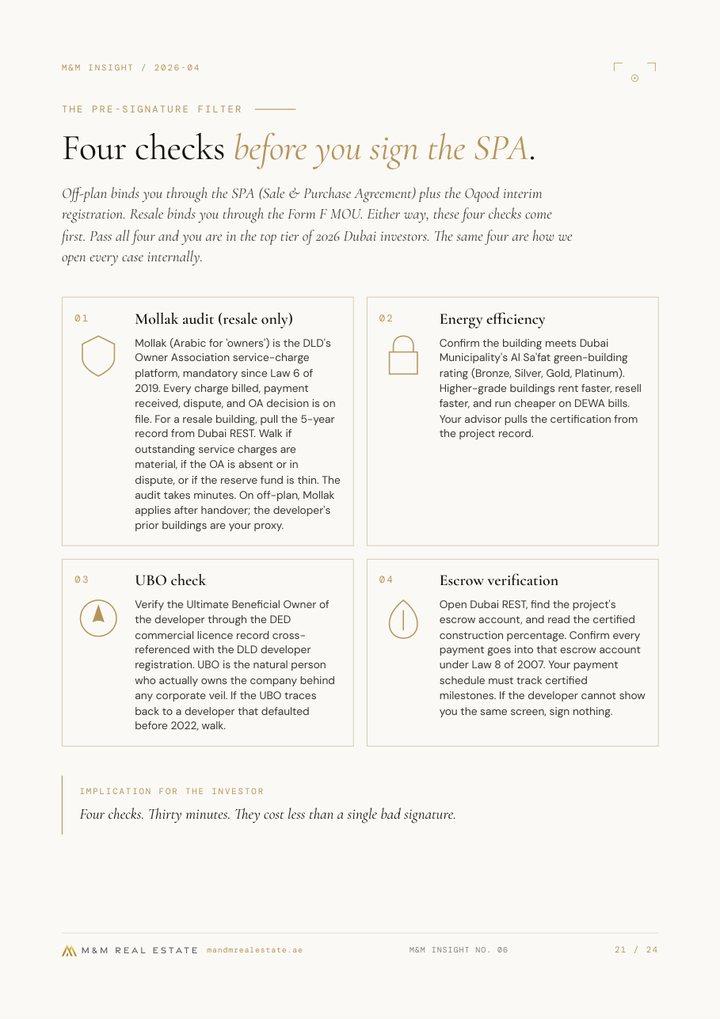
Start by matching the purchaser names and details, developer, project, unit identifier and ownership shares across the SPA and its schedules. A mismatch can leave uncertainty about who has the contractual duties and which property the agreement covers.
Read the main SPA alongside the reservation form, payment-plan document, annexes and any written amendments. The unit description, finishes, payment terms and later agreed changes may appear outside the main agreement.
If two documents use different wording, record the exact clauses and request a written correction. Make sure the agreed wording appears in the final version signed by the parties; a sales discussion or unsigned message does not change the signed contract.
M&M Real Estate’s off-plan advisory assesses opportunities across developer track record, product specification, location, market dynamics and resale liquidity, with cross-border purchase support. This helps place the contract review within the wider project decision.
The off-plan buying guide explains the purchase sequence, including Oqood, the Dubai Land Department’s off-plan registration. Compare the named developer and project with developer profiles as part of due diligence on the project and purchase structure.
Pin down the unit, specifications and permitted changes
Check that the unit plan, floor or plot reference, area basis, layout and parking allocation match across the SPA and annexes. A project brochure may describe the wider development, while the contract needs to identify the specific unit being sold.
Compare the finishes schedule and list of inclusions with the SPA. A named material, appliance or fitting gives a clearer contractual reference than a broad description, so record the exact specification that forms part of the purchase.
Read the variation clause closely. It should explain which changes the developer may make, any stated limits or approval process, and how a change could affect the area, layout, finish or included items.
Put any sales promise that affects your decision into the signed contract documents. This gives both parties one written version of the agreed unit and specification to follow.
Connect payment triggers to escrow and cash flow
List every instalment beside its due date and contractual trigger. Compare that schedule with the SPA’s payment instructions and the project escrow account, the project-specific account that receives buyer payments for the development.
Calendar-based instalments fall due on stated dates. Construction-linked payments depend on a defined milestone, so check how the SPA describes that milestone and how the developer gives notice that it has been reached.
Read the final instalment together with the handover notice, inspection period and payment deadline. A short gap between notice and payment can leave little time to arrange funds or resolve a recorded defect.
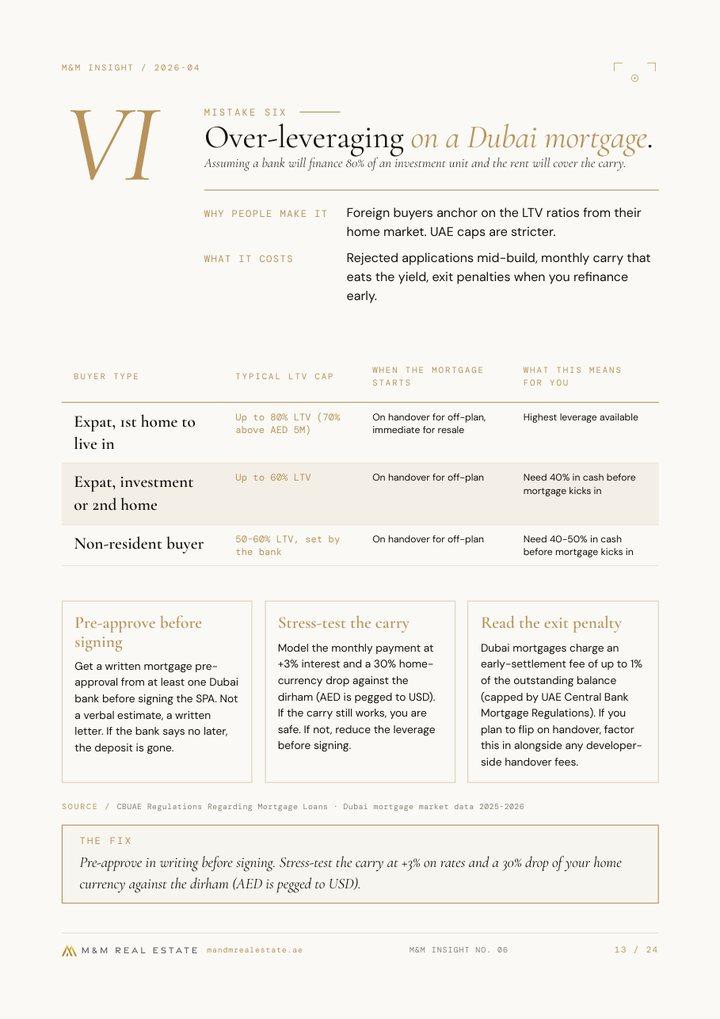
If a mortgage will fund the final payment, allow for the lender’s valuation, approval and drawdown process. The financing plan does not itself change the payment date in the SPA.
Keep the DLD transfer fee in the purchase budget as well as the instalments.
Read completion, delay and handover provisions together
Read the stated completion date with any grace period and extension rights. A date in a project summary may differ from the last date allowed by the signed SPA.
Check how the contract defines force majeure, an event outside a party’s control as defined in the agreement. Look for the notice the developer must give, the obligations affected and any change to the completion timetable.
Identify the SPA’s remedies or compensation provisions for late delivery. Note any conditions, notice requirements and steps the buyer must take to preserve a claim, then keep records of notices and replies.
A handover notice starts a process; it does not complete every inspection, defect-reporting or title-transfer step. Follow the SPA’s deadlines for inspection and snagging, the process of listing and reporting defects in the unit, and keep a written record of each item raised.
Map buyer default, cancellation and refund consequences
For a missed instalment, trace the notice method, the time allowed to cure the default, any late-payment consequences and the steps the developer may take if the missed payment continues. Check how the SPA treats notices sent by email, post or another specified channel.
Read termination and refund clauses together. Identify who may terminate, the procedure required, how payments are treated and whether the outcome changes with the project’s completion stage.
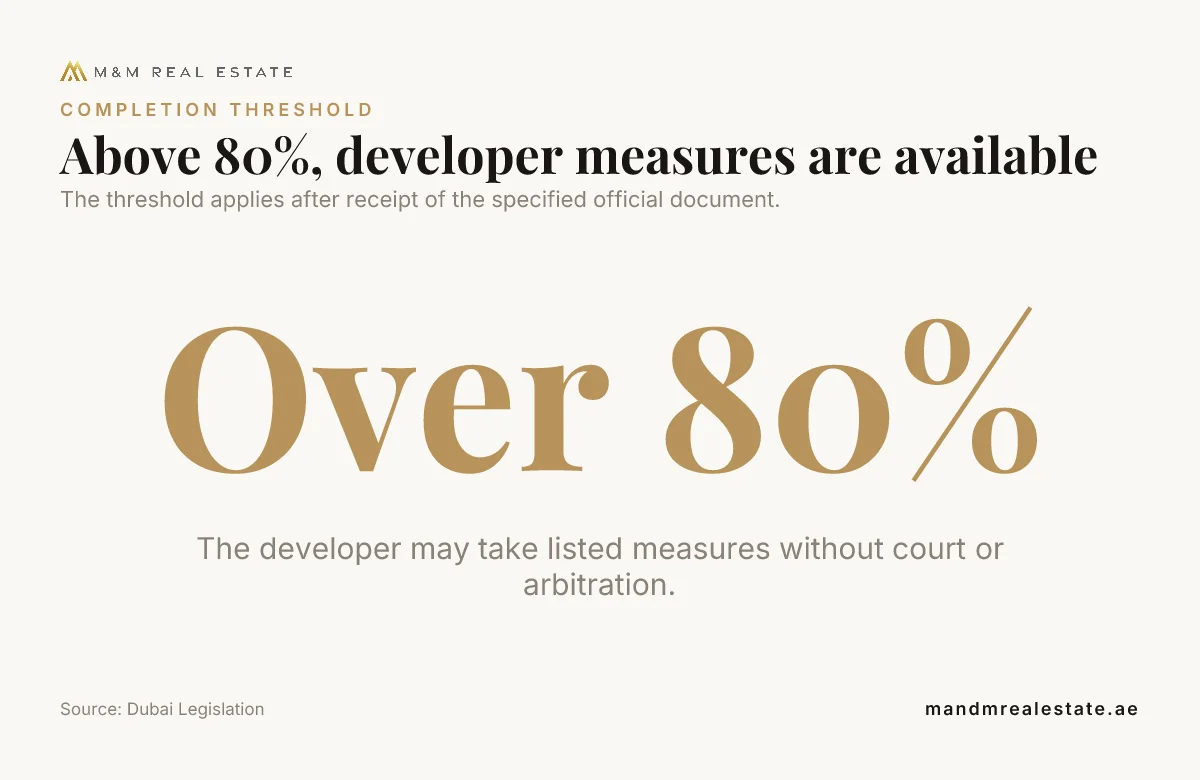
Completion stage can affect the statutory measures available to the developer. A lawyer should assess the applicable statutory position alongside the SPA.
A buyer’s wish to leave because of changed plans or market conditions is separate from a contractual right to terminate. The SPA and applicable statutory route determine what the parties can do, so base any exit decision on the written terms and the facts of the purchase.
Check assignment and resale restrictions before planning an exit
Assignment means transferring contractual rights and obligations to another purchaser. Check whether the SPA sets a minimum payment threshold, developer consent, a no-objection certificate (NOC), fees or other conditions before the transfer can proceed.
Read what the restriction covers. It may apply to transfer of the whole SPA, a change in purchaser details or another form of assignment, and the contract may set specific timing and document requirements.
Compare the permitted transfer window with the payment schedule and expected completion date. A resale plan may depend on meeting payment conditions first, so the clause can determine whether an exit is available when the buyer expects it.
If the investment plan depends on assignment, have the clause and process reviewed before signing. Finding a new purchaser does not by itself complete the transfer.
Resolve open points before signing and understand enforcement
Keep a discrepancy list that names each document, clause or schedule, the conflicting wording and the correction requested. Before signing, check that every agreed correction appears in the final SPA and its annexes.
Review the governing-law, dispute-resolution and notice clauses. They set out how the parties raise a contractual issue, where they pursue it and which communication steps the SPA requires.
Compare the purchaser and project details in the SPA with the Oqood registration documents. Oqood records an off-plan registration with the DLD; project-specific advice can explain what that registration establishes in the buyer’s circumstances.
For questions about statutory remedies, enforceability or conflicting documents, ask a Dubai-qualified property lawyer to review the SPA and confirm that the advice reflects current Dubai rules. This is general information, not tax or legal advice.
M&M’s end-to-end assistance covers the process from initial consultation through handover and beyond, with legal, financial and logistical support included as standard. It suits buyers coordinating contract review with the practical steps around the purchase.
See also: Dubai Golden Visa through Property: 2026 Guide, Which Dubai Property Area Fits Your Investment Goal in 2026?, Dubai Rental Yields in 2026: Gross Returns, Costs and Tax, What Investors Need to Know About Tax on Dubai Property, Dubai Property Investment in 2026, Best Areas to Invest in Dubai and Abu Dhabi, Dubai Investment Guides & Resources, Bay Estate by Nakheel, Dubai Islands: Investment Case, The Yards Plaza by BEYOND, City of Arabia Offices, Emaar and DAMAC: How to Compare Two Projects on the Public Record, Al Jaddaf Waterfront Guide 2026: Prices and Metro, 30/70 Payment Plan: What Beyond’s Offer Changes, JVC (Jumeirah Village Circle) Investment Guide 2026, Dubai Hills Estate Guide 2026: Prices and Yields, Dubai population growth is reshaping how the city plans for residents, How Dubai Property Crowdfunding Works: Shares, Returns and Risks, The Yards Plaza by BEYOND, City of Arabia Offices, M&M.
What to do before signing
Before committing, match the purchaser and unit details, reconcile every schedule, map payment dates against cash available, and record the completion, default and resale terms that affect your plans. Send any discrepancy list to the developer and review the corrected final version with a Dubai-qualified property lawyer.
An M&M advisor can go through your budget, timeline and shortlist with you. Speak with an M&M advisor about the SPA clauses that shape your options.
Figures are past data from the sources named; this article is general information and not tax, legal or financial advice, and returns are not guaranteed.


Who prepares the Dubai off-plan SPA, the buyer or the developer?
The developer usually prepares the first draft of the SPA for the project and unit. The buyer can request changes, and both parties should sign the version that includes any agreed amendments.
Can a buyer cancel an off-plan SPA simply because property prices or personal circumstances change?
No. Whether cancellation is available depends on the signed SPA and the applicable statutory route; seek advice before acting.
Can a buyer sign a Dubai off-plan SPA remotely?
Remote signing may be possible when the developer accepts the signing method and can complete its identity checks. A buyer using a representative should have the authority and any required authentication steps reviewed before execution.
What should joint purchasers consider if one buyer wants to leave the SPA?
A private agreement between co-buyers may not change the developer’s contract or the registered purchaser details. The parties should document how any approved change affects payment responsibility, ownership shares and the remaining buyer’s obligations.
How does buying off-plan work in Dubai?
The buyer selects a unit under construction and follows the SPA’s agreed payment, registration and handover steps.
Ten off-plan mistakes
The ten mistakes overseas buyers make most, and how to check each one before you sign. 24 pages. Free by email.