A buyer can review and complete a Dubai off-plan Sale and Purchase Agreement (SPA) from abroad when the developer accepts the signing method used for that transaction. The key steps are to compare the SPA with the agreed purchase, verify payment instructions independently and obtain confirmation of registration.
- Use the reservation form to check the proposed purchase, then review the full SPA before signing.
- Prepare the identity and contact details the developer requests, and match buyer names across the documents.
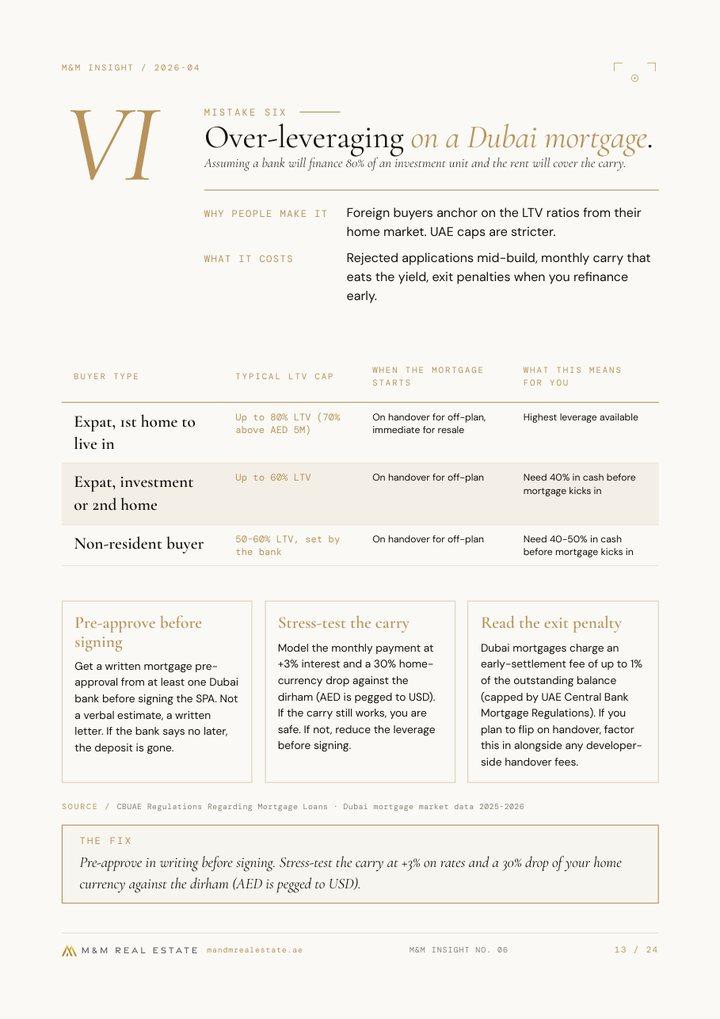
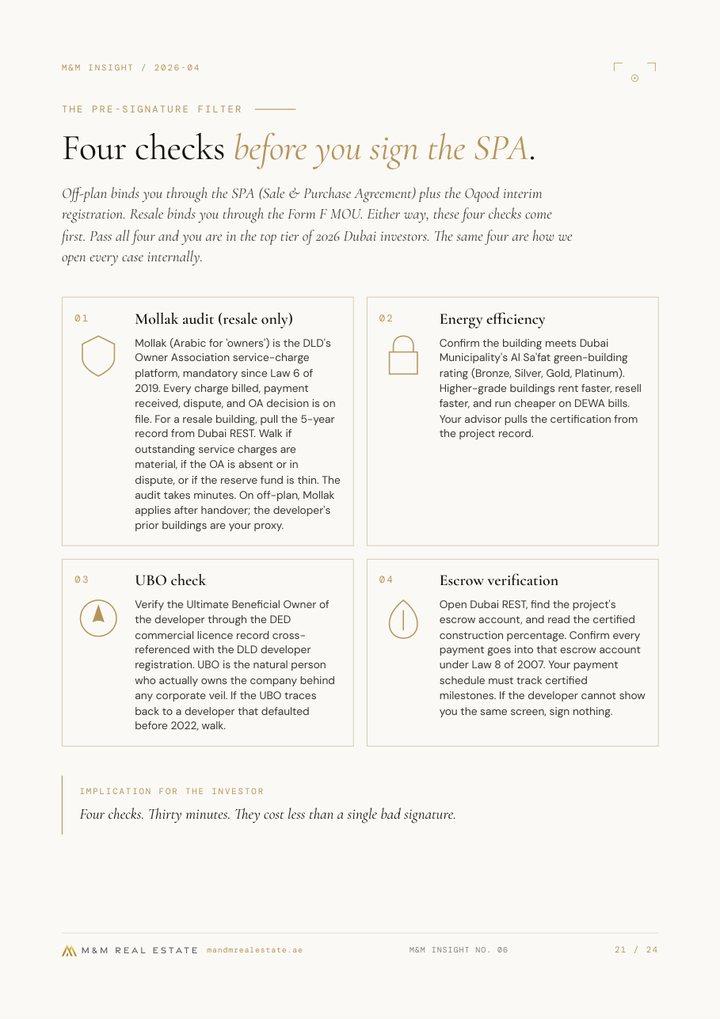
- Verify the project, escrow arrangements and payment account through trusted channels before transferring funds.
- Ask the developer to confirm its accepted signing method, document requirements and deadlines in writing.
- After signing, keep the executed SPA, receipts and registration confirmation together.
- For wider Dubai location and buying material, use M&M’s property location guides and investment resources.
The reservation form starts the file, the SPA sets the terms
A reservation form records the proposed purchase and the initial terms discussed with the developer. The SPA sets out the detailed contractual obligations, so the booking stage does not replace a careful review of the agreement.
Before the developer issues the SPA, prepare the identity and contact details it requests. Check that every buyer’s name and ownership details match across the reservation form, purchase documents and agreement, since inconsistent records can delay signing and registration.
When the draft arrives, compare it with the reservation terms straight away. Raise any difference in the unit, price or payment plan before signing, and ask the developer for a written sequence of signing, payment and registration deadlines so overseas bank-transfer times can be allowed for.
M&M Real Estate’s off-plan buying guide sets out the broader purchase sequence. Its off-plan property page provides further context for buyers comparing developments.
Complete the investment checks before committing to the SPA
An SPA records the agreed purchase. The buyer still needs to assess whether the area, asset and ownership plan fit the intended investment.
Market and location context is covered in M&M’s Dubai property investment guide, area analysis and population growth coverage. District references include JVC and Al Jaddaf Waterfront.
Rental income, tax and residence planning may also shape the purchase decision. M&M covers these topics in its guides to Dubai rental yields, Dubai property tax and the property-based Golden Visa. Its crowdfunding guide covers a different investment structure for readers comparing ways to access Dubai property.
Verify the project and payment route before sending funds
Check the project registration and stated project escrow arrangements through the Dubai Land Department (DLD) or another official channel. A project escrow account is the account assigned to receive payments for that development, so match the payment instructions to the project and the SPA.
Compare the beneficiary and account details with instructions verified through a separate, trusted contact route. If an email announces a change to the account, pause the transfer and confirm the change directly using contact details obtained independently of that message.
Keep the payment schedule, transfer confirmations and receipts together. This gives the buyer a record for matching each transfer to the relevant SPA obligation and for raising a discrepancy with the developer.
Questions about the company behind a project can be framed with M&M’s developer profiles. For a buyer assessing a villa purchase, the off-plan villa investment advisory focuses on waterfront communities, making it relevant when the property type forms part of the investment brief.
Project examples can help a buyer understand how a development is presented. The images below open a developer comparison and a Dubai Islands project case; use them as context alongside the project registration and payment checks.
Compare the SPA with the agreed purchase
Match the unit identifier, building, floor and other particulars in the SPA against the reservation documents. This check helps ensure the agreement records the property the buyer selected.
Reconcile the purchase price, booking deposit, instalment amounts and due dates against the agreed payment plan. Read any milestones in the SPA alongside that schedule, since the contract defines when each obligation falls due.
Check buyer names, ownership shares and the agreed purchase structure before signing. Then read the provisions for fees, specification changes, formal notices and assignment alongside the headline price, because these terms can shape the buyer’s obligations after execution.
The Dubai Harbour Property Guide covers market prices, sales, rental yield, active projects, investor suitability and off-plan projects. It can help frame questions about the location and development, while the SPA confirms the unit and payment terms agreed for the purchase.
A further payment-plan comparison is available in M&M’s analysis of a developer payment plan. The linked Yards Plaza Investment Case and its project analysis offer examples of project-level material to review as part of the purchase decision.
Read completion, delay and termination terms together
The SPA’s contractual completion date and the later handover process are related stages with different steps. Check how the agreement describes completion notices, inspections and delivery of possession so the buyer knows what to expect at each point.
Read delay, extension and termination provisions together, including the notice process and any steps the buyer must take. If the practical effect of a material clause is unclear, ask a qualified property lawyer to explain it before signing.
Review late-payment and default clauses alongside the instalment schedule. The buyer needs to understand the agreement’s stated remedy process and deadlines if a payment is delayed or missed.
This is general information, not tax or legal advice.
A construction image and a completed residential community offer context for the distinction between works on site and the buyer’s later handover steps.
Choose a remote signing method the developer accepts
Ask the developer which signing methods it accepts for this SPA. The process may use an electronic signature, a scanned signed copy, couriered originals or another method, so get the required sequence and deadlines in writing for this transaction.
If the developer accepts an electronic signature, ask how it authenticates the completed agreement and returns the executed copy. If it requires original documents, allow time for the courier and keep proof of dispatch and receipt.
A power of attorney may help when the buyer cannot sign directly or the transaction requires a representative. Define the authority for the intended act, then confirm the notarisation, legalisation and translation requirements with the developer and relevant authorities before relying on a document signed abroad.
Keep the final draft and the returned agreement together. A clear record of the version sent for signature and the version accepted by the developer helps the buyer track completion of the signing process.
Complete payment and off-plan registration follow-up
Use the SPA and agreed payment schedule to identify amounts due around booking, signing and registration. The contract’s stated due dates determine when each payment falls, so the buyer can plan overseas transfers against the correct obligation.
Ask how the developer will record the purchase with the Dubai Land Department, including whether Oqood, the DLD’s off-plan registration, applies to the transaction. Request the registration confirmation and the details of any further action the buyer needs to take.
After each transfer, retain the receipt and ask the developer to confirm that the funds have been allocated to the purchase. Obtain registration evidence separately, then store it with the fully executed SPA and payment records in one secure place.
Track instalments and notices through handover
Maintain a dated record of instalments and receipts, then match each payment to the SPA. Keep the developer’s contact details and written updates together, and respond to formal notices within the time stated in the agreement.
As completion approaches, arrange the inspection and handover steps described in the SPA. Construction completion and delivery of possession are distinct stages, so follow the developer’s formal instructions for each one.
For location comparisons that form part of the wider purchase decision, M&M also covers Al Jaddaf Waterfront and JVC. A buyer can use those area guides while keeping the signed SPA and its obligations as the record for the chosen purchase.
Speak with an M&M advisor about the purchase, budget and timeline. The Bay Estate image in the earlier section opens its Investment Case as another project example; M&M’s Yards Plaza project analysis is already linked above.
Conclusion: get the signing sequence in writing
Before signing a Dubai off-plan SPA from abroad, match the unit, buyer details and payment schedule to the agreed purchase. Ask the developer to confirm the signing method, deadlines, payment route and registration evidence in writing, then keep the executed SPA and every receipt in one secure record.
Speak with an M&M advisor to go through your budget, timeline and shortlist.
This article is general information and not tax, legal or financial advice, and returns are not guaranteed.

Can two overseas buyers sign the same Dubai off-plan SPA from different countries?
Yes, when the developer accepts a signing process that lets each buyer complete the same agreement from their location. Time-zone differences and local holidays can affect coordination, so both buyers can plan around the developer’s stated deadlines.
Can an overseas buyer pay instalments from a bank account outside the UAE?
The developer’s payment instructions determine whether it accepts funds from that account. Ask which transfer reference and currency the developer needs, and allow for bank charges or currency conversion when planning the remittance.
What should I do if the SPA arrives in a language I do not understand?
Arrange an independent translation of the complete SPA, including schedules and annexes, before signing. Compare the translated version with the agreement the developer expects you to execute, and ask a property lawyer to explain clauses that remain unclear.
Can I change the buyer’s name or ownership shares after signing the SPA?
A change after signing needs the developer’s written process and may affect the purchase record held for registration. Ask for the required amendment steps and written approval before submitting a change request.
What records should I keep if a payment is delayed or disputed?
Keep the bank transfer trace, debit confirmation, beneficiary details, payment instructions in force at the time and correspondence with the developer. A dated record of when each party sent or received a message helps explain the sequence if the payment is disputed.
Ten off-plan mistakes
The ten mistakes overseas buyers make most, and how to check each one before you sign. 24 pages. Free by email.