A Dubai off-plan payment plan works for an overseas buyer when each AED instalment has a date, a funding source and enough time for the money to arrive. Compare the full schedule, currency exposure and handover costs before you commit.
- Compare dates and amounts. A headline payment split does not show when each instalment falls due.
- Build one cash-flow calendar. Match contractual milestones to income receipts, savings and transfer lead times.
- Test the exchange rate. Estimate the home-currency cost for each transfer date and allow for an adverse movement.
- Plan the handover balance. Name a primary funding route and a fallback that does not depend on unconfirmed finance.
- Keep rent separate until it arrives. Allow for furnishing, leasing time, vacancy and operating costs before using rental income in the plan.
- Read the contract and exit terms. The Sales and Purchase Agreement sets payment triggers and late-payment consequences, while assignment rules affect a possible sale before completion.
Compare the schedule, not just the headline split
A fixed-date instalment is due on a calendar date. A construction-linked instalment is triggered by a project milestone, so faster progress can bring a cash call forward. Put each date or trigger beside the expected income and savings that will fund it.
For a handover-heavy plan, record the amount due at completion and the funds available on that date. A post-handover payment plan moves some instalments beyond completion, so include those future obligations in the same comparison.
Use the M&M off-plan guide to understand how payment plans, escrow and purchase steps fit together. For each project, turn the percentage split into AED amounts, then compare the dates and triggers across the full schedule.
Two property images can help place the examples in their project context. The Dubai Islands case image shows a separate development, while the off-plan collection image gives a wider view of the type of asset being considered.
For SHIONE by BEYOND, map each instalment to its own date in the signed schedule.
Worked example: Multiply the purchase price by the completion percentage to calculate the completion cash requirement, then map the remaining balance to earlier instalments in the signed schedule.
For another Dubai Islands project context, read the Bay Estate investment case. Compare project schedules on their own terms, since a similar location does not mean similar payment dates.
Build a calendar around overseas income and commitments
Use one calendar for every contractual milestone, expected income receipt, savings drawdown and international transfer. Add time for bank processing and compliance checks, because a transfer instruction on the due date may not reach the developer in time.
Separate instalment funds from emergency liquidity and money already committed to family, business or other property costs. If income is irregular or several properties have instalments, test the dates against a weaker-income period and include all overlapping payments in one view.
Keep the supporting records ready before a transfer is due. Banks may ask for information about the source of funds, so gather the relevant account statements and transaction records early. Store contracts, transfer records and acknowledgements together in a secure folder, using the M&M resources page as a starting point for wider Dubai property reading.
For an investor with more than one asset, label the calendar by property and location. For shortlist organisation, the Dubai locations overview from M&M can help; its Al Jaddaf Waterfront page, JVC guide and Dubai Hills guide cover areas that may already feature in an investor’s portfolio.
The images below show a property-planning discussion and a Dubai city view. Use the calendar to bring each asset’s obligations into one schedule, even when the properties sit in different areas.
For a shortlist of off-plan property, compare the project and the company behind it using M&M’s project selection and developer profiles. Keep those checks separate from the calendar: the contract still sets the payment dates.
Stress-test the exchange rate before committing
For every planned transfer, estimate the home-currency amount needed to buy the AED instalment at a planning rate. Then repeat the estimate at a less favourable rate, so the cash-flow plan shows how much additional home-currency funding a movement could require.
Set aside a currency reserve that reflects the size and timing of upcoming payments. A plan based only on today’s exchange rate leaves future instalments exposed to currency movements between income receipt and transfer.
Include both transfer fees and the provider’s exchange-rate spread in the estimate. If you compare a currency hedge with an unhedged transfer, include the hedge cost and the payment dates it covers.
Use the currency in which income and savings actually arrive. Funds in separate currencies have separate exchange costs, so model each transfer from its real starting balance. For wider allocation decisions, Dubai areas comparison and property tax overview from M&M can sit alongside the cash-flow review.
If a property purchase also forms part of a residency plan, read the Dubai Golden Visa property guide as a separate decision. Keep its costs and timing outside the developer’s instalment schedule.
Prepare a credible route for the handover balance
Name a primary funding route for completion, such as cash reserves or borrowing, and a fallback if the first route is delayed or unavailable. Mortgage pre-approval can indicate affordability at the time of assessment, while the final loan terms and availability at handover depend on the lender’s decision then.
When comparing borrowing in your home country with UAE finance, include the full repayment cost, the currency of the debt and the effect on other borrowing commitments. A loan in a different currency from the property instalments can add another exchange-rate exposure to the capital stack.
For The Yards Plaza, compare the payment schedule with its milestones before assessing the completion funding need.
Write each payment trigger and amount into the calendar before judging the completion funding need. The 40/60 headline alone does not tell you how much falls due at handover. M&M’s Yards Plaza investment case and its investment case page provide project context for that review.
These images show two Dubai development examples. Use them as project context, then rely on the signed payment schedule for the amounts and dates in your funding plan.
Compare the developer’s schedule with your borrowing route before you sign. A different aspect of due diligence is covered by M&M’s developer comparison, while the payment schedule itself remains the basis for calculating your cash requirement.
Budget for the period between handover and stable rent
Allow time between handover and the first rent receipt. Furnishing, marketing and leasing all need to happen before a tenant pays, so build this period into your cash plan instead of treating rent as available on completion day.
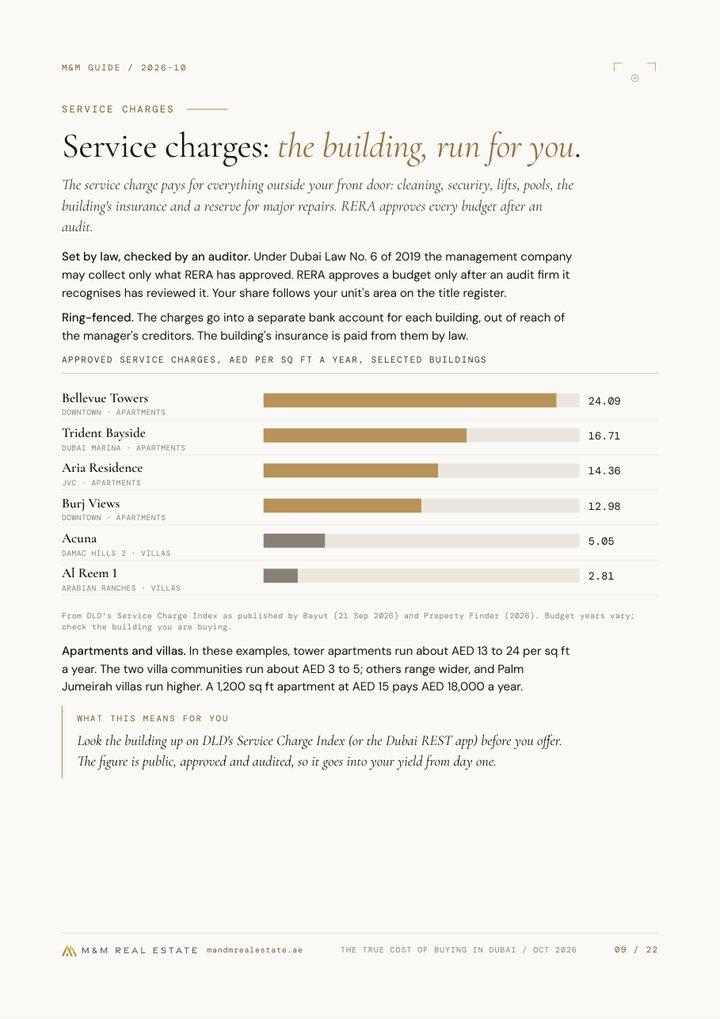
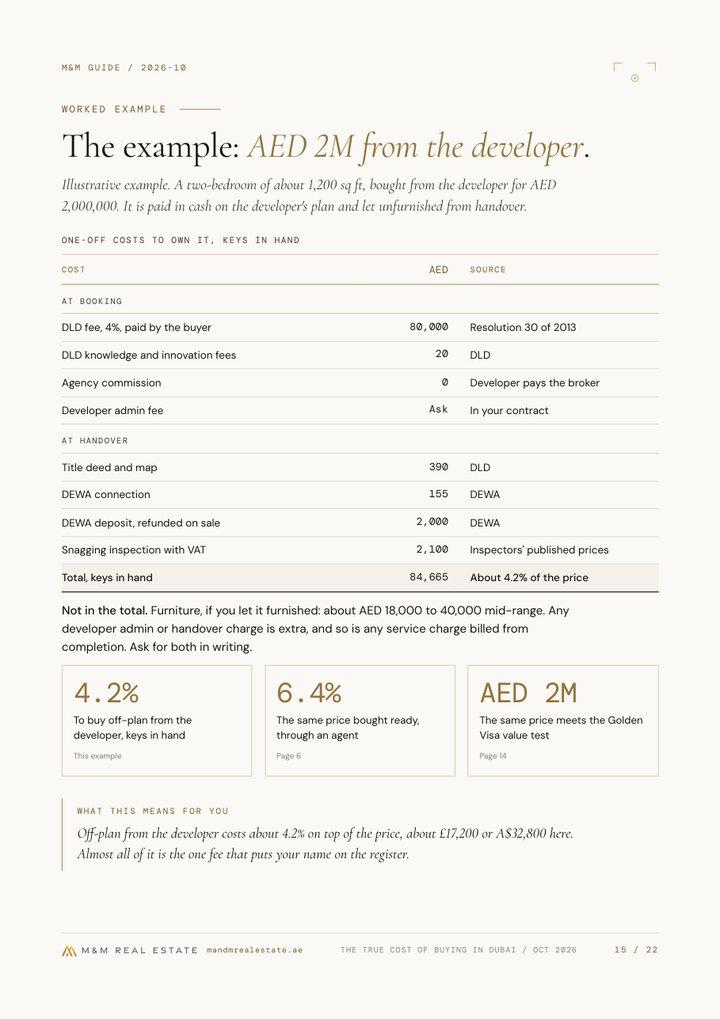
Stress-test a vacancy period and include service charges, furnishing, maintenance and other operating costs. Keep a separate buffer for this phase, because a fixed developer instalment still falls due even when a property has no rental income.
For a post-handover plan, compare each instalment with rental cash flow after costs. A headline rent or projected rental yield does not show the amount left after operating expenses or the date the income reaches your account.
Rental assumptions can be considered alongside M&M’s Dubai rental yields and costs guide. Its Dubai population analysis can sit alongside a location review, while the JVC area image shows one example of a residential district.
The images below show rental and residential property contexts. Keep the operating-cost estimate and the first-rent date as separate lines in the cash-flow calendar.
Before treating rent as a funding source, write down the expected first-tenant date, operating costs and the instalment dates that follow. The Dubai Hills guide offers another area reference when comparing a rental strategy.
Review the payment mechanics and exit terms
Read the Sales and Purchase Agreement (SPA), the contract between buyer and developer, for due-date triggers, payment instructions and late or missed instalment consequences. Put any notice period and bank processing time into the calendar, and retain each transfer receipt with the developer’s payment acknowledgement.
A project escrow account is a project-specific account for buyer payments. Escrow and construction milestones are explained in M&M’s off-plan guide, so compare the milestone information with the payment instructions and keep a record of each payment.
Review assignment or resale terms before relying on a sale before completion to fund future instalments. Consent requirements and contractual conditions can affect whether a transfer is possible and when sale proceeds might be available.
Run one downside case that combines an earlier construction-linked payment, a weaker exchange rate and a delay to expected income. A separate discussion about shared property investment structures can draw on M&M’s crowdfunding overview, while an advisor can review the cash-flow plan for a direct purchase.
Build the schedule before you commit
Put the signed milestones, transfer lead times, currency scenarios, handover funding and post-completion costs into one calendar. Then ask the developer to explain any unclear trigger, late-payment term or assignment condition before you commit.
The Off-plan payment plan: match instalments to overseas cash flow approach gives you a clear test: each AED payment needs a date, a funding route and a reserve for delays or currency movement. An M&M advisor will go through your budget, timeline and shortlist with you. Speak with an M&M advisor.
This article is general information and not tax, legal or financial advice, and returns are not guaranteed.


Can an overseas buyer pay an instalment from a joint or third-party bank account?
The developer’s payment instructions and the receiving bank’s compliance process determine whether that account can be used. Ask the developer to record the permitted payer details before sending funds, and keep documents that explain the relationship between the buyer and account holder.
Can I pay an instalment early to reduce uncertainty about future exchange rates?
Early payment can bring forward the currency conversion and change how the developer allocates the amount to the instalment schedule. Get written confirmation of the amount, allocation and receipt before arranging an early transfer.
Does a currency forward contract remove all the risk of paying instalments from abroad?
No. A forward contract can set an exchange rate for an agreed amount and date, while leaving exposure to contract costs, mismatched payment dates and the consequences of changing or cancelling the arrangement.
Can two co-investors with different income currencies share responsibility for instalments?
They can agree how each person funds the schedule, while the purchase contract and payment instructions still govern what the developer receives. Put contribution shares, exchange-rate conversion rules and responsibility for a shortfall in a written co-investment agreement.
The true cost of buying in Dubai
Every fee from reservation to resale, with a worked example on an AED 2 million home. 22 pages. Free by email.