Dubai property scams can involve fake adverts, impersonated agents or owners, off-plan payment requests outside a project’s escrow account, or messages claiming to come from the Dubai Land Department (DLD). A Madmoun QR code can help check whether an advert is valid.
Spot the warning signs in property offers
An unsolicited call or message, or a deadline that leaves little time to check the offer, is a reason to pause. Pressure to pay before you can review the unit, seller and contract cuts short the checks that protect your money.
Be cautious when a price or projected rent looks unusually attractive and the sender avoids direct questions about the property, owner or written terms. Ask for the unit details and documents, then compare the offer with similar properties and the assumptions behind its projected income.
A polished advert, WhatsApp message, QR code or copied photograph can look convincing. Use the QR code to check the advert permit and listing status, then verify the seller’s authority and the offer separately.
Compare the asking price with similar units in the same area, including their size, condition and completion status. A large unexplained gap calls for more checks on the property and the terms before you decide.
Fake property listings in Dubai can also use urgency to keep a buyer from checking these details. We advise investors to pause when the seller will not allow time to verify the offer through official channels.
Verify the agent, advert and right to act
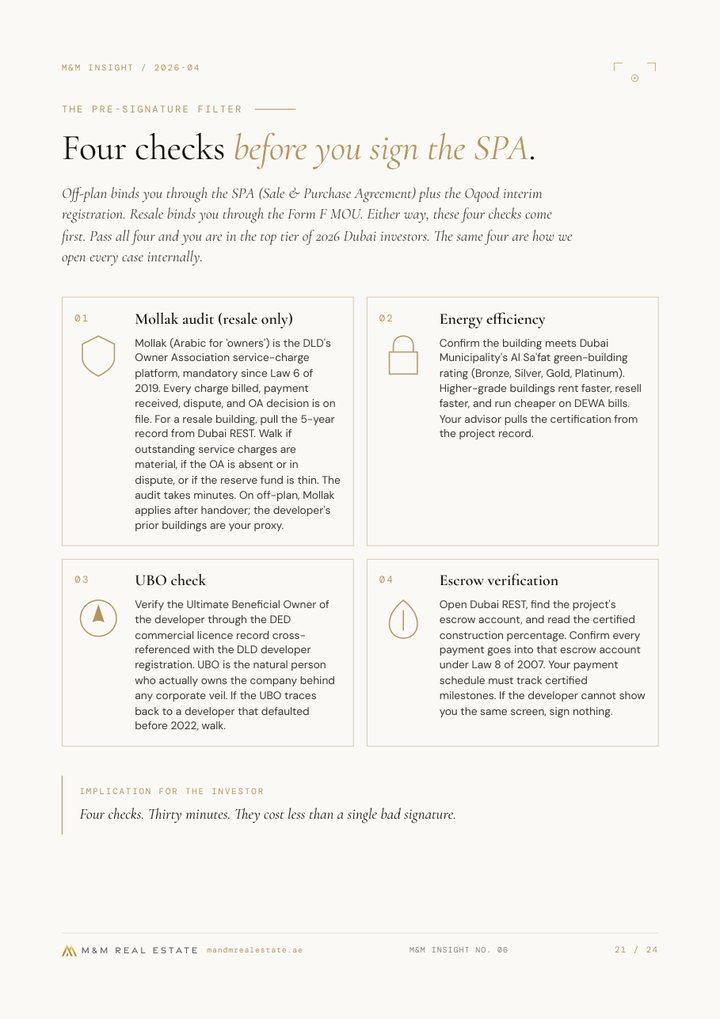
The Real Estate Regulatory Agency (RERA) regulates Dubai’s property sector. Check the broker’s e-card through DLD’s broker e-card validation service, then verify the office licence and permits through DLD’s Trakheesi licence and permit service. A registered broker’s status tells you about the broker. You still need to check that person’s authority to offer this specific property.
Check that the Madmoun QR details and permit information match the unit and advertiser in the offer you received.
An unsolicited call is not proof that the caller is authorised. If an unsolicited call leads to pressure to pay or share identity documents, stop and verify the caller’s details through DLD’s official services.
To verify a property owner in Dubai, check the official ownership record. DLD’s title deed verification guide covers title deed verification. A title deed is the document recording property ownership. A screenshot or image of a deed does not replace a check against the DLD record.
Ask the owner to establish their identity, and check that the person signing has authority to sell or rent the unit. For a sale under a power of attorney (POA), check that the POA covers the transaction.
If the ownership record, contract and seller’s account do not match, pause the transaction. Resolve the difference through an authorised channel before signing or paying. M&M’s Dubai investment guides and resources offer further reading for buyers reviewing Dubai property decisions.
Match the documents before transferring money
Check that the contract names the same unit, buyer, seller, price and payment schedule as the verified offer. A difference in any of these terms can change what you are agreeing to buy, so ask for a corrected document before proceeding.
Verify the payment recipient and account instructions through a contact route you have already confirmed. Keep purchase funds and deposits within the documented transaction, and do not send them to a personal account or an unverified beneficiary.
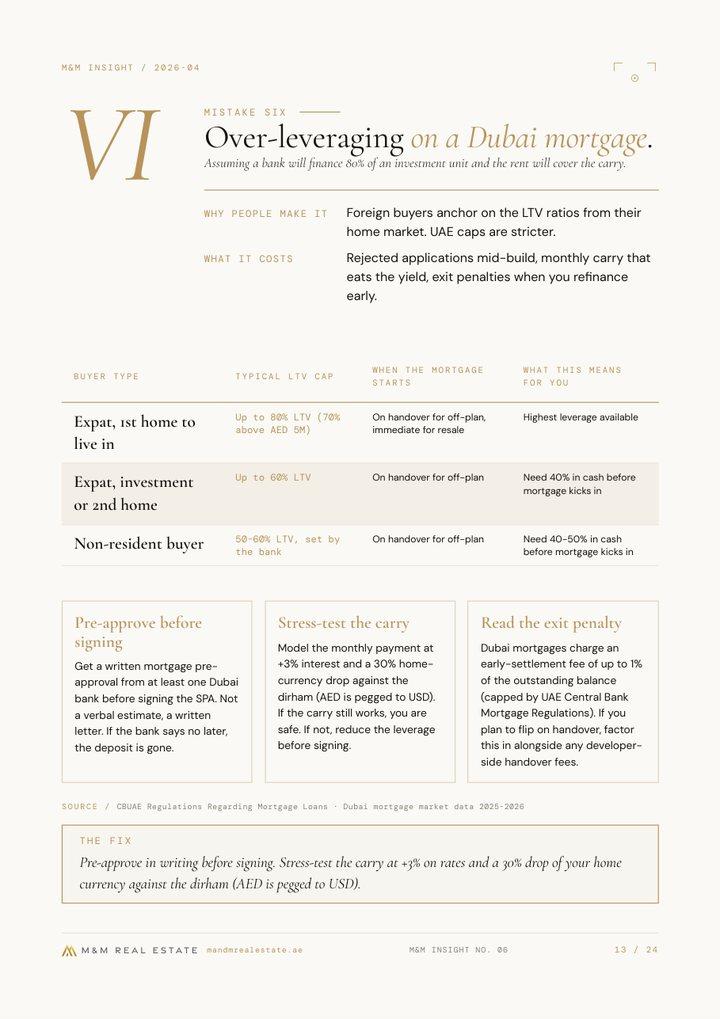
For an off-plan property, verify that DLD has approved and registered the project before you pay. An escrow account is a project-specific account for receiving off-plan payments.
Use DLD’s project status search to check the project, then independently verify the account name and payment instructions before transferring money.
Read the payment plan as a schedule of obligations. Compare its dates and amounts with the signed contract and official project information. A payment plan sets out when payments fall due; project registration and escrow checks establish where those payments should go.
For payment plans, escrow and buyer protections, see M&M’s guide to buying off-plan property in Dubai. This is general information, not tax or legal advice.
Check off-plan progress as well as the developer’s record
Check the project’s official registration and status, then compare available progress information with the developer’s updates. A completion date in marketing material is an estimate presented by the developer. It does not establish that construction is on schedule.
Review the developer’s completed projects and handover history, then assess the specific project separately. A developer’s past record gives background; the individual project’s registration, escrow details, construction progress and contract terms still need their own checks.
Location, developer track record and growth potential shape the curation of M&M’s off-plan properties in Dubai. That framework helps organise a shortlist, while DLD records and the contract provide the project-specific checks.
For developer background, review M&M’s Dubai developer profiles and track records. Compare the project’s promised features, payment milestones and completion expectations with its registered details and contract. Investigate any discrepancy before committing.
A flexible payment plan or an exclusive-offer claim does not establish value or reduce delivery risk. Assess the location, project status and contract on their own merits before deciding whether the offer fits your investment plan.
Test yield claims and the eventual exit
Ask whether a quoted rental yield is gross or net. Gross yield uses rent before property costs; net yield accounts for costs such as service charges, maintenance, management, transaction costs and periods without a tenant.
Ask what rent, occupancy and operating-cost assumptions sit behind a projection. A promise of fixed rental income or a single headline yield gives no detail about vacancy, expenses or the evidence used to estimate rent.
Compare the proposed rent and purchase price with evidence for similar properties. Test how the result changes if rent is lower or the unit stays vacant for a period. An independent property valuation can also help you assess whether the asking price is supported by comparable evidence.
Rental income is only one part of the investment decision. Consider the likely buyer pool and how easily you could sell if your plans or financial needs change. M&M’s guides to Dubai rental yields, costs and tax and Dubai property investment cover these wider calculations.
Take extra care when renting a property
Check that the person offering the unit is its owner or an authorised representative. Compare their authority with the landlord named in the tenancy contract, and make sure the agreement identifies the same property.
Read the tenancy contract for the exact unit, rent, term, deposit and payment dates. Arrange tenancy registration through official Dubai channels, and keep the signed agreement with the registration record.
Pay rent and deposits only to a verified recipient entitled to receive them. Keep receipts and payment records with the contract so you can connect each payment to the agreed tenancy.
A request for a deposit before the person establishes authority to rent the unit and provides written terms is a reason to pause. A payment request by itself does not reserve a legitimate tenancy.
Respond quickly if something seems suspicious
Stop further payments and preserve the advert, messages, email addresses, phone numbers, contracts, receipts and account details. Keep original files where possible, and write down when each interaction took place.
If you have sent money, contact your bank or payment provider through its official channel as soon as possible. Ask whether it can stop or trace the transaction. Report suspected fraud to the relevant UAE police authority, and confirm the reporting route with Dubai Police.
For a complaint against a real estate company, use the DLD violation complaint service. Provide a clear timeline and copies of the supporting records.
Keep a developer’s background check separate from the response to a suspicious message or payment request. For developer background, see M&M’s Emaar Properties profile. A developer profile does not verify a particular seller, project account or payment request.
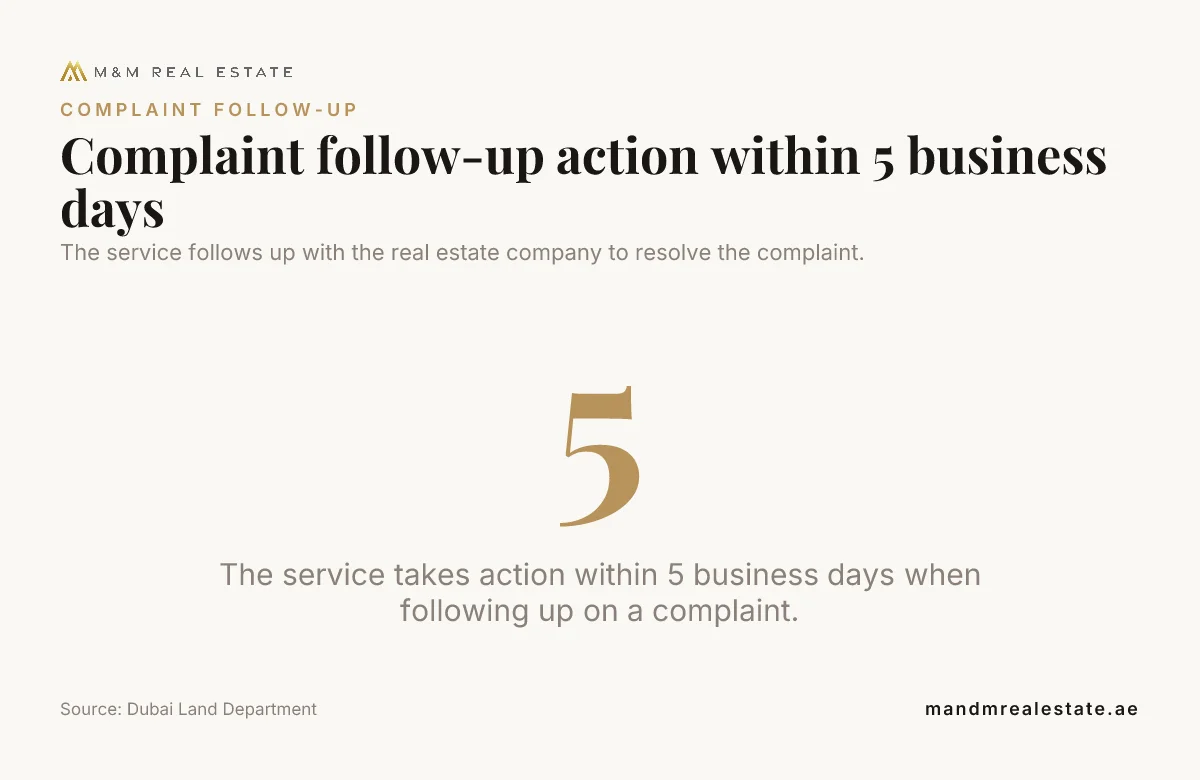
The service follows up with the real estate company to resolve the complaint.
Source: Dubai Land Department
If you shared identity documents, tell the relevant authority and financial institutions. Watch for unfamiliar account activity, and do not send more money or documents to anyone who offers to recover funds.
Messages that use a department’s name can be impersonations. Keep screenshots, dates and times, and report an impersonation message through an official channel.
See also: Dubai Golden Visa through Property: 2026 Guide, Which Dubai Property Area Fits Your Investment Goal in 2026?, What Investors Need to Know About Tax on Dubai Property, Best Areas to Invest in Dubai and Abu Dhabi, Bay Estate by Nakheel, Dubai Islands: Investment Case, The Yards Plaza by BEYOND, City of Arabia Offices, Emaar and DAMAC: How to Compare Two Projects on the Public Record, Al Jaddaf Waterfront Guide 2026: Prices and Metro, 30/70 Payment Plan: What Beyond’s Offer Changes, JVC (Jumeirah Village Circle) Investment Guide 2026, Dubai Hills Estate Guide 2026: Prices and Yields, Dubai population growth is reshaping how the city plans for residents, How Dubai Property Crowdfunding Works: Shares, Returns and Risks, The Yards Plaza by BEYOND, City of Arabia Offices, M&M.
What to do before you send money
Before you commit, match the advert and broker details with DLD records, confirm the owner’s authority, compare the contract with the offer, and verify the payment recipient. For an off-plan purchase, check the project registration and escrow account against the specific project.
Confirm with a qualified adviser before acting. An M&M advisor will go through the property, documents and payment route with you. Speak with an M&M advisor.
this article is general information and not tax, legal or financial advice, and returns are not guaranteed.


What scams are going round in Dubai property at the moment?
Common examples include false or misleading listings, impersonation and requests to pay off-plan funds outside the project escrow account.
Can someone buying from abroad verify a Dubai property without travelling to the UAE?
Yes. Complete remote checks first, and use an authorised representative only for steps that require someone in person.
Should I use a lawyer to review a Dubai property purchase contract?
Yes. Ask the lawyer to explain any clause you do not understand before you sign.
How long should I keep property transaction records and payment receipts?
Keep the records for the full period of ownership or tenancy and while any payment, dispute, financing or sale remains open. Store a dated digital copy separately from the originals, and ask a qualified adviser about any record-retention rules that apply in your home country.
Is it risky to buy property in Dubai?
Yes, buying property in Dubai carries risks, including fraud, construction delays, changes in property values and rental income, and difficulty selling when you need to. Checking the ownership or project registration, seller’s authority, contract and payment route can help reduce, but not eliminate, those risks.
Ten off-plan mistakes
The ten mistakes overseas buyers make most, and how to check each one before you sign. 24 pages. Free by email.