


Dubai waterfront communities differ in how easily residents can reach the water, who may use the shore and which activities the shoreline supports. Dubai Municipality’s Dubai Beach Guidelines set minimum beach access at 6m or one-third of the height of the adjoining building.
- Follow the whole route. Entrances, crossings, gates and level changes can make a nearby shore inconvenient to reach.
- Ask who can use the water’s edge. Resident, guest and visitor rules shape privacy and everyday access.
- Match the shoreline to the routine. Beaches support bathing and shore walks, while marina and canal paths suit different forms of waterfront recreation.
- Compare the home-to-water route. Steps, ramps, shade and places to rest affect how accessible the route feels.
- Include daily travel and upkeep. Transport connections, services, maintenance and salt air all shape life by the shore.
Shore access depends on the route, rights and opening hours
A waterfront view tells you what you can see from home. To understand everyday shore access, trace the route from the front door to the water, including building entrances, gates, road crossings, barriers and changes in level. A short line on a map can still lead to a long or awkward walk.
Establish who controls each part of the route. Ask whether residents, guests and visitors can enter, and whether access is managed by the building or by the wider community. A private beach or controlled entrance may have different rules from an open public beach, so identify the actual rights attached to the home.
Walk the route at different times of day and ask about opening hours. A promenade or beach entrance can be less convenient than the view suggests if a gate closes early or a crossing adds a detour. M&M Real Estate advises investors to compare the shoreline route and access terms as part of a wider waterfront property assessment.
Beach, marina and canal settings support different routines
Shoreline type affects what residents can do close to home. Use this comparison to frame the questions you ask about access and rules.
| Setting | Everyday use | What to establish |
|---|---|---|
| Beach | Swimming, sunbathing and walking along the shore | Where swimming is permitted and who can use the beach |
| Marina | Waterside walks and a boating-centred setting | Berth arrangements and any swimming restrictions |
| Canal | Waterside paths and views | Whether the edge is for walking, boating or another use |
Beachfront living can bring the shore into a regular routine, while marina frontage often centres on promenades and boats. Canal-side paths can also support a waterside walk, though canal edges may have safety or operational rules that restrict swimming. Access to a marina berth and permission to swim are separate matters to establish.
Completed beachfront buildings on Palm Jumeirah’s trunk include Marina Residences.
Park Island is a group of completed towers on the marina.
Promenades and public spaces shape the community atmosphere
A continuous waterfront promenade can make walking and informal social activity part of the day. A controlled beach entrance can create a more resident-focused setting, while a public route near homes can bring more visitors and reduce seclusion.
The Dubai Municipality, Dubai Beach Guidelines set promenade access at a minimum 3m or one-third of the height of the adjoining building. The beach and promenade dimensions are design benchmarks; they do not establish that a particular home has convenient access or permission to use a shoreline.
Ask how guest access, operating hours and security work. Then look at the route itself: shade, seating, lighting and clear pedestrian space affect whether residents can comfortably reach the water and spend time there.
At a marina promenade, public movement and boating activity can shape the feel of the walk. A Creek-side route has its own relationship with open space and water, so assess its entrances and visitor activity on site.
Twelve chapters on what the regional war tested, the balance sheet and dollar peg behind the market, and how to pick the right side of this cycle.
Download free→Apartments and villas offer different ways to live by the shore
An apartment can put residents close to shared paths and facilities. The experience depends on the route from the entrance or lift to the water and on how the building manages shared areas.
A villa can give residents a more private transition from indoor space to a garden or terrace. Daily convenience still depends on the distance to the shoreline and the connection to community paths.
Compare the full route from the front door to the water, including steps, ramps, gates and resting points. Those details affect access for children, older residents and people with mobility needs.
Choose a layout around the routine. Frequent short walks suit a direct route, while a longer shared path can form part of an outing for residents who want the walk itself. At M&M Real Estate, we look at how a home connects to the shoreline as well as what it faces.
Compare Dubai’s waterfront settings by shoreline type
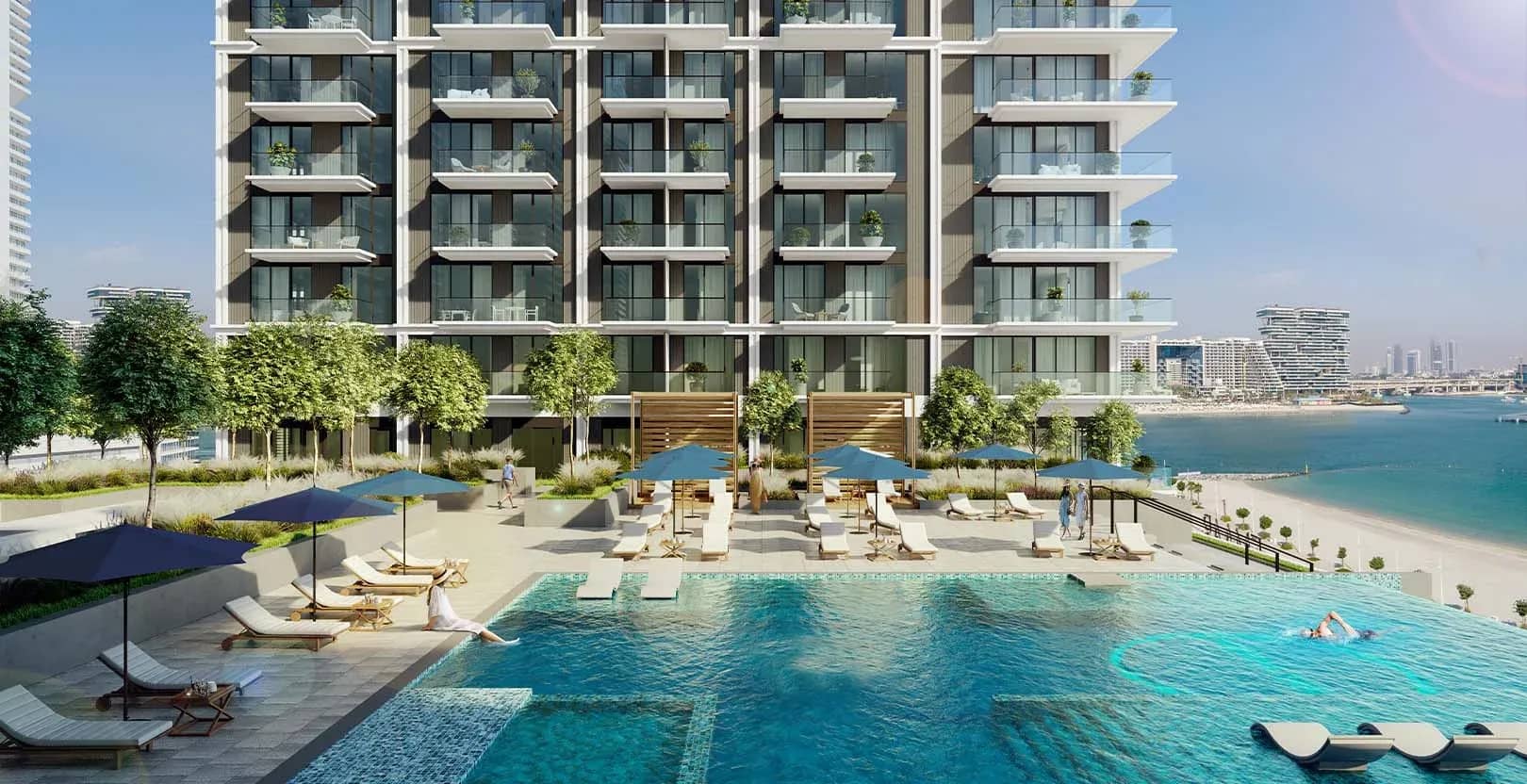
For a beachfront setting, compare Palm Jumeirah and Emaar Beachfront by the actual route to the beach and the rules for using it. At Emaar Beachfront, residents share a private beach; the term describes the setting, while the building and community rules define access.
Dubai Marina is a marina-front district where promenades and boating activity create a different routine from a bathing beach. Dubai Creek Harbour and Al Jaddaf Waterfront are creek-side contexts, so assess their waterside paths and public spaces separately from beach access.
Compare each route with transport, work, schools and everyday services. A waterside address can involve longer daily travel, so map the connections you will use and travel them at the times that matter to your household.
For a wider location comparison, use M&M’s Dubai area directory and its area analysis. The JVC guide and Dubai Hills Estate guide offer non-waterfront reference points for daily access and location choice.
For a closer look at creek-side living, read the Al Jaddaf Waterfront guide. Buyers comparing Dubai Islands can also review the Bay Estate by Nakheel Investment Case.
Test the route in real conditions before deciding
Walk from the building entrance to the shore in daylight and after dark. Check crossings, surface condition, gradients, lighting and places to rest, because the walking distance alone does not show how the route feels to use.
Assess shade and wind exposure at the times you expect to use the waterfront. In Dubai’s heat, shade and seating can make an outdoor route more practical than a shorter path with little shelter.
Ask who handles maintenance and shoreline works. Cleaning, repairs and construction can temporarily affect access, so establish how residents receive updates and which alternative routes remain available.
Salt-laden air can accelerate corrosion on exposed metal. Plan for regular cleaning and inspect metalwork, seals and exterior finishes as part of the upkeep of a coastal home.
Conclusion: choose a shoreline that fits daily use
Before choosing among Dubai waterfront communities, walk the route, establish who can use the shore, and compare its shade, public activity and connection to daily services. Ask the building or community manager about guest access, operating hours, maintenance and any work planned along the water.
Off-plan decisions can be assessed with M&M’s off-plan buying guide, current off-plan properties and a comparison of how a Beyond payment plan affects cash flow. Project due diligence can include Dubai property developers and M&M’s Emaar and DAMAC comparison.
For broader ownership questions, see the Dubai property investment guide, rental yield analysis, Dubai property tax guidance and the Dubai Golden Visa property guide. For wider-decision context, consult M&M’s investment resources alongside the Dubai population analysis.
For other investment structures and property types, compare the Dubai property crowdfunding guide with the commercial-property cases for The Yards Plaza by BEYOND and The Yards Plaza offices.
An M&M advisor will go through your budget, timeline and shortlist with you. Speak with an M&M advisor at https://www.mandmrealestate.ae/contact about the route, access terms and community fit.
this article is general information and not tax, legal or financial advice,


Does a marina-front apartment usually include a boat berth?
A berth is a separate allocation or lease arrangement. Ask who controls the berth, how long the arrangement lasts and whether it transfers with the property.
Can residents swim in a canal beside their community?
Swimming permission depends on the canal’s safety and operational rules. Check the signs and community guidance for that specific stretch of water before entering.
Does beachfront access mean the water is suitable for swimming at every tide?
Water conditions can change with tides, weather and currents. Use current beach notices, lifeguard instructions and flag systems to judge conditions on the day.
How can residents reduce the effects of salt air on a waterfront home?
Rinse exposed surfaces with fresh water and use corrosion-resistant hardware where suitable. Keep ventilation and air-conditioning equipment maintained, and address worn seals before moisture reaches interior finishes.


