


The exact handover balance comes from the unpaid instalments the Sale and Purchase Agreement (SPA) makes due by handover. M&M Real Estate’s guide to buying off-plan in Dubai explains that buyers pay against agreed stages, so the full payment schedule sets the funding target.
- A 50/50 or 40/60 label summarises a plan. The SPA sets the amounts, payment triggers and deadlines.
- Add every unpaid instalment due on or before handover. Keep costs outside the purchase price in a separate budget.
- Compare the largest payment and its due date across plans, as well as the total obligation. Our analysis of a Beyond 30/70 plan looks at how payment timing changes the funding demand.
- Allow time for mortgage approval, valuation and disbursement. Keep a cash backup for a lower loan or delayed funds.
- For more purchase-planning material, browse M&M’s Dubai investor resources.
What a payment-plan split tells you and what it does not
An off-plan payment plan sets out when the buyer pays for a property under construction. Its headline ratio is a summary, not a full calendar of amounts and deadlines. The SPA should state each instalment and the event that makes it due.
Check whether instalments are linked to construction milestones, fixed dates, completion or handover. Two plans with the same ratio can place their largest payments at different points in the build, which changes how much cash you need and when.
Separate the balance due by handover from any instalments due afterwards. A post-handover payment plan shifts some payments to a later date; it does not reduce the purchase price or the total amount owed.
For SHIONE by BEYOND, use the SPA’s full schedule to identify the amount due at handover.
For The Yards Plaza, use the SPA’s full schedule to identify which instalments fall at handover. Our The Yards Plaza investment case provides further project context.
Calculate the balance from every instalment in the schedule
Start with the purchase price and copy every instalment from the SPA into a schedule. Mark each one as paid, due before handover, due on handover or due afterwards. This makes the contractual balance visible without relying on a plan label.
Use the purchase price and each percentage in the SPA to calculate the instalments:
- At signing: purchase price × signing percentage.
- During construction: purchase price × the applicable percentage.
- At handover: purchase price × the handover percentage.
After the earlier instalments have been paid, subtract them from the purchase price to find the balance due at handover under the schedule. The amount applies only where the signed contract uses these terms. Registration charges, service charges and other completion costs sit outside this purchase-price calculation.
Read the payment trigger with the deadline that follows it. The SPA may tie an instalment to completion, a formal notice, a certificate or another stated event. Record the event and the payment deadline separately, so you know when funds must be available.
Stress-test cash flow before you commit
Place each instalment against the expected completion timeline and your available cash. Test whether you can meet the largest payment without depending on a property sale, bonus or income that has yet to arrive.
Keep a separate reserve for a changed completion date and unexpected costs. Using every available dirham for scheduled instalments leaves no room to respond if the timing or the amount of another expense changes.
For post-handover instalments, compare each future payment with income and savings you can access on schedule. Rent may start after the first instalment falls due, and rent may not cover the full payment. Build the plan around funds you can use, not an assumed rental start date.
Compare plans by their full price, payment dates and largest handover demand. A small early instalment can still lead to a large completion payment, so the headline ratio alone is a poor basis for comparing cash flow.
The wider investment plan also affects the cash you can set aside. Our Dubai property investment guide, rental income and yield guide and explanation of property crowdfunding cover related ways to assess an investment and its income plan.
Location and demand form part of that decision. Compare Dubai areas by investment goal, browse the location guides, and read about JVC, Dubai Hills Estate and Al Jaddaf Waterfront. Our article on Dubai population growth adds context for planning a longer hold.
For project-level checks, see our Bay Estate investment case. Our Dubai developer profiles and Emaar and DAMAC comparison cover developer assessment. Separate ownership questions are covered in our guides to the Dubai Golden Visa through property and tax on Dubai property.
What foreign buyers get wrong in Dubai off-plan, what each mistake costs, and exactly what to do instead.
Download free→Arrange funding with time for valuation and disbursement
Decide how much of the handover balance will come from savings and how much may need mortgage financing. Approval, valuation and release of funds are separate steps, so a likely loan amount does not mean the money will reach the developer by the contractual deadline.
Speak to a lender early enough to understand eligibility and loan-to-value, which is the loan amount compared with the property value used by the lender. Keep cash available in case the valuation or final approval supports less borrowing than you planned.
A planned resale can take longer to complete, and future rent may start later than expected. Keep both out of the core handover funding plan unless the funds will be available by the payment deadline.
Set a backup funding route and a decision date well before the deadline. Our off-plan property information can help you review project choices while you plan the cash required at completion.
Budget for completion costs and understand the handover steps
Keep the developer’s remaining purchase-price balance separate from completion costs. Depending on the transaction, these costs may include registration charges, service-charge payments and utility connections. Service charges cover the shared running costs of a building or community.
A handover notice is the developer’s formal notice that starts the contract’s completion process. Read the stated deadline and arrange the inspection, documents and payment steps promptly. The notice should be read alongside the SPA, because the agreement sets the payment trigger and the required process.
Inspect the property and record defects through the agreed procedure. Keep the inspection record and the payment timetable separate, because the inspection itself does not automatically change the deadline in the SPA.
An escrow account is a project account that holds buyer payments for the development, with releases governed by Dubai’s off-plan rules. Project sales funds are subject to restrictions on their use, including a limit on marketing costs:
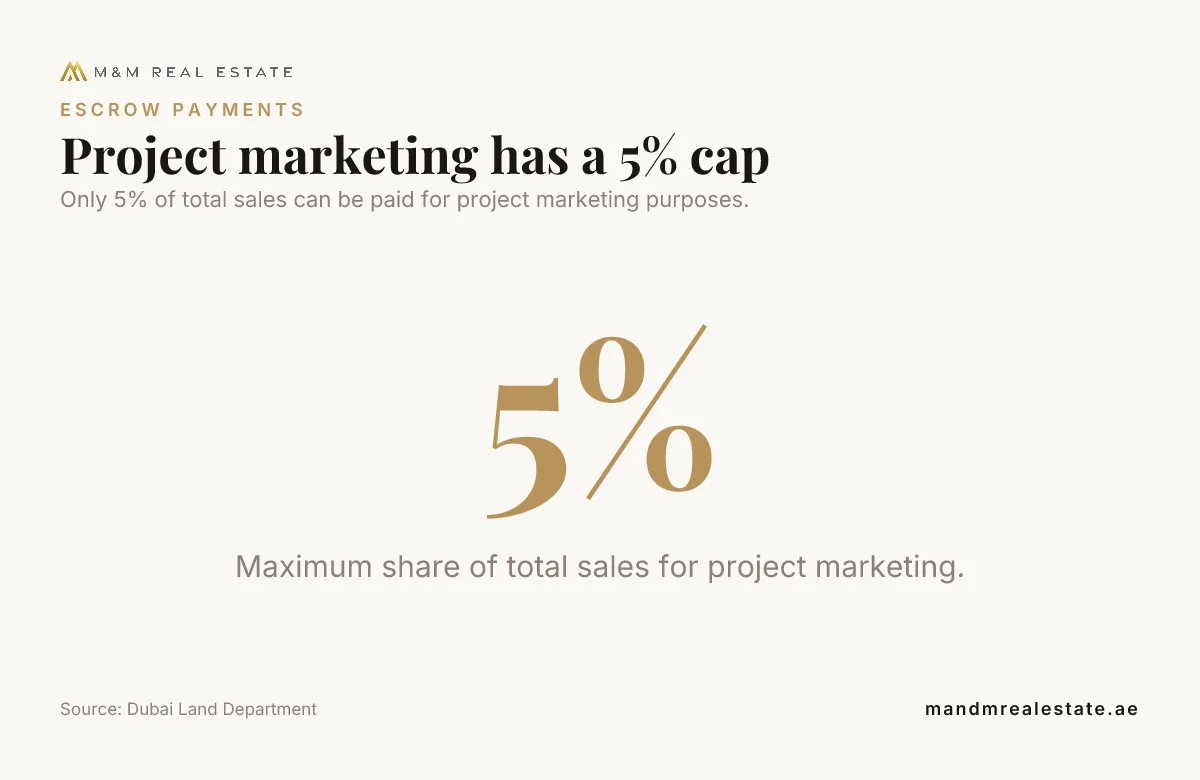
Only 5% of total sales can be paid for project marketing purposes.
Source: Dubai Land Department
If the completion timetable changes, revisit the mortgage timeline, available cash and any payment deadline. Ask the developer how the revised timetable affects the formal notice and the next amount due.
Read the SPA for deadlines, default terms and remedies
Find the clauses that set instalment triggers, handover notices, payment methods, deadlines and the process for disputing a calculation. Read them before signing, while there is time to ask clear questions about a payment date or trigger.
Read the default clause closely. Identify any cure period, late-payment consequences and remedies, and learn how the developer must serve formal notices under the agreement. Keep dated copies of payment instructions, notices and receipts.
If a deadline looks difficult to meet, contact the developer and seek professional advice promptly. A delay, negotiation or pending mortgage application does not itself change a contractual due date. This is general information, not tax or legal advice.
What to do now
Before committing, map every SPA instalment by date and trigger, calculate what remains due by handover, and add completion costs to a separate budget. Ask the lender when valuation and disbursement can happen, and set a backup funding decision date ahead of the contractual deadline.
An M&M advisor will go through your budget, timeline and shortlist with you. Contact M&M about your handover funding plan.
Figures are past data from the sources named; this article is general information and not tax, legal or financial advice, and returns are not guaranteed.


Can I negotiate an extension to a handover payment deadline?
A developer may agree to extend a deadline, but the revised terms should be recorded in a written variation signed by the parties with authority to amend the SPA. The document should state the new date and whether the extension changes any later instalments or charges.
Can I sell an off-plan property before handover to fund the balance?
A resale may be possible if the SPA and applicable procedures allow a transfer at that stage. Treat sale proceeds as available for the handover balance only when the transfer is complete and the funds have cleared.
Does finding defects during a handover inspection let me withhold payment?
A defect does not by itself establish a right to deduct money from the handover payment. Keep dated photographs and a detailed inspection record, then use the defect procedure set out in the SPA and get legal advice before withholding any sum.
Can I pay off post-handover instalments early?
Early payment depends on the SPA and the developer’s payment process. Ask for a written settlement figure and an updated account statement so the early payment is recorded against the correct instalments.
What is off-plan payment?
An off-plan payment is an instalment paid for a property that is still under construction, according to the payment schedule in the sale and purchase agreement. The schedule sets out the amounts, due dates and triggers for each payment.
What are the steps involved in the property handover procedure in Dubai?
After completing the handover, keep copies of the signed documents and payment receipts for your records.


