A non-resident can sell Dubai property through an authorised representative, provided the ownership records, signing authority and payment arrangements fit the transfer route. Prepare the file before agreeing a completion date, so a name mismatch, mortgage settlement or developer approval does not disrupt the sale.
- For a ready property: gather the Title Deed, passport details for every owner and available property references.
- For an off-plan unit: add the Oqood record and developer account details, then establish the developer’s resale process.
- For a remote sale: give the representative clear authority for the actions they need to take.
- Before signing sale terms: agree the price, deposit, costs, completion date and arrangements for delays.
- Before transfer: align the NOC, charge clearance, lender steps, payment route and trustee appointment.
- After completion: retain the sale and payment records, and ask a tax adviser in your country of tax residence how to report the disposal.
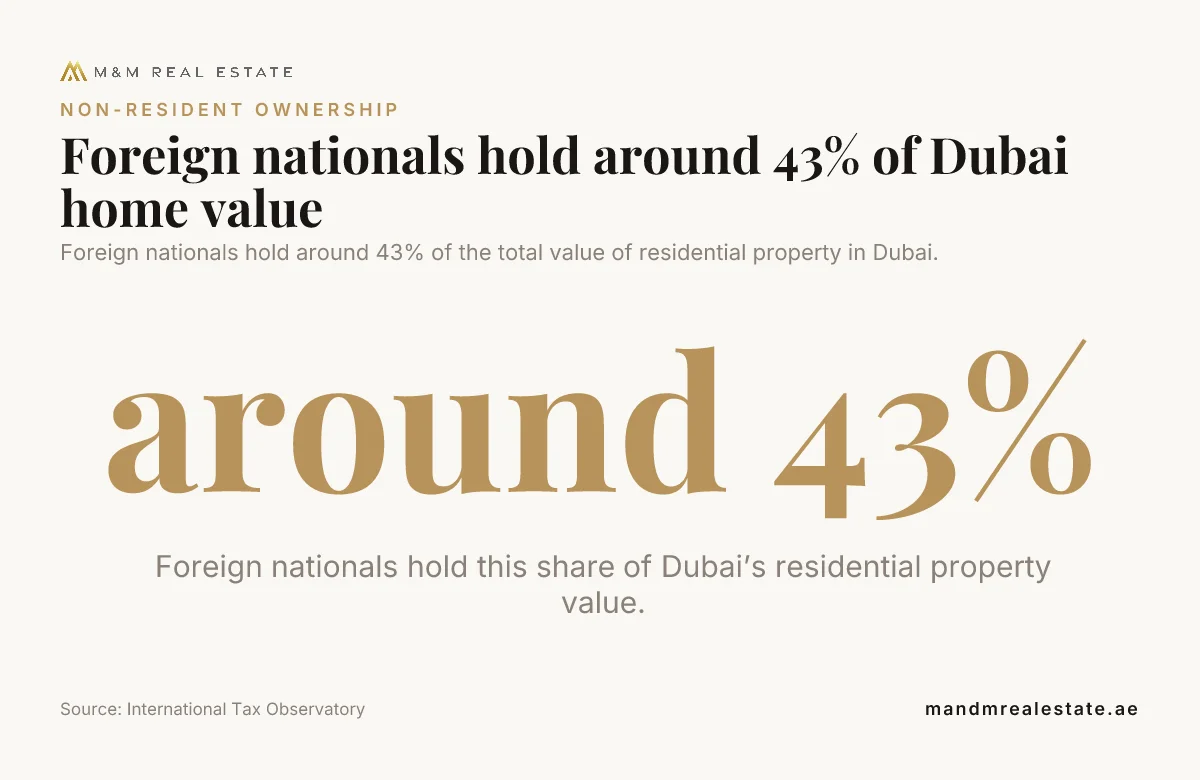
Source: International Tax Observatory
Build the core file before marketing the property
For a ready property, start with the Title Deed, passport details for every owner and any available property or account references. For an off-plan unit, include the Oqood record, the DLD’s off-plan registration, and the relevant developer account details.
Keep separate copies for marketing, the developer’s No Objection Certificate (NOC) request and the transfer appointment. Each stage can call for a different document set, so a single folder that mixes drafts and final records can slow down the handover.
| Sale stage | Records to prepare | Why they are needed |
|---|---|---|
| Marketing | Title Deed or Oqood, owner identity details and property references | To identify the property and the registered owners. |
| Developer NOC | Ownership record, sale details, account references and representative authority where relevant | To support the developer’s clearance process. |
| Transfer | Accepted ownership records, identity documents, signed sale terms and payment details | To let the trustee complete the transaction with the parties who have authority to sign. |
Compare each owner’s name and identifying details across the passport, Title Deed or Oqood, Power of Attorney and intended payment arrangements. Resolve spelling, transliteration and name-change differences before setting completion, so the transfer file and payee details identify the same person.
For jointly owned property, add the co-owner’s signing authority. For company-owned property, prepare the company authorisations that show who can act for it. For an estate, include the estate and succession records that establish who may sign.
Choose the sale route for the property’s status
How to sell a property in Dubai depends on its status. For a ready property, organise the ownership record and outstanding-charge information first; for an off-plan resale, establish the developer’s assignment process and the records required to transfer the unit.
Background on this type of ownership appears in M&M’s off-plan guide and off-plan property overview. If a payment plan remains active, the article on how a 30/70 payment plan works offers further context for reviewing the account before approaching the developer.
If a tenant occupies the property, align the timetable with the tenancy documents, applicable notice requirements and the buyer’s intended use. Agree whether the buyer expects the tenancy to continue or the property to be vacant, then set sale terms that match that arrangement.
For a mortgaged property, request the lender’s current mortgage liability letter and settlement information early. The lender’s redemption steps, mortgage release and transfer arrangements shape the completion sequence, so keep them as a separate workstream alongside the developer’s requirements and tenancy position.
Bring the developer, lender and tenancy deadlines together in one completion plan. When the resale depends on the developer, consult M&M’s Dubai developer profiles for background.
Set up representation and a sale-specific Power of Attorney
A non-resident may be able to complete a sale through an authorised representative. Define the representative’s authority in practical terms: can they sign the sale documents, obtain the NOC, settle charges and complete the transfer?
Use sale-specific wording that names the actions the representative must take. A broad or unrelated Power of Attorney may leave a gap between the authority granted and the steps required for this sale.
Before signing abroad, ask the relevant Dubai registration trustee or authority which notarisation, legalisation and Arabic translation steps it accepts. Overseas notarisation alone may not meet its requirements, so establish the document route before arranging signatures.
Start early. Preparing and accepting the authority document takes time, and a name difference between the Power of Attorney and ownership record can lead to additional checks.
Agree the marketing and sale terms in writing
Use Form A to record the broker appointment and agreed marketing terms. Set the asking price against the property’s condition, location and relevant comparable evidence, and agree who will approve listing details and respond to offers while the owner is abroad.
Use completed-sale comparables to set the asking price. For context about locations and buyer profiles, consult M&M’s area comparison, Dubai area guides and neighbourhood pages for JVC, Dubai Hills and Al Jaddaf Waterfront.
For rental-market context, see M&M’s guide to Dubai property rentals and yields. Its article on population growth adds broader context about residents and the city’s housing market.
Developer and project material can help explain an address to a prospective buyer. To explain an address to a prospective buyer, draw on M&M’s Emaar and DAMAC comparison, Investment Cases on Bay Estate by Nakheel and The Yards Plaza, and the Yards Plaza Investment Case. Use completed-sale evidence to price the property.
Before signing Form F or a Memorandum of Understanding, agree the price, deposit, completion date, fee allocation and what happens if an approval or mortgage settlement is delayed. Keep these terms consistent with lender release, developer consent, tenant arrangements and the representative’s signing authority.
Keep signed copies of Form A, Form F or the Memorandum of Understanding, along with payment records. Those documents let the seller trace the agreed terms through to transfer.
Clear charges and obtain the developer NOC
Request the developer’s NOC process and document requirements early. Submit the ownership, sale and representative records in the format the developer requires, so the NOC work can run alongside lender and buyer arrangements.
Arrange service-charge clearance and settle other amounts due before expecting the NOC. Outstanding charges can hold up approval, so keep clearance evidence with the developer’s correspondence.
For a mortgaged property, coordinate the lender’s liability and settlement steps with the NOC timetable. Keep the NOC, service-charge clearance and lender correspondence together for the transfer appointment.
Plan the transfer appointment and payment of proceeds
Before fixing completion, align the buyer, the seller or representative, the trustee appointment, the NOC, accepted ownership records and any mortgage-release steps. A non-resident can sell without travelling when the representative’s authority and the required documents work for the transfer route.
Ask the bank, broker and registration trustee which payment route they will accept before agreeing completion terms. A manager’s cheque may suit some arrangements, while others can call for a different route; get the participants’ requirements aligned in advance.
Match the payee name and bank details to the owner’s identity and sale documents. Prepare for any source-of-funds checks, and agree how and when the proceeds will be remitted abroad, including bank processing, currency conversion and receiving-account requirements.
Budget for sale costs and check tax in your country of residence
Set out expected seller costs and who pays each one in the sale terms. Include any agreed broker fee, developer charges, service-charge balance and mortgage settlement costs, then retain the invoices and settlement evidence with the exit file.
Calculate the expected net proceeds by deducting the mortgage settlement and agreed charges from the sale price, then account for any other costs.
Ask a tax adviser in your country of tax residence how to report the disposal, any gain and the overseas proceeds. The UAE position does not replace obligations in the country where the owner is tax resident. This is general information, not tax or legal advice.
Keep the sale agreement, transfer records, expense evidence and proceeds documentation for tax reporting and bank questions about the source of funds. Background on the UAE side of property taxation is available in M&M’s Dubai property tax overview.
For a wider investment decision, read M&M’s Dubai property investment guide and guide to property crowdfunding for coverage of other investment topics. Owners considering another residential opportunity can also explore property for sale in Downtown Dubai, where M&M Real Estate provides personalised advisory support to explore residential property opportunities.
Prepare the exit file before setting completion
Gather the ownership and identity records, choose the sale route, establish the representative’s authority and bring the NOC, lender, tenancy and payment deadlines into one plan. Keep signed sale terms and the final transfer and proceeds records together for your tax adviser and bank.
Further reading is available in M&M’s Dubai investment resources. An M&M advisor will go through your sale route, documents and completion plan with you. Contact M&M.
this article is general information and not tax, legal or financial advice, and returns are not guaranteed.


Does selling a Dubai property automatically cancel a property-linked residence visa?
A property sale does not by itself establish the status of every residence visa, because the visa basis and immigration record determine the required action. M&M’s Dubai Golden Visa guide explains the property route. For a property-linked visa, ask the issuing authority how a change of ownership affects the visa.
Can a Dubai property sale proceed if the seller’s passport expires before the transfer?
An expired passport may not meet the trustee’s identity checks. Ask the trustee which valid identity document it accepts for the appointment, then update the sale file and payment details to match.
What should an owner do if the original Title Deed has been lost?
Ask the Dubai Land Department how to obtain a replacement or an accepted digital ownership record before arranging transfer. The registration trustee can identify which ownership record it will use for the appointment.
Can a sale still proceed if a co-owner is temporarily unable to sign?
Ask the registration trustee whether a separate sale-specific Power of Attorney from that co-owner will meet the transfer requirements. Keep the proceeds instructions consistent with the ownership and signed sale documents.
Ten off-plan mistakes
The ten mistakes overseas buyers make most, and how to check each one before you sign. 24 pages. Free by email.