Selling Dubai Property as a UK Resident: Where Gains Are Taxed depends first on your UK tax residence in the year of sale and the gain calculated in sterling. The UAE’s treatment of a personal investment gain does not settle the UK tax position.
- A UK tax resident may owe UK Capital Gains Tax (CGT) on a gain from Dubai property.
- The UAE generally does not levy personal income tax on an individual’s property gains. Company ownership or business activity can involve different rules.
- Calculate the gain in sterling, translating the purchase, sale and eligible costs at the relevant transaction dates.
- A double taxation agreement does not remove a UK charge by itself. A foreign tax credit depends on the applicable rules and tax actually paid.
- Keep records of ownership, occupation, costs and exchange rates, then report a taxable overseas property disposal through the appropriate UK process.
Where a gain on Dubai property may be taxed
A UK tax resident can be liable to UK CGT on overseas property, including a Dubai home, because UK residence can bring worldwide gains into scope. The property’s location alone does not decide the UK tax treatment.
For an individual holding property as a personal investment, the UAE generally does not levy personal income tax on capital gains. A company or business holding may face different UAE and UK rules, so identify the owner and the purpose of the ownership before working out the tax.
M&M Real Estate’s free investor guide gives UK investors a broader view of the tax questions that can arise when buying, holding and selling Dubai property.
For a wider overview of the local tax position, the M&M overview of tax on Dubai property sets out the Dubai-side context. Keep that separate from the UK calculation: the UAE’s personal tax treatment does not determine whether a UK resident owes UK CGT.
Establish UK tax residence for the year of sale
HMRC assesses UK tax residence under the Statutory Residence Test for the relevant tax year. A British passport, an overseas address or time spent abroad alone does not establish the result; the test considers a person’s UK ties and pattern of presence.
Set the disposal date alongside any move into or out of the UK. A change of address before a sale does not, by itself, settle the tax position because the residence test and the timing of the disposal both matter.
HM Revenue & Customs says non-residents may have to pay UK tax on overseas property if they return to the UK within 5 years of leaving. This temporary non-residence rule means a move before the sale may leave a later UK tax charge to consider.

The rule concerns non-residents who return to the UK after leaving.
Source: HM Revenue & Customs
Calculate the gain in sterling, not just in AED
Start with the disposal proceeds and acquisition cost. Then account for eligible purchase and sale expenses, along with capital improvements that added value to the property or extended its useful life.
Keep repairs separate from improvements. Routine work that maintains the property’s condition belongs in a different category from work that adds value or extends its useful life, so retain invoices and a clear description of each job.
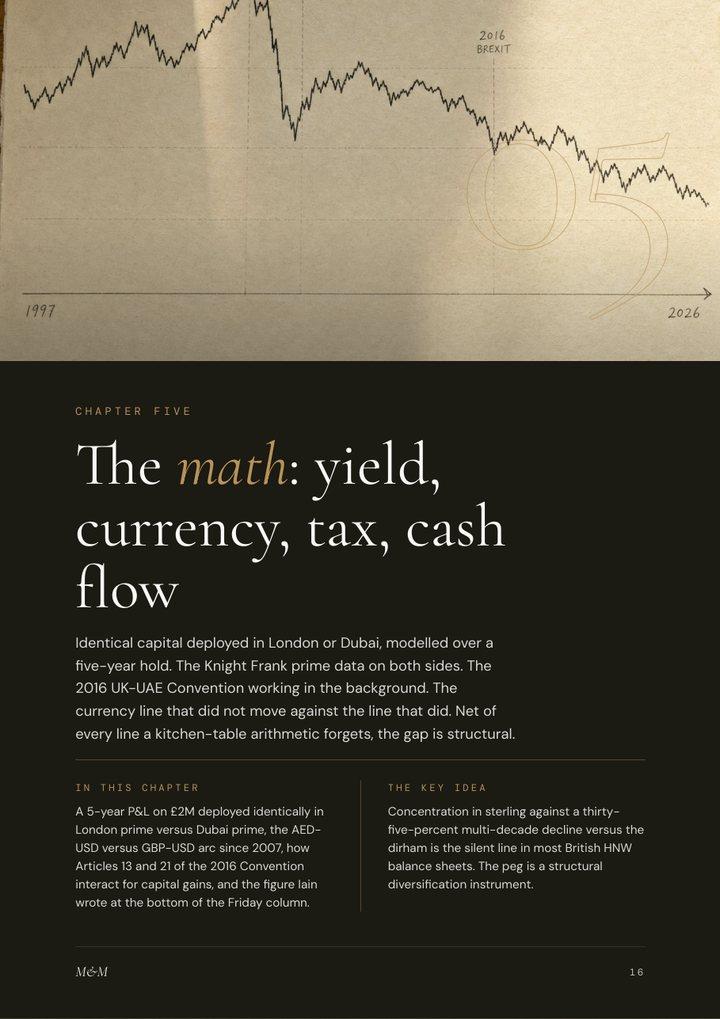
Translate the purchase price, sale proceeds and relevant costs into sterling using an appropriate exchange rate for each transaction date. Converting only the final AED profit can produce a different sterling gain because the pound-to-dirham rate can change between purchase and sale.
A mortgage affects the cash left after completion. The gain calculation centres on disposal proceeds, acquisition cost and eligible costs, while the loan balance affects settlement of the debt.
Worked calculation in AED and sterling. Let the sale proceeds be AED S and the purchase price be AED P. Use the relevant exchange rate for each transaction date, then deduct eligible costs in sterling.
- Convert AED P at the purchase-date rate to find the sterling acquisition cost.
- Convert AED S at the sale-date rate to find the sterling disposal proceeds.
- Convert each eligible cost at its relevant date, then add allowable acquisition costs and capital improvements to the sterling basis.
- Subtract the sterling basis and eligible disposal costs from the sterling proceeds to find the gain or loss for the UK calculation.
This method keeps the property gain separate from the mortgage settlement and from the amount transferred to a UK bank account.
What the UK-UAE tax treaty and tax relief do
The UK-UAE Convention applies to other taxes in respect of taxable years beginning on or after 1 January 2017, according to HM Revenue & Customs. The treaty is relevant to cross-border tax treatment, while a UK resident’s CGT position still needs its own calculation under UK rules.
Foreign tax credit relief depends on the applicable rules and foreign tax actually paid. If an individual pays no UAE tax on a personal investment gain, there may be no UAE tax to credit against a UK liability.
Work through the questions in order: establish UK tax residence for the disposal year, calculate the gain in sterling, then assess whether treaty provisions or foreign tax relief apply. This is general information, not tax or legal advice.
What thousands of high-net-worth British residents are doing right now, the forces pushing them, and what Dubai offers in 2026.
Download free→How living in or letting the property can affect relief
A Dubai home may qualify for Private Residence Relief if the relevant UK conditions are met. Its overseas location alone does not determine eligibility, so record when you lived in the property and how you used it.
Rental income and a capital gain are separate tax questions. Keep the rental records apart from the sale calculation, and track periods of occupation and letting because they can affect residence-based relief.
Apply the UK residential-property CGT rules and rates for the tax year of disposal. The amount due depends on the seller’s circumstances, available reliefs and losses, and the applicable rate; use the current HMRC CGT rates guidance for that year.
Ownership structure and the sale process matter
Identify the legal and beneficial owner before calculating a gain. Personal ownership, a UAE company and a trust can involve different tax rules and reporting duties, so the title documents and ownership agreements form part of the tax file.
The legal setup service for UK investors covers personal ownership versus a UAE company and coordination with UK-qualified solicitors and UAE legal partners. Use the ownership structure shown in the documents when assessing the sale, and take specialist advice where a company or trust holds the asset.
For an off-plan sale, establish what the seller transfers and when the disposal occurs under the transaction documents. A payment schedule alone does not set the tax date, so review the sale agreement and transfer records together.
The M&M off-plan guide explains payment plans and the buying process, while the off-plan property page shows the type of investment route involved. A mortgage affects settlement and net cash proceeds; purchase and sale figures remain central to the gain calculation.
Report the disposal and keep a clear record
Where a UK tax resident has a reportable gain, include the overseas property disposal in the appropriate Self Assessment return and account for tax due under the rules for that year. Moving sale proceeds from Dubai to a UK bank account is a separate banking step; it does not determine whether the property gain is taxable.
Keep a file with the documents needed to support the calculation:
- Purchase and sale contracts, completion statements and proof of ownership.
- Invoices for potentially allowable purchase, improvement and disposal costs.
- Evidence of improvement work, including what work was done and when.
- Exchange-rate records used to translate each transaction into sterling.
- Records of occupation, letting, ownership shares and any mortgage settlement.
The compliance step for UK investors covers worldwide income declarations and Self Assessment filing, with documents prepared for the investor’s accountant. Give your accountant the property records alongside the sale and exchange-rate calculations.
What to do before you sell
Before agreeing a sale, establish your UK residence position for the disposal year, identify the legal and beneficial owners, gather purchase and improvement records, and prepare a sterling calculation using transaction-date exchange rates. Ask your accountant to review any residence change, rental period, company or trust ownership, or possible relief.
Related Dubai property context
- Dubai Golden Visa through property
- Dubai areas by investment objective
- Dubai property developer profiles
- locations
- M&M property resources
- Bay Estate by Nakheel investment case
- The Yards Plaza investment case
- Emaar and DAMAC developer comparison
- Al Jaddaf Waterfront guide
- Beyond’s 30/70 payment plan
- Dubai Hills Estate guide
- Dubai population growth and city planning
- How Dubai property crowdfunding works
- The Yards Plaza Investment Case
Selling Dubai Property as a UK Resident: Where Gains Are Taxed comes down to residence in the disposal year, the sterling calculation and the ownership structure. At M&M Real Estate, we advise international investors on Dubai property decisions. An M&M advisor will go through your disposal date, ownership records and calculation with you. Speak with an M&M advisor.
this article is general information and not tax, legal or financial advice, and returns are not guaranteed.


Can a capital loss on another asset reduce a gain from selling Dubai property?
A UK capital loss may be set against taxable capital gains under the UK rules, subject to the rules on how losses are used and reported. Unused losses may be carried forward when they are properly notified to HMRC.
How is the gain divided if more than one person owns the Dubai property?
Each owner’s share is usually based on their beneficial ownership, which can differ from the names shown on a title document. Check the purchase documents, ownership agreement and any later changes before allocating proceeds and costs.
Does transferring a share of the property to a spouse before selling avoid Capital Gains Tax?
A transfer between spouses or civil partners who are living together will usually follow the UK no gain, no loss rule. The receiving spouse generally takes over the original base cost, so the transfer can change who reports a later gain without removing the gain from the calculation.
What happens if the sterling calculation shows a loss even though the sale price was higher in AED?
The UK calculation uses sterling amounts, so exchange-rate movements can produce a sterling loss even when the AED sale price exceeds the AED purchase price. If the loss is allowable, it may be available against other gains under the UK rules.
Why UK money is choosing Dubai
Tax, yields and the buying process, compared side by side for UK investors. 27 pages. Free by email.