


Which townhouse community amenities change daily access depends on how often a household uses them, whether residents can reach them easily and whether they are open when needed. In Town Square, Nshama’s townhouse rows and mid-rise apartments sit around a central park, with shops, cafés and schools within the community.
Start with the amenities your routine actually uses
Community amenities serve different needs. A park or play area can support a daily walk with children, while a pool, gym or sports court is useful when the household uses it often enough to make the route and access rules worthwhile.
Practical services deserve the same attention as recreation. A nearby shop can shorten an everyday errand, and access to schools or healthcare can shape the household’s weekly travel more than another leisure facility.
| Facility | Routine it can support | Access to assess |
|---|---|---|
| Parks and green spaces | Walking, outdoor play and time outside | Walking route, shade, seating and usable entrances |
| Play areas | Regular play close to home | Safe crossings and visibility from paths or seating |
| Swimming pools | Recreation and exercise | Opening hours, resident access and guest rules |
| Gyms and sports courts | Planned exercise or team activities | Booking, operating hours and peak-time demand |
| Shops, schools and healthcare | Regular errands, education and care | Walking route, road access and travel time at busy periods |
A private garden belongs to the home and gives its residents direct access. A shared park, pool or court serves a wider group and follows community access rules. Compare each option against the household’s normal week, not the total number of facilities in a brochure.
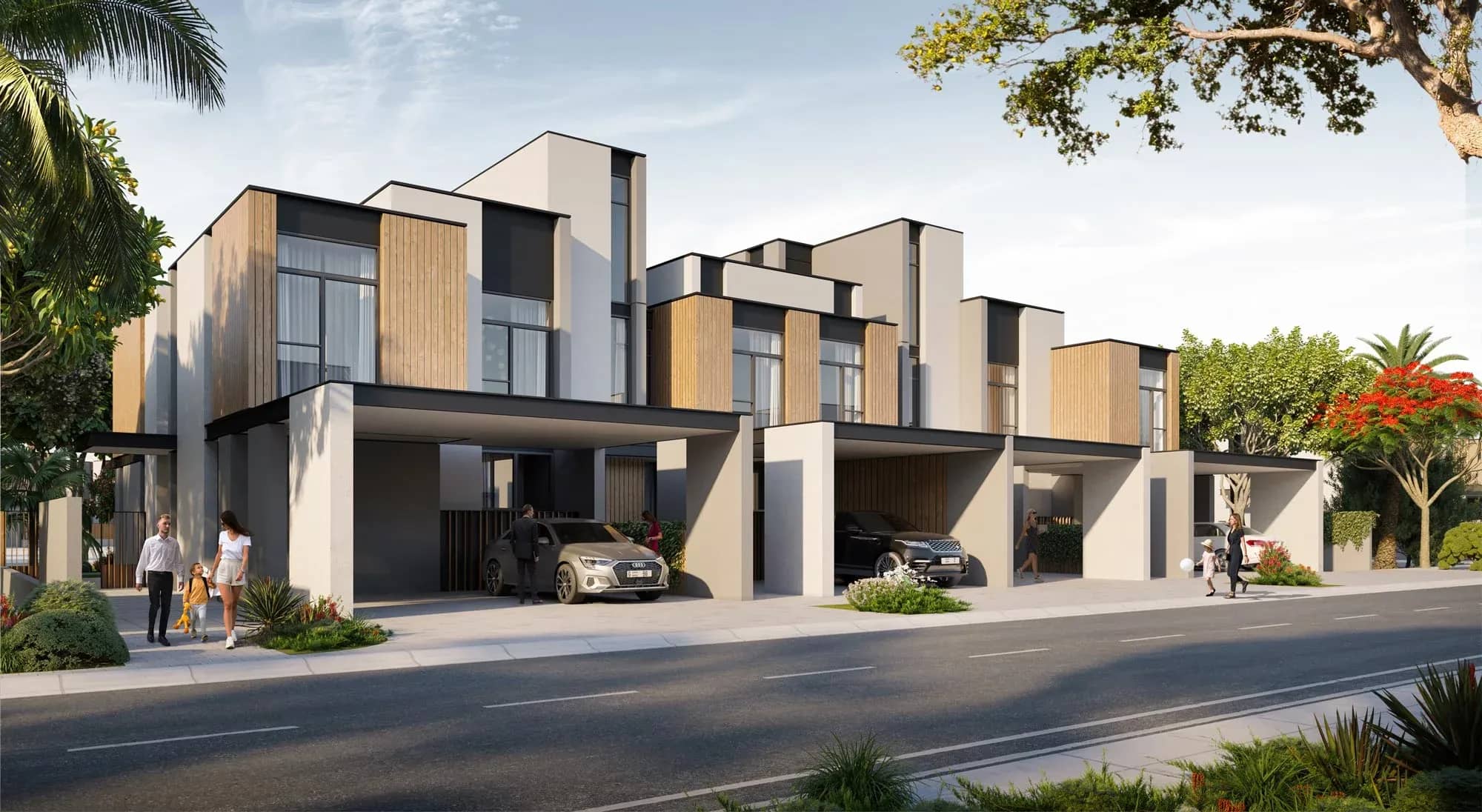
Town Square is a useful example of a community that combines recreation with daily services. Its central park sits among townhouse rows and apartments, while shops, cafés and schools are inside the community. That mix may suit a household that values outdoor space and routine errands within the same area.
Test the route, not just the distance
A map can show how far a facility is from a home, but the entrance-to-entrance route determines whether it is convenient. Trace the route from the actual townhouse or cluster to the nearest usable entrance, including any road crossings, gates or detours.
Look for a continuous path, safe crossings, shade and step-free access. A short walk can be difficult for a young child, an older resident or someone with mobility needs if the route crosses busy roads, includes stairs or has little shade.
Assess shops separately from schools and healthcare. A local shop may be within walking distance, while a school or clinic may require a drive. For the latter, consider the route at school-run times and during the hours when the household is most likely to travel.
Road access affects daily convenience too. When comparing townhouses for sale in Dubai, look at how a home connects to main roads and whether a trip to a regular service involves a simple turn or a longer route through the community.
When possible, walk or drive the route at the time the household would use it. A school entrance may be easy to reach outside peak hours and slow to access during drop-off and collection.
Confirm what is open and who can use it
A facility changes daily access when it is operating and available to residents in the relevant phase or cluster. A master plan describes intended facilities; it does not establish that a particular pool, gym or court is open for use today.
Ask how opening hours, bookings, guest access and resident eligibility work. Pools, gyms and courts can have different rules, so clarify whether residents need to reserve a time, register guests or use a particular entrance.
Access can also differ between clusters in a large development. Ask whether households share the same facilities, whether each cluster has its own entrance and how gated entry works for deliveries, carers, school pick-ups and visitors.
For off-plan homes, separate facilities that operate now from those planned for a later phase. Our off-plan buying guide explains the purchase process; for amenity access, ask the developer which facilities will serve the home’s phase and when residents can use them.
Serena is a townhouse community. Its pools, parks and play areas show why buyers should ask which facilities serve each cluster and how residents enter them.
For a wider view of how M&M assesses developers, see our Dubai developer profiles. For any specific home, ask the developer or community manager to identify the facilities open to that address.
Match facilities to the household’s daily needs
For a household with young children, a usable play area, safe walking routes and nearby green space can support frequent outings without driving. Check whether the route allows an adult to walk with a child safely and whether the play area is easy to reach from the home.
Residents with mobility needs or care responsibilities should assess the full route, including steps, slopes, seating, toilets and entrance access. A facility may be close on a plan and still be hard to reach if the path has stairs or lacks places to rest.
Think about the facilities used most often. A pool or fitness zone is more practical when the route from home is direct and its opening hours fit the household’s schedule.
Mudon Al Ranim offers three- and four-bedroom townhouses, including options with a family room, alongside community pools, picnic areas, a fitness zone and a basketball court. These facilities serve different routines, from outdoor family time to exercise and sport.
Allow for purchase costs in addition to the home’s price.
Use the facilities list to test the fit with the household’s actual routines. A pool used weekly, a play area used most afternoons and a court used occasionally have different value to different households.
Twelve chapters on what the regional war tested, the balance sheet and dollar peg behind the market, and how to pick the right side of this cycle.
Download free→Compare shared facilities with private space
A private garden gives the household direct access and control over when it is used. A shared park or pool depends on community rules, opening hours and the number of other residents using it at the same time.
Shared facilities can provide recreation without each townhouse having its own pool or sports area. A villa with private facilities gives its household more control over access, while the owner takes responsibility for upkeep and gives space to those facilities at home.
Compare privacy, convenience and maintenance together. Shared facilities may have guest limits or booking rules; a private outdoor space is managed by the household, which also needs to look after it.
Before choosing, consider who will use the space and how often. A household that prefers a private garden may value direct access at home, while residents who use a range of activities may prefer shared facilities close to their route through the community.
Account for upkeep, crowds and temporary closures
Shared pools, landscaped areas, gyms and courts need ongoing maintenance. Owners should include the cost of maintaining shared facilities in their budget, because these expenses may appear in service charges, the annual costs owners pay for common-area upkeep.
For a buyer, the listed facilities are only one part of the comparison. Ask how the community manager communicates maintenance work, how residents hear about temporary closures and what alternatives remain open during repairs.
Crowding affects whether a facility works for the household at its usual time. A pool, gym or sports court may be less convenient during busy periods, so ask how residents book access and whether use is shared across several clusters.
Compare the condition and everyday usability of facilities as well as their presence. A well-maintained park with an accessible route can support more regular use than several facilities that are difficult to reach or often closed for work.
Review the community’s service-charge budget and the rules for reporting maintenance issues. A clear process gives residents a way to raise a problem and learn which facilities remain available during the work.
See also: Dubai Golden Visa through Property: 2026 Guide, Which Dubai Property Area Fits Your Investment Goal in 2026?, Dubai Rental Yields in 2026: Gross Returns, Costs and Tax, What Investors Need to Know About Tax on Dubai Property, Dubai Property Investment in 2026, Off Plan Properties in Dubai, Best Areas to Invest in Dubai and Abu Dhabi, Dubai Investment Guides & Resources, Bay Estate by Nakheel, Dubai Islands: Investment Case, The Yards Plaza by BEYOND, City of Arabia Offices, Emaar and DAMAC: How to Compare Two Projects on the Public Record, Al Jaddaf Waterfront Guide 2026: Prices and Metro, 30/70 Payment Plan: What Beyond’s Offer Changes, JVC (Jumeirah Village Circle) Investment Guide 2026, Dubai Hills Estate Guide 2026: Prices and Yields, Dubai population growth is reshaping how the city plans for residents, How Dubai Property Crowdfunding Works: Shares, Returns and Risks, The Yards Plaza by BEYOND, City of Arabia Offices, M&M.
What to check before you choose
Before making a decision, walk the routes from the home to the facilities the household expects to use. Ask which amenities are operating for that cluster, how residents and guests access them, and how maintenance closures are communicated.
Compare the answers against the household’s weekly routine and budget. M&M Real Estate’s advisors can review the home, the community’s access arrangements and the questions to put to the developer. Contact M&M about your budget, timeline and shortlist.
this article is general information and not tax, legal or financial advice, and returns are not guaranteed.


Do all townhouse clusters in a large community use the same shared facilities?
No; confirm the facilities and entry points assigned to the specific home before relying on them.
Are community amenities generally available to tenants as well as owners?
Tenants commonly use shared facilities as part of living in the home, subject to the tenancy agreement and community rules. Agree who will register household members and arrange access cards as part of the move-in process.
Can nearby shops make up for a lack of retail inside a townhouse community?
Yes, nearby shops can serve regular needs when residents can reach them safely and at useful times. For larger shopping trips, delivery access, parking and the route to the home also shape convenience.
What should residents do if an amenity is overcrowded or temporarily closed?
Use the community manager’s resident channel to report the issue and ask about booking options or an alternative facility. Keep a record of recurring closures or access problems so the manager can respond to a specific pattern.


