This guide to Dubai Off-Plan Property: How the Reservation Becomes a Purchase follows the steps from choosing a project to handover. Oqood, the DLD’s off-plan registration, records the transaction on the Interim Real Estate Register before a completed property receives its title deed.
- Check the developer, project registration and designated escrow arrangements before paying a booking deposit.
- Read the reservation form for the unit, price, payment terms, deadlines and deposit conditions.
- Compare the signed reservation terms with the Sales and Purchase Agreement (SPA) and record any agreed changes in writing.
- Keep dated records of every payment, registration update and communication with the developer.
- Use our Dubai property investment guide to consider how a purchase fits your wider investment plans.
- Find related guidance in our Dubai property resources.
What buying off-plan means and what to check first
An off-plan property is bought before construction is complete. You commit based on the contract, approved plans and specifications, so those documents set out what the developer has agreed to deliver.
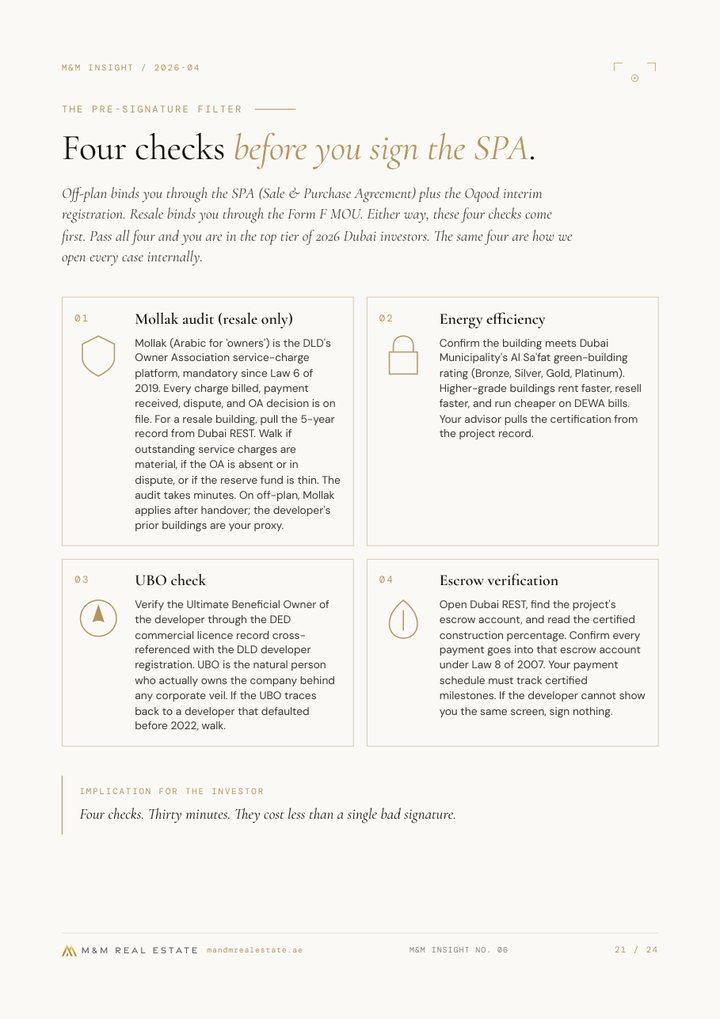
Before reserving, check the developer, project approvals and registration with the relevant Dubai authorities, including the Dubai Land Department (DLD) and Real Estate Regulatory Agency (RERA). Confirm the project’s designated escrow arrangements, meaning the account used for project payments, and keep a record of what you checked.
Compare the unit number, floor, location, plans, specifications and completion terms in the project documents. Marketing images can help you understand the design, while the contract and its attachments define the features and delivery terms you can rely on.
At M&M Real Estate, we curate off-plan properties in Dubai around developer credibility, location fundamentals and projected return, with direct developer access and assistance through handover. Our Dubai area analysis helps investors assess location alongside the project itself.
Check the developer’s delivery record and financial standing as part of that review. Our profiles of Emaar and DAMAC show how to compare developers using their public records.
Location analysis should include the area’s housing, access and likely buyer or tenant demand. Our guides to Dubai locations, JVC, Dubai Hills and Al Jaddaf Waterfront provide area-specific context, while our Dubai population analysis considers the city’s changing demand.
Our project reviews include Bay Estate by Nakheel and The Yards Plaza. A separate Yards Plaza Investment Case gives another project-specific reference for assessing an opportunity.
Budget for the booking payment, every later instalment and the costs due at purchase.
Read the reservation form before paying
A reservation form or booking form should identify the unit, purchase price, booking deposit and payment method. It should also set out any payment-plan terms, so the reservation can be matched to the intended purchase.
Read the wording, not only the document title. A form called a reservation may create obligations if it records commitments by the buyer and developer.
Check the reservation expiry date, the conditions for proceeding, the SPA-signing deadline and what happens to the deposit if you withdraw or the SPA is not signed. These terms determine what each party has agreed to do and what the buyer may lose if the purchase stops.
If the reservation depends on finance, approval or another condition, look for how that condition is defined and how to meet it. Check what evidence or notice the form requires and when it must reach the developer.
This is general information, not tax or legal advice. A qualified legal adviser can review the form when its terms affect your decision or obligations.
Compare the SPA with the reservation before signing
The SPA sets out the purchase terms in detail. Compare its unit identification, price, instalment schedule, completion terms, specifications and agreed conditions against the reservation form before signing.
Resolve differences before you sign. Ask the developer to record agreed changes or clarifications in the SPA or a written amendment, then keep the final signed documents together.
Read the SPA provisions for delays, default, cancellation, refunds, notices and dispute handling. These terms govern what the parties can do when the transaction does not proceed as expected.
If a change affects your decision or funding plan, pause signing until you understand its effect and the agreed position appears in writing. M&M’s off-plan property advisory includes asset evaluation, early allocation access and exit planning for investors comparing projects and purchase terms.
Payment plans can place instalments at different stages of construction or after handover. Our analysis of the Beyond payment plan is one example of why you should read the schedule as written and map each due date to your own funding plan.
Track the deposit, instalments and registration
Follow the payment plan and its stated milestones. Keep dated receipts and bank records for the booking deposit and each instalment, along with the developer’s payment instructions.
Pay through the project’s designated escrow arrangements as set out in the transaction documents. Escrow is the project-specific account that receives buyer payments; keeping the transfer record gives you evidence of where and when the money was sent.
Oqood is associated with the Interim Real Estate Register, which records an off-plan transaction before the title deed for a completed property. Ask the developer for registration evidence and check the record through the relevant DLD channels.
If confirmation does not arrive, request written status and supporting evidence from the developer. Keep the reply with your payment records, and seek suitable professional guidance if the issue remains unresolved.
Respond carefully if a payment or construction milestone slips
Start with the SPA’s milestone definitions, notice requirements, grace periods and remedies. A construction update or informal assurance does not change the signed terms by itself.
Keep a dated file with the SPA, payment receipts, progress communications, notices and requests for clarification. This record helps establish what happened and when.
If the developer has not registered the transaction, or you are concerned that the unit may be dealt with again, request written confirmation and registration evidence promptly. Then raise the matter through the relevant official channels or with a qualified legal adviser.
If you may miss an instalment, read the default and notice provisions and communicate in writing before the due date where possible. Withholding payment can create consequences under the SPA, so get advice on the contract before deciding how to respond.
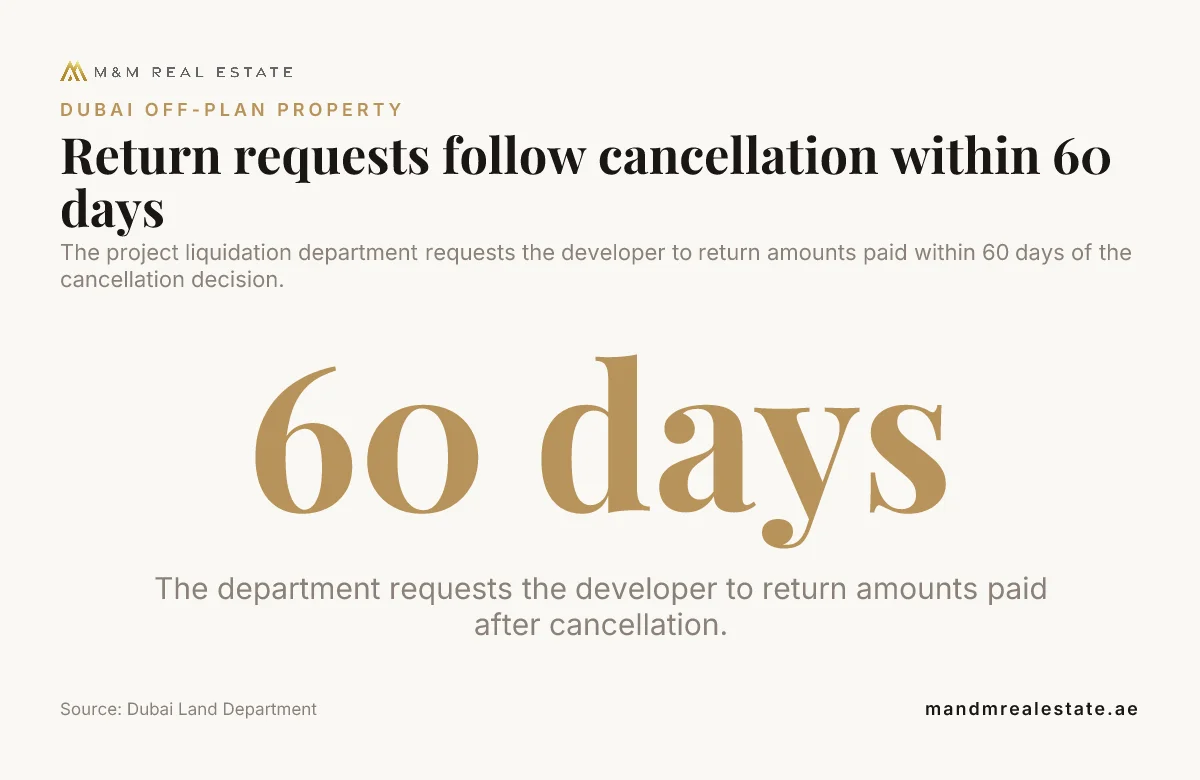
The project liquidation department requests the developer to return amounts paid within 60 days of the cancellation decision.
Source: Dubai Land Department
M&M also offers a 30-minute portfolio review with an advisor to discuss your goals, budget and timeline. It can help you organise the questions to raise as you assess a purchase or respond to a delay.
Inspect the property before handover and keep the closing records
At inspection, compare the finished unit with the SPA specifications. Record each defect with a dated photograph, its location in the property and a clear written description, so the snagging list identifies what needs attention.
Separate cosmetic snagging from issues affecting safety, access or essential function. Record when you reported each item, who received the report and how the developer addressed it.
Read the handover documents and any acknowledgement before signing. Put outstanding items in writing and keep a copy of the list and the developer’s response.
The DLD states that Article 14 of the Escrow Account Law requires 5% of the total amount paid in the escrow account to be retained for one year after project completion, as a guarantee for addressing defects. The Dubai Land Department FAQ explains this escrow provision.
Keep the completion, payment and handover records together, then follow the applicable title deed registration steps once the purchase requirements are met. If your plan includes renting the property, review our guidance on Dubai rental yields and property tax for investors as part of the ownership plan.
For buyers weighing residency or different investment structures, our guides to the Dubai property Golden Visa and real estate crowdfunding in Dubai cover related considerations.
What to do before you reserve
Before paying, collect the project documents, check the developer and escrow details, and read the reservation terms for the deposit, expiry date and SPA deadline. Compare the SPA with the reservation before signing, then keep a dated record of payments, registration evidence and handover items.
Dubai Off-Plan Property: How the Reservation Becomes a Purchase is a process you can follow document by document. An M&M advisor will go through your budget, timeline and shortlist with you. Speak with an M&M advisor.
This article is general information, not tax, legal or financial advice; returns are not guaranteed.


Is it worth buying off-plan property in Dubai?
It can suit a buyer who can fund instalments over the construction period and accepts that the property will not produce rental income before handover. Compare the contractual terms and total costs with a ready property that could be occupied or rented sooner.
Can I sell my off-plan property in Dubai before handover?
A pre-handover sale may be possible, subject to the SPA, the developer’s transfer conditions and the status of the buyer’s payments and registration. Ask the developer for the written assignment process and the documents required for a transfer.
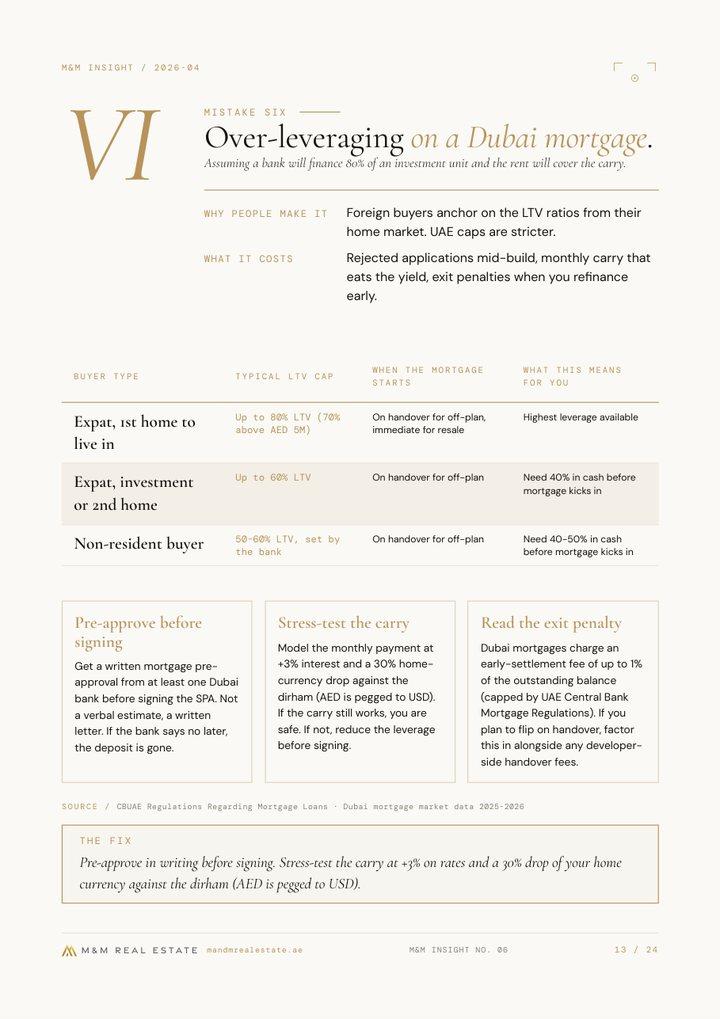
Can you get a mortgage on an off-plan property in Dubai?
Some lenders offer mortgages for off-plan purchases, with approval depending on the buyer, the project and the lender’s requirements. Ask the bank when it will release funds and how its payment dates fit the developer’s instalment schedule.
Can a non-resident buy off-plan property in Dubai?
Yes, a non-resident can buy in areas where foreign ownership is permitted, subject to the applicable Dubai rules and the project’s terms. The buyer can appoint an authorised representative to handle transaction steps where the relevant process allows it.
Ten off-plan mistakes
The ten mistakes overseas buyers make most, and how to check each one before you sign. 24 pages. Free by email.